

Call us NOW


A commercial steamer oven is defined as a multifunctional cooking appliance that combines convection heat, steam, and a simultaneous combination of both modes within a single cabinet. Known in the industry as a combi oven, this equipment replaces multiple appliances like convection ovens, dedicated steamers, and proofers, centralizing production and reclaiming valuable kitchen space. Brands like RATIONAL, AMPTO, and Alto-Shaam have made these units standard in professional kitchens worldwide. For any culinary professional or serious home cook evaluating commercial steam cooking appliances, understanding how this technology works, what it costs, and how to use it effectively is the foundation of a smart equipment decision.
A combi oven operates across three distinct cooking modes: convection, steam, and combination. Each mode serves a different culinary purpose, and the ability to switch between them mid-cook is what separates this equipment from every single-function alternative.
Convection mode circulates dry hot air using internal fans, producing browning and crisping. Steam mode injects moisture at controlled temperatures, ideal for vegetables, fish, and delicate proteins. Combination mode runs both simultaneously, giving you the Maillard browning of dry heat with the moisture retention of steam. This is the mode most chefs use for roasting large cuts of meat.
Steam generation varies by system type:
Humidity sensors and programmable controls allow precise management of temperature and moisture levels throughout the cooking cycle. Controlled moisture environments directly translate to better food quality, reduced waste, and higher kitchen profitability. Advanced models from RATIONAL and similar manufacturers include self-cleaning cycles, HACCP data logging, and recipe memory for up to several hundred programs.
Pro Tip: When evaluating steam generation systems, match the method to your service volume. A connectionless unit works well for a catering setup or small café, but a boiler-based system is the correct call for a hotel kitchen running 300 covers per service.
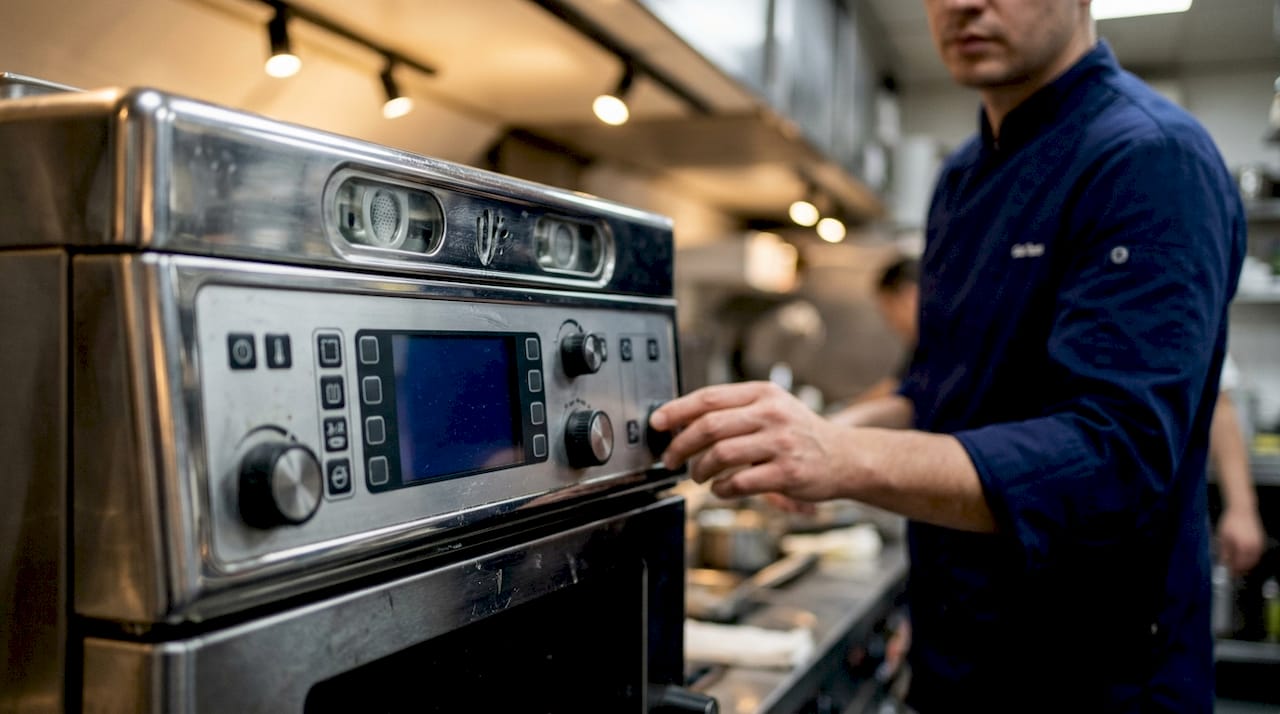
The practical case for investing in a combi oven comes down to five measurable advantages that affect food quality, labor, and operating costs every single day.
Nutrient and moisture retention. Steam cooking preserves water-soluble vitamins and minerals that are lost in boiling or high-heat dry cooking. Proteins cooked in combination mode retain more natural juices, producing juicier results with less shrinkage than traditional convection methods.
Improved food yield. Controlled humidity protects moisture and texture unlike traditional convection ovens, reducing shrinkage in proteins and improving kitchen margins in high-volume settings. Less shrinkage means more portions per kilogram of raw product.
Equipment consolidation. One combi oven can replace a convection oven, a dedicated steamer, a proofer, and in some cases a rethermalizer. One Asian-fusion restaurant replaced three separate appliances with one combi oven and freed 18 square feet of kitchen space valued at $4,500 annually. That is a direct return on investment that shows up in rent and labor costs.
Energy efficiency. Ventless steamers produce 35% lower energy consumption than traditional steam-jacketed models, qualifying for utility rebates and saving hundreds monthly. In high-volume kitchens running eight hours daily, documented energy cost savings reach approximately $412 per month.
Consistency at scale. Programmable recipe memory means a line cook can execute a chef’s recipe with the same result every time. This repeatability is critical in high-volume operations where quality variance directly affects customer retention.
The combination of these factors makes the combi oven one of the highest-return investments in any commercial kitchen equipment guide for 2026.
Not every steam cooking appliance is the same, and selecting the wrong type is a common and expensive mistake. The three primary categories are dedicated steamers, combi ovens, and pressurized steam ovens.
| Type | Steam Control | Browning Capability | Best Use Case |
|---|---|---|---|
| Dedicated steamer | Moist heat only | None | Vegetables, shellfish, rice |
| Combi oven | Steam + dry heat | Yes | Roasting, baking, retherming |
| Pressurized steamer | High-pressure steam | None | Speed cooking, bulk starch cooking |
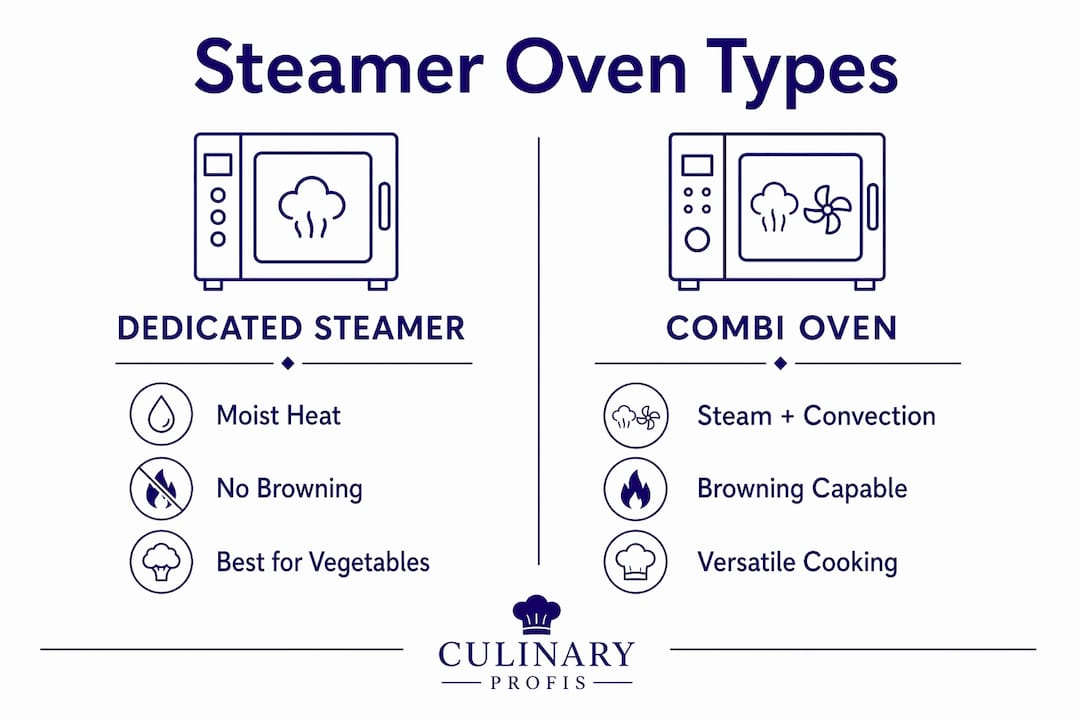
Dedicated steamers only provide moist heat, while combi ovens add dry heat and humidity control, enabling roasting and browning. Using a dedicated steamer for browning produces poor food outcomes. This distinction matters when planning a menu that requires both techniques.
Size and footprint vary significantly. Countertop combi ovens typically accommodate 6 to 10 full-size hotel pans and suit smaller kitchens or secondary cooking stations. Full-size floor models handle 20 or more trays and are built for central production kitchens and hotel banquet operations. The AMPTO BISTROT 10T, for example, is a 10-tray countertop combi oven that delivers Italian-engineered performance at 15kW without requiring a dedicated floor installation.
Ventless models use internal filtration to manage steam exhaust, eliminating the need for a Type I or Type II hood in some jurisdictions. Vented models require hood installation but handle higher steam volumes and are the standard for large-scale operations.
Pro Tip: Before specifying a ventless model, verify local health department and fire code requirements. Some jurisdictions still mandate hood ventilation regardless of the appliance’s built-in filtration system.
Commercial steamer ovens represent a significant capital investment, and the purchase price is only part of the total cost of ownership. Equipment decisions should consider total cost of ownership including acquisition, energy usage, maintenance, downtime, and residual value rather than sticker price alone.
Entry-level boilerless combi ovens start around $3,000 to $6,000 for countertop units. Mid-range floor models from established brands run $10,000 to $20,000. High-end units from RATIONAL or Convotherm with full touchscreen controls, self-cleaning systems, and HACCP integration can exceed $30,000. Estimated commercial kitchen startup budgets including high-end combi ovens range between $30,000 and $100,000 depending on scale and menu, and 63% of kitchen startups overspend by at least 25% due to unforeseen installation, utility, and compliance costs.
Hidden costs to budget for include:
On the savings side, ENERGY STAR certified models can deliver energy savings up to $1,500 annually. The 2026 ENERGY STAR efficiency standards are 45% stricter than 2023 benchmarks, so specifying a certified unit now positions your kitchen for utility rebate eligibility and lower operating costs over the equipment’s lifespan.
Buying the equipment is the easy part. Getting full value from a combi oven requires deliberate integration into your workflow, menu, and maintenance schedule.
Map your menu to cooking modes. Identify which menu items benefit from steam (fish, vegetables, custards), which need combination mode (roasts, poultry, bread), and which use convection only (pastries, pizza). Program these as saved recipes to eliminate guesswork on the line.
Use batch cooking to maximize throughput. Combi ovens excel at overnight or off-peak batch production. Proteins can be slow-cooked in combination mode at low temperatures, then held or finished to order during service. This reduces peak-hour labor pressure significantly.
Manage water quality proactively. Install a water filtration system at commissioning and replace filter cartridges on the manufacturer’s recommended schedule. Hard water scale is the primary cause of heating element failure and unplanned downtime. Log filter changes alongside routine maintenance records.
Align the unit’s position with your kitchen layout. Place the combi oven adjacent to prep and plating stations to minimize travel distance. Review your kitchen layout plan before finalizing the installation position, since moving a plumbed and wired floor unit after installation is costly.
Train every cook on the unit, not just the head chef. Combi ovens with recipe memory are only as effective as the team operating them. Schedule structured training at commissioning and refresher sessions when new staff join.
Pro Tip: Run a full cleaning cycle at the end of every service shift, not just at end of day. Residual grease and food particles in the steam generator degrade performance and create off-flavors in subsequent cooks.
A commercial steamer oven delivers measurable gains in food quality, kitchen efficiency, and operating cost when selected, installed, and operated correctly.
| Point | Details |
|---|---|
| Core function | Combines convection, steam, and combination modes in one unit, replacing multiple appliances. |
| Steam system selection | Match boiler-based, boilerless, or connectionless systems to your service volume and plumbing capacity. |
| Food quality gains | Combination mode reduces protein shrinkage and preserves moisture, improving yield and portion value. |
| Total cost of ownership | Budget for filtration, ventilation, electrical work, and maintenance beyond the equipment purchase price. |
| Operational integration | Program saved recipes, train all staff, and manage water quality to maximize performance and equipment lifespan. |
I have spent years reviewing commercial kitchen equipment decisions, and the pattern I see most often is this: operators buy a combi oven, use it as a convection oven, and wonder why the ROI never materializes. The combination mode is where the real value lives, and most kitchens never fully exploit it.
The second mistake I see consistently is treating infrastructure as an afterthought. Kitchens that skip the restaurant startup equipment planning phase and order a floor-model combi oven without confirming three-phase power availability end up paying for emergency electrical work that costs more than a year of energy savings. Plan the infrastructure first. Spec the equipment second.
The technology in 2026 combi ovens is genuinely impressive. Self-cleaning, HACCP logging, cloud-connected recipe management, and ENERGY STAR certification are now standard features on mid-range units. But none of that matters if the unit is not integrated into a deliberate workflow. The operators who get the most from this equipment are the ones who treat it as a production system, not just another oven.
My honest recommendation: before purchasing, spend time with a dealer demo unit running your actual menu items. The difference between a $6,000 boilerless countertop unit and a $20,000 boiler-based floor model becomes obvious the moment you run a 40-portion protein cook and compare recovery times.
— John
Culinaryprofis stocks a curated selection of professional-grade combi ovens and commercial steam cooking appliances suited for restaurant kitchens, catering operations, and serious home cooks who demand commercial performance.
The catalog includes countertop and floor models from trusted brands, with specifications covering tray capacity, steam generation method, power requirements, and ENERGY STAR compliance. Every unit ships with expert support and a flexible return policy. Whether you are outfitting a new kitchen or replacing aging equipment, browse the full equipment catalog at Culinaryprofis to find the right combi oven for your operation. For specific model details and technical specifications, the AMPTO BISTROT 10T is a strong starting point for countertop combi oven evaluation.
A dedicated steamer delivers moist heat only, with no browning capability. A combi oven adds dry convection heat and humidity control, enabling roasting, baking, and browning in the same unit.
Entry-level countertop combi ovens start around $3,000 to $6,000. Full-size floor models from premium brands like RATIONAL range from $15,000 to over $30,000, with installation and infrastructure costs adding significantly to the total.
Most floor-model combi ovens require a dedicated water supply line and drain connection. Connectionless models use an internal reservoir and require no plumbing, making them suitable for locations without fixed water access.
Combi ovens handle proteins, vegetables, fish, bread, pastries, and custards across their three cooking modes. Combination mode is particularly effective for large roasts, poultry, and any protein where moisture retention and surface browning are both required.
ENERGY STAR certified combi ovens can save up to $1,500 annually in energy costs. Ventless models consume 35% less energy than traditional steam-jacketed alternatives, and many qualify for utility rebates under 2026 efficiency standards.