

Call us NOW


A restaurant kitchen equipment checklist covers seven fundamental categories that determine whether a professional kitchen operates safely, efficiently, and profitably. Those categories are cooking equipment, refrigeration, prep equipment, dishwashing, storage, ventilation, and smallwares. Startup budgets vary from $30,000 to over $100,000 depending on concept size, service volume, and whether equipment is purchased new or used. Getting this list right before opening day is not a preference. It is the difference between a kitchen that passes inspection and one that shuts down in the first month.
Every functional commercial kitchen is built on the same seven-category framework, regardless of cuisine type or service format. Cooking equipment, refrigeration, prep tools, dishwashing systems, dry and cold storage, ventilation, and smallwares each serve a distinct operational role. Miss one category and you create a bottleneck that slows service, creates safety violations, or fails a health inspection. Chefs and owners who treat this checklist as a living document, updated with each menu change or volume increase, maintain tighter control over procurement and compliance.
The checklist also functions as a financial planning tool. Knowing which categories require the highest capital outlay, typically cooking equipment and refrigeration, allows owners to phase purchases intelligently. Equipment for catering kitchens follows the same framework, though mobile and modular units often substitute for fixed installations. Use the checklist during your restaurant startup planning phase to map utility requirements, floor space, and vendor lead times before signing a lease.
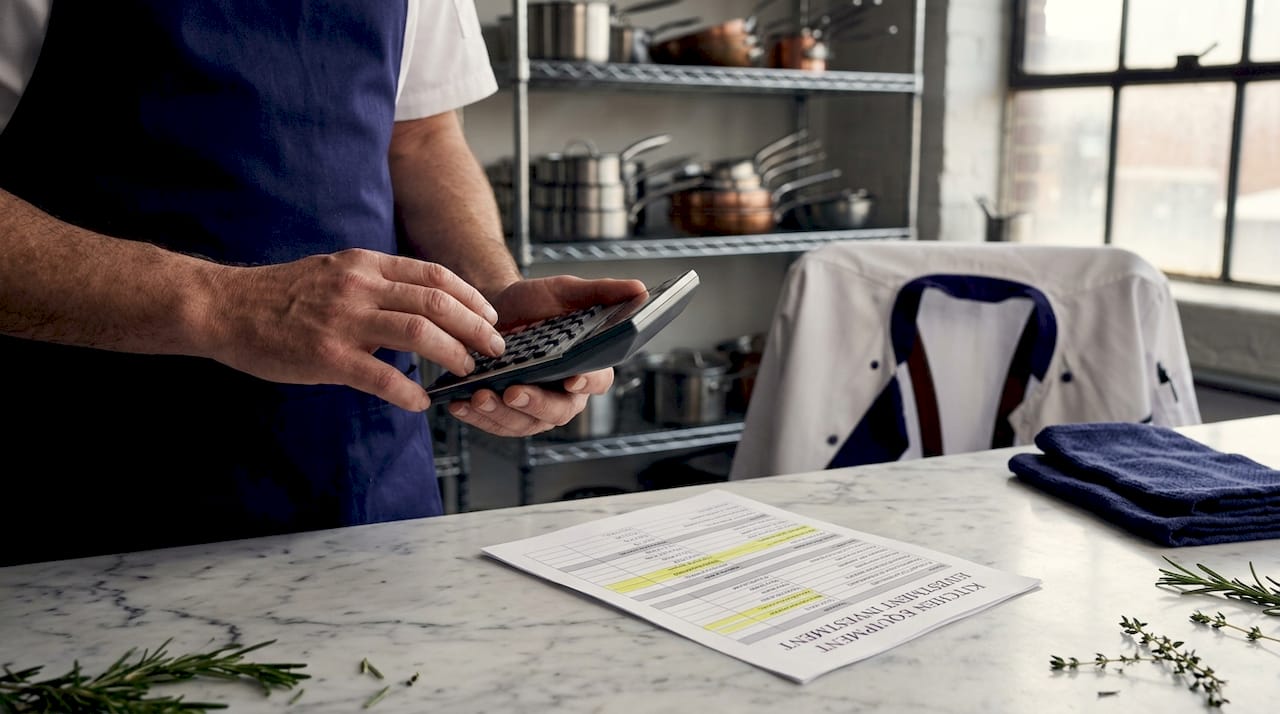
Gas ranges are preferred over electric in professional kitchens because of heat responsiveness and lower operating costs under heavy use. A standard restaurant supply list for cooking equipment includes commercial ranges, convection ovens, deep fryers, griddles, charbroilers, commercial microwaves, and combi ovens. Each piece serves a specific function, and the right combination depends entirely on your menu.
Combi ovens from brands like Rational and AMPTO replace multiple traditional units by combining steam, convection, and combination cooking in one footprint. Multifunctional systems reduce footprint and energy consumption but require specific gas, electric, and water hookups planned well before installation. Owners who skip utility planning at this stage face costly retrofits after equipment arrives.
Here is a quick comparison of the most common cooking equipment categories:
| Equipment | Primary Use | Key Consideration |
|---|---|---|
| Commercial range (6-burner) | Sauté, boiling, sauce work | Gas preferred for heat control |
| Convection oven | Roasting, baking, finishing | Stackable units save floor space |
| Combi oven (e.g., AMPTO Rotorbake E2) | Steam, roast, bake combined | Requires water line and drain |
| Deep fryer | Frying proteins and sides | BTU rating matched to volume |
| Charbroiler | Grilling proteins | Ventilation load must be calculated |
Pro Tip: Trial cooking equipment in a manufacturer demo kitchen using your actual menu before purchasing. This is the single most reliable way to verify that a unit matches your workflow and output volume.
Refrigeration sizing follows one clear rule: plan for approximately two days of cold storage capacity for every three deliveries per week. This prevents over-purchasing units that sit half-empty while keeping ingredient quality consistent. A high-volume restaurant receiving daily deliveries needs less total refrigeration than a concept running on a three-day delivery cycle.
The standard restaurant supply list for refrigeration includes:
All refrigeration units should carry NSF certification, which confirms they meet sanitation and material standards for commercial foodservice. Walk-in coolers require professional installation with proper drainage, door gaskets rated for traffic frequency, and shelving that allows airflow on all sides. FIFO (first in, first out) organization is not optional. It is a health code requirement in most jurisdictions and the primary method for reducing spoilage costs.
| Refrigeration Type | Typical Capacity | Best Application |
|---|---|---|
| Two-door reach-in | 40-50 cubic feet | Line and prep area |
| Walk-in cooler | 100-400+ cubic feet | Bulk ingredient storage |
| Prep table refrigerator | 20-30 cubic feet | Pizza, sandwich, salad stations |
| Ice machine | 300-1,000 lbs/day | Bar, beverage, and food service |
Commercial prep equipment defines how fast your kitchen moves from raw ingredients to plated dishes. The core prep list includes commercial mixers (Hobart and Globe are the two dominant brands), food processors, slicers, immersion blenders, and meat grinders. For kitchens doing in-house grinding, a unit like the Pro-Cut KG-32-MP meat grinder handles high-volume output without the reliability issues common in lighter-duty machines.
Daily kitchen operations require temperature verification, sanitizer concentration checks, and prep list review before service begins. These tasks depend on having the right tools in place: calibrated thermometers, sanitizer test kits, and clearly labeled prep stations. Without them, a kitchen cannot consistently maintain cold food at or below 41°F and hot food at or above 135°F, the two temperature thresholds that define safe food handling under most state health codes.
Dishwashing capacity is calculated by cover count and service style. A high-volume full-service restaurant needs a conveyor dishwasher. A smaller operation can run a door-type or undercounter unit. Key requirements for any dishwashing setup:
Pro Tip: Size your three-compartment sink to accommodate your largest pot or sheet pan. Undersized sinks force workarounds that slow sanitation and create compliance gaps during inspections.
Understanding foodservice sanitation standards is not optional for passing health inspections. NSF certification on dishwashers and sinks is the baseline, not the ceiling.
Type I hood systems are required over all cooking equipment that produces grease-laden vapors, including ranges, fryers, griddles, and charbroilers. Type II hoods handle heat and moisture from equipment like ovens and dishwashers that do not produce grease. Every commercial kitchen must have the correct hood type above each piece of cooking equipment, and the hood must be connected to a fire suppression system that meets NFPA 96 standards.
Maintenance neglect is a primary cause of commercial kitchen fires, and fire department inspections triggered by hood failures are among the most common reasons kitchens face temporary closure. The cleaning schedule mandated by NFPA 96 varies by operation type:
“Routine preventative maintenance is as critical as health inspections for avoiding costly shutdowns and disastrous fires.” Fire suppression systems must be inspected by a certified technician every six months, with documentation kept on-site for insurance and regulatory review.
Beyond hoods, every kitchen needs a clearly posted fire extinguisher plan, carbon monoxide detectors, and emergency shutoff access for gas lines. These are not suggestions. They are code requirements that directly affect your operating license.
Smallwares are consistently underbudgeted in restaurant startup planning, yet they are the tools your cooks touch every single minute of service. High-quality stainless steel knives, color-coded cutting boards, and calibrated measuring tools directly affect prep speed and cross-contamination risk. A kitchen with a $200,000 cooking suite and dull knives or unlabeled boards will fail a health inspection on the basics.
The complete smallwares list for a professional kitchen includes:
For a detailed breakdown of what belongs in this category, the smallwares restaurant supply guide from Culinaryprofis covers every subcategory with product-level specifics. Catering kitchen equipment lists follow the same smallwares framework, with the addition of chafing dishes, transport containers, and portable induction units. For catering operations, reviewing a catered menu checklist alongside your equipment list helps align tools with service format.
Preventive maintenance prevents equipment failures and the kind of catastrophic incidents that close kitchens for days or weeks. Daily, weekly, and monthly inspection protocols combined with digital maintenance logs create a documented record that satisfies both regulatory auditors and insurance adjusters after any incident. A kitchen that cannot produce maintenance records after a fire or equipment failure faces denied claims and potential license suspension.
The minimum maintenance schedule for a commercial kitchen covers daily temperature checks on all refrigeration, weekly cleaning of fryer oil and hood filters, monthly deep cleaning of all cooking surfaces and drain lines, and semi-annual professional inspection of fire suppression systems and ventilation hoods. Assign these tasks by role, not by availability. When maintenance is everyone’s responsibility, it becomes no one’s responsibility.
For guidance on selecting commercial kitchen appliances that are built for serviceability, look for units with accessible service panels, widely available replacement parts, and manufacturer support networks in your region.
A complete restaurant kitchen equipment checklist built on all seven categories, with proper sizing, NSF certification, and a documented maintenance schedule, is the foundation of a compliant and profitable commercial kitchen.
| Point | Details |
|---|---|
| Seven core categories | Cooking, refrigeration, prep, dishwashing, storage, ventilation, and smallwares are all required. |
| Refrigeration sizing rule | Plan for two days of cold storage per three weekly deliveries to match actual inventory needs. |
| Gas over electric | Gas ranges deliver better heat control and lower operating costs in high-volume professional kitchens. |
| Maintenance is mandatory | Digital inspection logs and scheduled cleaning protect against fires, shutdowns, and denied insurance claims. |
| Smallwares budget matters | Underbudgeting knives, boards, and measuring tools creates compliance gaps and slows prep throughput. |
Most owners I’ve worked with spend 80% of their equipment budget on cooking appliances and refrigeration, then scramble to fund everything else. That order of priority is correct, but the scramble is avoidable. The real mistake is not accounting for installation costs when building the initial budget. Venting, fire suppression tie-ins, utility upgrades, and specialized stands can add 20% to 40% on top of the equipment price itself. I’ve seen combi oven projects stall for weeks because the gas line wasn’t sized for the unit’s BTU demand.
The other lesson that took time to internalize: trial equipment before you buy it. Rational, AMPTO, and other major brands offer demo kitchen access for exactly this reason. A unit that performs brilliantly in a spec sheet may not match your actual menu workflow. Spending a day cooking your real dishes on a demo unit is the most efficient due diligence you can do.
Maintenance is where most kitchens fail quietly before they fail loudly. A hood filter that hasn’t been cleaned on schedule doesn’t announce itself until there’s a fire or a failed inspection. Build the maintenance calendar before you open, assign it by role, and treat it with the same seriousness as your prep list. The kitchens that stay open longest are not the ones with the most expensive equipment. They are the ones where the equipment is consistently cared for.
— John
Culinaryprofis stocks commercial-grade equipment across every category on this checklist, from high-output cooking appliances to NSF-certified prep refrigeration and professional smallwares.
The AMPTO Rotorbake E2 combi oven is one of the most space-efficient multifunctional units available for mid-volume kitchens, combining steam, convection, and combination modes in a single 10-tray footprint. For prep refrigeration, the Dukers pizza prep station delivers reliable temperature performance for high-turnover line stations. Browse the full commercial kitchen equipment catalog at Culinaryprofis, or contact the expert support team directly to discuss your specific checklist needs. Free shipping and a flexible return policy apply across the product range.
The seven categories are cooking equipment, refrigeration, prep equipment, dishwashing, storage, ventilation, and smallwares. Each category addresses a distinct operational and compliance requirement in a commercial kitchen.
Startup budgets range from $30,000 to over $100,000 depending on restaurant size, concept type, and whether equipment is purchased new or used. Installation costs for ventilation, fire suppression, and utility upgrades add significantly to the base equipment price.
NFPA 96 mandates cleaning frequency based on operation type: monthly for solid fuel ovens, quarterly for high-volume kitchens, semi-annually for standard restaurants, and annually for low-volume operations.
Gas is the standard choice in professional kitchens because it offers faster heat response and lower operating costs under heavy use. Electric ranges are used in specific contexts where gas lines are unavailable or prohibited by building code.
Knives, color-coded cutting boards, measuring tools, and NSF-certified storage containers are the most frequently underbudgeted items. These tools directly affect prep speed, cross-contamination prevention, and health inspection outcomes.