

Call us NOW


Smallwares restaurant supply is one of those terms that sounds self-explanatory but gets misunderstood constantly. Most new operators think it just means “the small stuff” — a catch-all bin for whatever doesn’t qualify as a major appliance. That framing is wrong, and it costs money. Smallwares are hand-held, non-electrical, reusable tools that directly shape how fast your kitchen moves, how consistently food gets produced, and how well your team maintains safety standards. Understanding this category properly is the first step toward running a tighter, more cost-efficient operation.
| Point | Details |
|---|---|
| Smallwares are not minor items | They are non-electrical, reusable tools that directly affect prep speed, consistency, and safety. |
| Smallwares vs. equipment is a real distinction | Equipment is depreciated long-term; smallwares are replaced frequently as operating expenses. |
| FOH and BOH have separate needs | Front-of-house and back-of-house smallwares serve different functions and require separate sourcing priorities. |
| Fewer, better tools outperform large sets | Experienced operators favor multi-use, durable tools over specialty gadgets that rarely get used. |
| Sourcing strategy affects cost significantly | Factory-direct purchasing and backup supplier relationships protect margins and prevent supply gaps. |
The formal definition is narrower than most people expect. Smallwares are the hand-held, non-electrical tools a kitchen crew uses every single service: knives, cutting boards, mixing bowls, sheet pans, spatulas, tongs, ladles, prep containers, hotel pans, colanders, and more. They are reusable, relatively low-cost per unit, and handled directly by staff throughout the day.
The critical distinction that matters operationally is smallwares versus equipment. A commercial range, a walk-in refrigerator, a combi oven — those are equipment. They get depreciated on a long-term schedule and require maintenance contracts. Smallwares, by contrast, are replaced as operating expenses, not depreciated. When a spatula cracks or a cutting board warps, you replace it. There is no service agreement. This distinction affects your accounting, your procurement planning, and your supplier relationships in ways that matter at tax time and budget time. You can learn more about how commercial cooking appliances differ from smallwares in terms of procurement strategy.
Smallwares also split cleanly into two operational zones:
Back-of-house (BOH) smallwares cover everything the kitchen team touches:
Front-of-house (FOH) smallwares are what guests interact with directly:
FOH and BOH smallwares have different sourcing priorities. FOH items get judged aesthetically by guests and take heavy abuse from bussing and dishwashing cycles. BOH tools need to meet NSF certification standards, which verify that materials are safe for food contact and can be properly sanitized. Always confirm NSF certification on prep tools and food-contact surfaces. That certification is non-negotiable in a commercial kitchen. For context on why those sanitation standards matter, it goes well beyond compliance.
The tools you put in your kitchen crew’s hands determine how fast they work and how few mistakes they make. A dull knife is slower and more dangerous than a sharp one. A warped sheet pan cooks unevenly. A cutting board that slides on the counter creates a safety hazard every single prep shift. These are not abstract concerns.
Selecting durable, multi-purpose tools optimizes kitchen workflow and reduces the frequency of replacements. A silicone spatula that is heat-resistant to 600°F and dishwasher-safe earns its place on every station. One tool that handles sautéing, folding, and scraping is worth more than three single-function utensils that each need washing between tasks.
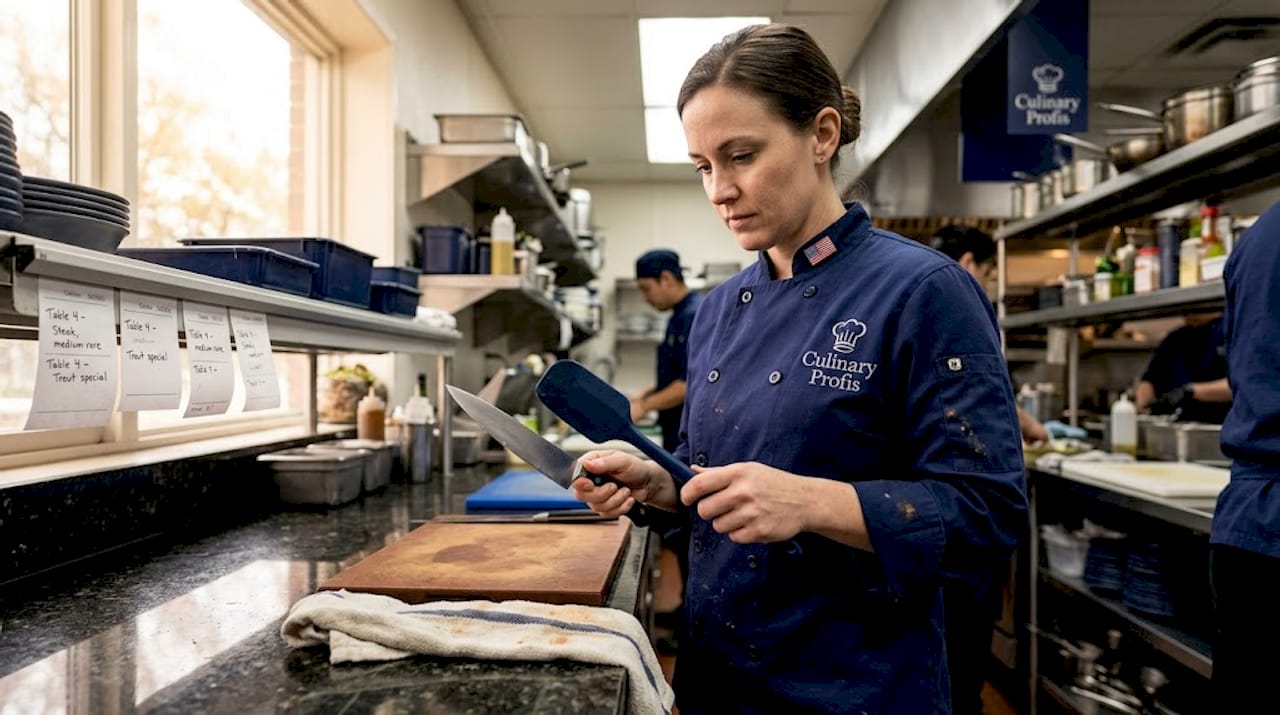
Food safety is where smallwares choices get serious. Color-coded cutting boards prevent cross-contamination between proteins, produce, and ready-to-eat foods. Dedicated prep containers for allergen items protect guests and protect the business. These are operational systems, and the right smallwares make those systems easy to follow consistently.
Pro Tip: Before purchasing new smallwares, audit your kitchen workflow first. Walk every station and identify the tools that are missing, broken, or causing slowdowns. Buying to fix a documented gap beats buying a full catalog set and figuring out what you need later.
The best operators also prioritize tools that are easy to clean and quick to sanitize. Complex smallwares with grooves, joints, or non-removable parts collect bacteria and slow down end-of-shift cleaning. Fewer parts means faster sanitation and less room for error.
Smallwares span a wide range of tasks, and organizing them by category helps with both purchasing and inventory management. Here is a practical breakdown by function:
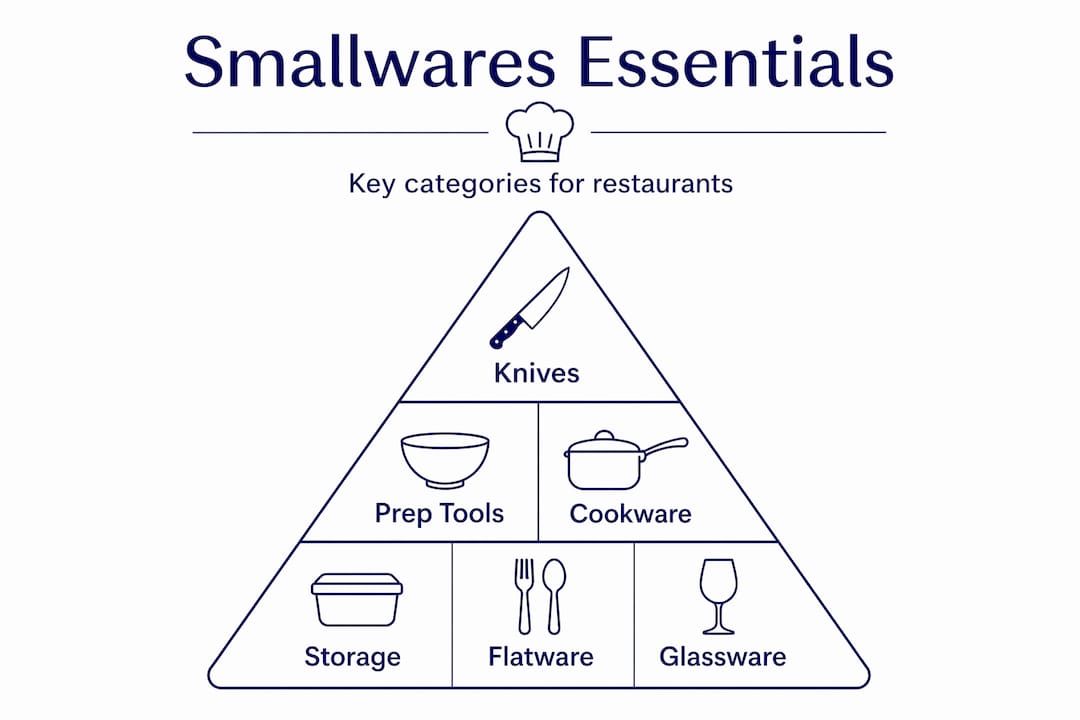
| Category | Examples | Notes |
|---|---|---|
| Prep tools | Knives, peelers, graters, mandolines | Requires NSF certification; knives are the highest priority |
| Cookware | Sauté pans, stockpots, sheet trays, hotel pans | Match gauge and material to cooking method |
| Bakeware | Sheet pans, loaf pans, cake molds, muffin tins | Aluminum or commercial steel for even heat |
| Measuring tools | Scales, measuring cups, thermometers | Precision matters for consistency and food safety |
| Storage containers | Lexan bins, lids, food storage containers | Size variety is critical for mise en place |
| Flatware and serviceware | Forks, spoons, knives, serving pieces | FOH items face heavy turnover; buy in surplus |
| Glassware | Water glasses, wine glasses, pint glasses | Factor in breakage rates; buy 25-30% above base count |
| Cleaning tools | Brushes, sanitizer buckets, squeegees | Replace regularly; cleaning tools are a safety item |
| Disposables | Napkins, condiment cups, take-out containers | High volume, purchased in bulk continuously |
Disposables deserve a separate note. New restaurant owners consistently underestimate how many disposable smallwares they will burn through each week. Napkins, single-use condiment cups, to-go containers, and disposable gloves move fast. Run out of them mid-service and you are making emergency purchases at retail prices. Calculate realistic weekly usage, build a buffer, and factor storage space into your planning before opening day.
The right smallwares selection also depends heavily on your menu and restaurant type. A high-volume sandwich counter needs different cutting boards, knives, and storage containers than a fine dining kitchen running composed plates. A bakery needs entirely different bakeware and measuring tools than a barbecue operation. Match your smallwares procurement to your actual menu demands, not a generic checklist. Understanding kitchen operations from the ground up helps frame those decisions correctly.
Knives are worth calling out specifically as the most personal and high-stakes smallwares category. The right kitchen knife selection directly impacts prep speed, crew safety, and the quality of cuts on every plate. Invest here.
Where you buy matters as much as what you buy. Smallwares procurement options range from local restaurant supply dealers to online wholesale distributors to factory-direct imports.
Local dealers offer speed and the ability to inspect before purchasing. That matters for glassware, where you need to check weight and rim quality before committing to 300 pieces. But local dealer prices carry significant markup, especially for commodity items like hotel pans, sheet trays, and storage containers.
Online wholesale distributors close some of that gap. They carry large SKU catalogs, ship fast, and offer volume pricing. The trade-off is that you cannot inspect products before they arrive. Stick to suppliers who provide clear specs, NSF certification documentation, and real return policies.
Factory-direct purchasing from verified overseas manufacturers can reduce costs by 30 to 50 percent compared to domestic distributors. The same NSF-certifiable materials are available at significantly lower prices if you vet the manufacturer properly. Request certification documents, ask for samples before placing a full order, and confirm lead times. The savings are real, but the vetting process requires time upfront.
One factor that directly affects smallwares costs right now is trade policy. Changing tariffs affect pricing volatility across imported kitchen goods, particularly items manufactured in Asia. Build cost buffers into your smallwares budget and revisit pricing quarterly.
Pro Tip: Maintain at least one backup supplier for every high-turnover smallwares category. When your primary source runs out of stock or raises prices sharply, a pre-vetted backup supplier saves you from expensive emergency buys and service disruptions.
Planning for replacements is part of the job. Unlike equipment, smallwares do not require maintenance contracts. The management model is regular inventory turnover, not service agreements. Set a monthly review cycle to assess which items are worn, missing, or undersupplied, and build replacement orders into your operating budget as a fixed line item.
I’ve worked with enough restaurant openings to see the same mistakes repeat. The most common one is bulk buying a generic tool set before the kitchen is fully operational. It feels responsible. It’s not. You end up with six specialty tools no one uses and a shortage of the hotel pans and sheet trays your team actually needs every hour.
The low-fuss philosophy that experienced chefs use is worth adopting directly: fewer items, higher quality, chosen specifically for the actual menu. A restaurant running 80 covers a night with a focused menu does not need 40 different smallwares SKUs. It needs 12 of the right ones in sufficient quantity with a backup supply plan.
What I’ve seen work consistently is auditing the kitchen in operation before placing any large smallwares order. Watch a full prep shift. Watch a service. The tools people reach for constantly, the ones they share between stations, the ones that get improvised around because they’re missing — those are your priorities. Everything else is secondary.
The other thing I’d push back on is ignoring the sourcing side entirely. Most operators spend time choosing tools and almost no time building supplier relationships. When a tariff spike hits or a supplier goes out of stock, operators without backup sources pay 40% markups on emergency orders. That is preventable. Spend one afternoon per quarter reviewing your supplier list and confirming alternatives. It is among the most cost-effective things you can do.
— John
Culinaryprofis supplies commercial-grade kitchen equipment and smallwares to foodservice operators who need reliability and product knowledge, not guesswork. The catalog covers everything from professional kitchen equipment to small prep tools, with brands built for high-volume daily use.
Whether you’re setting up a new kitchen or replacing worn-out tools, Culinaryprofis carries the depth of selection that professional operations require. Free shipping, a flexible return policy, and direct support make procurement straightforward. Products like the Dukers stock pot range pair directly with the smallwares your kitchen uses every service. If you need to spec out a full kitchen build or just fill gaps in your current inventory, the Culinaryprofis catalog is built for that.
Smallwares are hand-held, non-electrical, reusable tools used in restaurant kitchens and dining rooms. Examples include knives, cutting boards, mixing bowls, flatware, glassware, and storage containers.
Equipment includes large, fixed or electrical items like ranges, ovens, and refrigerators, which are depreciated over time. Smallwares are replaced as operating expenses with no maintenance contracts required.
The main categories include prep tools, cookware, bakeware, measuring tools, food storage containers, flatware, glassware, cleaning tools, and disposables. Each category has BOH or FOH usage priorities.
Set a monthly review cycle to identify worn or missing items, maintain backup suppliers for high-turnover categories, and budget replacements as a fixed operating cost rather than a reactive purchase.
Options include local dealers for inspection-required items, online wholesalers for range and volume pricing, and factory-direct sources for commodity items where you can reduce costs by 30 to 50 percent with proper vetting.