

Call us NOW


Restaurant equipment leasing is a financing method that converts large upfront purchase costs into fixed monthly payments, preserving working capital for daily operations. The industry term is “equipment leasing,” and it applies directly to commercial kitchen assets including gas ranges, refrigeration units, ice machines, and POS systems. For restaurant owners weighing capital allocation, leasing offers three core advantages: cash flow protection, tax deductibility of payments, and the ability to upgrade equipment without selling used assets. This article covers the financial mechanics, tax treatment under Section 162, lease accounting under ASC 842, and the lease-versus-buy decision framework that every foodservice operator needs before signing a contract.
The most direct benefit of leasing is capital preservation. Lease payments are smaller than equivalent loan payments, which means operators keep more cash on hand for inventory, labor, and unexpected repairs. That buffer is not a luxury for restaurants. It is the difference between surviving a slow quarter and closing.
Consider a new restaurant opening in Chicago. Purchasing a full commercial kitchen outright, including a six-burner range, walk-in cooler, and commercial dishwasher, can run $80,000 to $150,000. Spreading that cost across a 48-month lease at a competitive rate keeps monthly obligations predictable and protects the cash reserves needed for the first 90 days of operation. Culinaryprofis covers this capital planning challenge in detail in their restaurant startup equipment guide, which outlines how to sequence equipment purchases and leases during an opening.
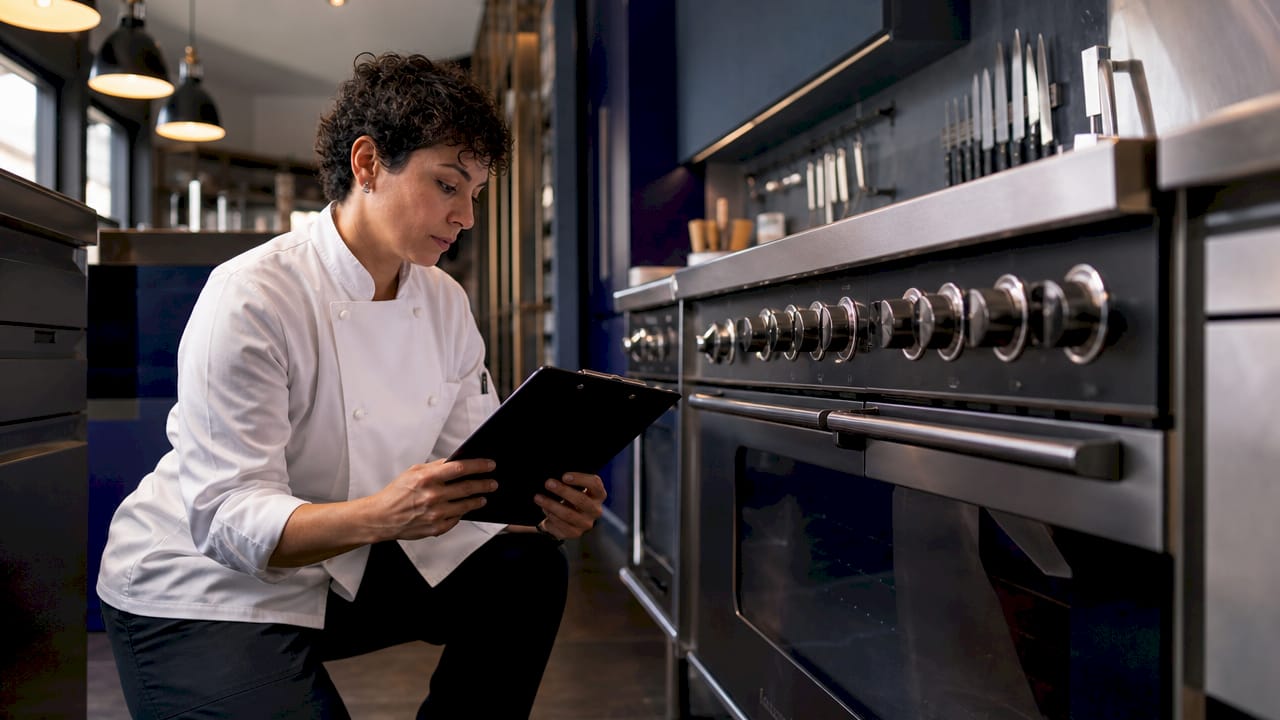
Leasing also removes the burden of selling used equipment when you need to upgrade. Upgrading leased equipment requires no secondary market transaction. You return the asset at term end and sign a new agreement. This matters most for technology-driven equipment where a two-year-old POS system or commercial ice machine may already be a generation behind.
Key cash flow benefits of leasing restaurant equipment:
Pro Tip: If you are opening a second location, lease the new kitchen equipment entirely and use your cash reserves to fund marketing and working capital. Mixing leasing and buying by location keeps your balance sheet clean and your liquidity intact.
Lease payments are generally deductible as operating expenses under Section 162 of the Internal Revenue Code. This is a straightforward deduction taken in the year the payment is made, with no depreciation schedule to manage. Purchased equipment, by contrast, requires depreciation over its useful life under MACRS, or an immediate Section 179 deduction if the asset qualifies and the business has sufficient taxable income.
The practical difference matters for cash-constrained operators. A $2,000 monthly lease payment produces a $24,000 annual deduction with zero complexity. A $90,000 purchased refrigeration unit may qualify for Section 179, but Section 179 eligibility varies by asset type, lease structure, and ownership classification for tax purposes. Consulting a CPA before choosing between leasing and buying is not optional. It is a financial planning requirement.
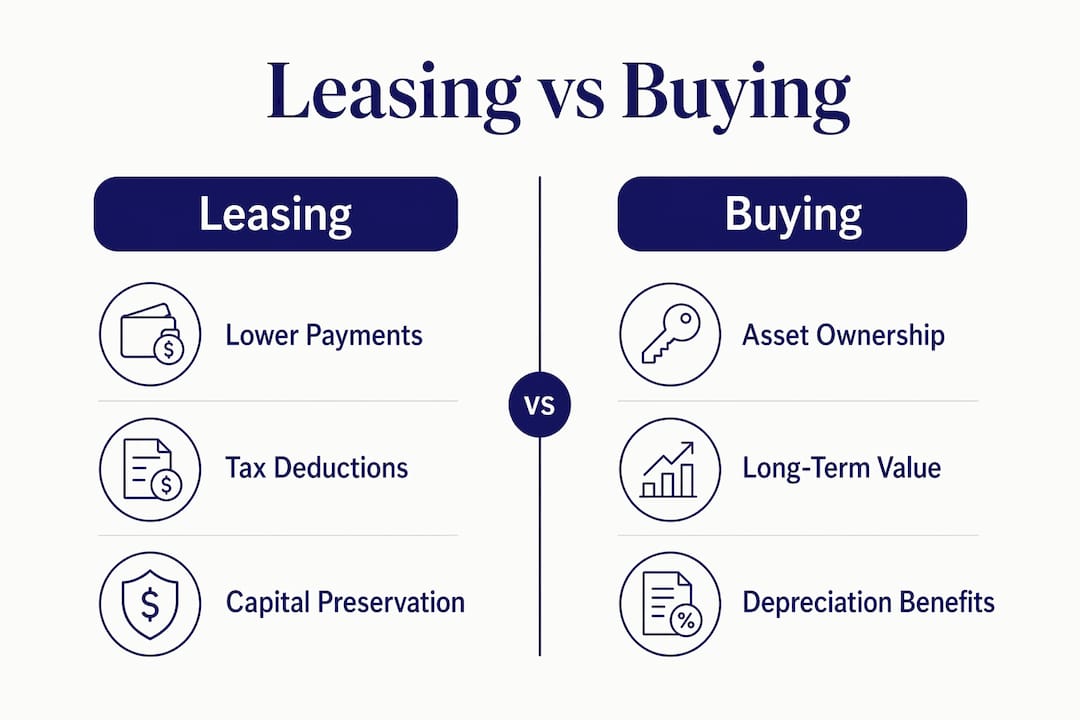
The table below compares the core tax and accounting treatment for leased versus purchased equipment:
| Factor | Leased equipment | Purchased equipment |
|---|---|---|
| Annual deduction method | Operating expense (Section 162) | Depreciation (MACRS) or Section 179 |
| Deduction timing | Immediate, per payment | Spread over asset life or accelerated |
| Balance sheet impact (ASC 842) | Right-of-use asset + lease liability | Asset + accumulated depreciation |
| Cash outlay in year one | Low (first payment only) | High (full purchase price or down payment) |
| Upgrade flexibility | High (return at term end) | Low (must sell or dispose) |
Under ASC 842, the accounting standard that governs lease reporting, most leases over 12 months require recognition of both a right-of-use asset and a corresponding lease liability on the balance sheet. Operating leases show a straight-line expense on the income statement. Finance leases front-load expenses, similar to a loan. This distinction affects your leverage ratios and how lenders assess your creditworthiness.
ASC 842 transparency has pushed many operators toward shorter lease terms, typically 24 to 36 months, to minimize the size of right-of-use assets and lease liabilities on their books. Smaller reported liabilities improve debt-to-equity ratios, which matters when applying for SBA loans or negotiating with landlords who review financial statements.
Pro Tip: Ask your CPA to model both the operating lease and finance lease treatment before signing. The income statement impact differs significantly, and the wrong classification can distort your profitability metrics for the duration of the contract.
The answer depends on two variables: how fast the equipment becomes obsolete and how long you plan to use it. Restaurant leasing decisions are driven heavily by equipment obsolescence profiles. Technology-driven assets favor leasing. Long-lived, stable-use assets favor buying.
Equipment that benefits most from leasing:
Equipment that typically makes more sense to buy:
Operators commonly buy cooking ranges and refrigeration but lease POS systems and maintenance-heavy items to match useful life and obsolescence profiles. This mixed financing approach is the standard practice among multi-unit operators and franchise groups. You can read more about the financial logic behind this in the Culinaryprofis breakdown of automated kitchen equipment benefits, which covers how technology turnover affects purchasing decisions.
Pro Tip: Build a simple spreadsheet with two columns: “useful life over 10 years” and “technology changes in under 5 years.” Every piece of equipment goes in one column. Buy the first column. Lease the second. This single framework eliminates most lease-versus-buy confusion.
Typical lease terms run 24 to 60 months with effective APRs ranging between 7% and 20%, depending on the lessor, your credit profile, and the equipment type. Understanding the structure before signing protects you from costs that do not appear in the monthly payment figure.
The three most common lease structures for restaurant equipment are:
Operating lease. You use the equipment for the lease term and return it at the end. No ownership transfer. Monthly payments are lower because the lessor retains residual value. Best for equipment you expect to upgrade.
Finance lease (capital lease). Structured like a loan. You take on the asset and liability on your balance sheet and own the equipment at term end, often for a nominal $1 buyout. Total cost is higher than an operating lease but you build equity in the asset.
Lease-to-own with fair market value option. At term end, you can purchase the equipment at its current fair market value, renew the lease, or return the asset. This structure offers flexibility but introduces residual price uncertainty. If the equipment holds its value, the buyout can be expensive.
End-of-lease economics including buyout price and early termination fees significantly impact the true cost comparison with purchasing. A 48-month lease with a $15,000 fair market value buyout on a $40,000 piece of equipment may cost more in total than buying outright, once you add all payments plus the residual. Model the total cost, not just the monthly payment.
Strategies for evaluating lease contracts before signing:
Pro Tip: Always request the effective APR in writing before signing. Lessors are not always required to disclose it upfront, but the number tells you the true cost of the financing. Compare it against SBA 7(a) loan rates or equipment financing rates from banks like Fifth Third or Regions Bank before committing.
Restaurant equipment leasing preserves working capital, delivers deductible operating expenses, and gives operators the flexibility to upgrade technology-driven assets without the burden of resale or depreciation management.
| Point | Details |
|---|---|
| Capital preservation | Lease payments are smaller than loan payments, keeping cash available for operations. |
| Tax deductibility | Lease payments deduct as operating expenses under Section 162, with no depreciation schedule. |
| ASC 842 balance sheet impact | Leases over 12 months create right-of-use assets and liabilities that affect leverage ratios. |
| Lease vs. buy by asset type | Lease technology-driven equipment; buy long-lived assets like ranges and walk-in coolers. |
| Total cost modeling | Always calculate total payments plus buyout price before comparing leasing to purchasing. |
I have reviewed hundreds of restaurant equipment decisions over the years, and the most consistent mistake operators make is treating leasing as a fallback when they cannot afford to buy. That framing is wrong. Leasing is a deliberate capital allocation tool. The operators who use it well are not cash-strapped. They are protecting liquidity on purpose.
The second most common mistake is ignoring end-of-term costs. I have seen operators sign 60-month leases on commercial espresso machines with fair market value buyouts, then face a $12,000 purchase decision at month 61 that they never planned for. The monthly payment looked fine. The total cost did not.
My practical recommendation: buy your core cooking equipment outright if you have the capital, because a commercial range from a brand like Vulcan or Garland will serve you for 20 years and the depreciation is straightforward. Lease everything that plugs into a software platform or requires a service contract. That category grows every year as kitchens add connected appliances, smart refrigeration, and automated prep tools.
ASC 842 changed the accounting, but it did not change the underlying logic. Shorter leases, cleaner balance sheets, and a mixed financing portfolio remain the right framework for most operators. The goal is not to own equipment. The goal is to run a profitable restaurant.
— John
Culinaryprofis stocks a full range of commercial-grade kitchen equipment suited for restaurant operators, catering businesses, and culinary entrepreneurs. The catalog covers gas ranges, convection ovens, walk-in refrigeration, commercial ice machines, pizza ovens, and beverage dispensers from professional-grade brands. Whether you are equipping a new location or replacing aging assets, the Culinaryprofis equipment catalog gives you access to durable, high-performance options with free shipping and expert support. Browse by category, compare specifications, and contact the team directly for guidance on financing options that fit your operation’s capital plan.
Restaurant equipment leasing is a financing arrangement where operators pay fixed monthly fees to use commercial kitchen assets over a set term, typically 24 to 60 months, without purchasing the equipment outright. At term end, options include returning, renewing, or buying the equipment.
Lease payments are generally deductible as operating expenses under Section 162 of the Internal Revenue Code. This differs from purchased equipment, which requires depreciation over its useful life or a Section 179 deduction, depending on asset type and tax classification.
Under ASC 842, most leases longer than 12 months require recognition of a right-of-use asset and lease liability on the balance sheet. This affects leverage ratios and how lenders evaluate financial statements, making lease term length a strategic accounting decision.
Lease technology-driven or maintenance-heavy equipment like POS systems and ice machines, which become obsolete quickly. Buy long-lived assets like gas ranges and walk-in coolers, which hold value and have useful lives exceeding 15 years.
A fair market value buyout gives the lessee the option to purchase leased equipment at its current market value at term end. This option introduces cost uncertainty because the buyout price depends on market conditions at the time, and it can significantly increase the total cost of the lease.