

Call us NOW


If you’ve been comparing kitchen equipment options and wondering what is rotisserie oven commercial grade versus the standard consumer version, you’re not alone. Many culinary professionals underestimate how much the two diverge in technology, output capacity, and long-term value. A commercial rotisserie oven is a purpose-built cooking system designed to handle high-volume production with consistent results, not simply a larger version of what you’d find in a home kitchen. This guide covers how these machines work, which types fit which operations, and what you need to know before purchasing.
| Point | Details |
|---|---|
| Dual-heat technology | Commercial rotisserie ovens use both radiant and convection heat to cook food evenly with minimal staff oversight. |
| Multiple oven types | Batch, floor model, and vertical rotisserie ovens each serve different volume needs and kitchen footprints. |
| Real efficiency gains | Rotating spits reduce cooking time, cut waste, and improve product consistency compared to static roasting. |
| Maintenance is non-negotiable | Regular cleaning, greasing, and professional inspections directly affect lifespan and food quality. |
| Smart ovens are the future | Multi-mode, connected ovens with remote monitoring are becoming standard in modern foodservice operations. |
Understanding commercial rotisserie oven function starts with recognizing what separates it from conventional cooking equipment. These ovens combine radiant and convection heat to cook food from multiple angles simultaneously. Radiant heat from the heating elements browns and crisps the exterior surface. Convection heat circulates hot air throughout the cooking chamber, ensuring the interior reaches proper temperature without drying out the product.
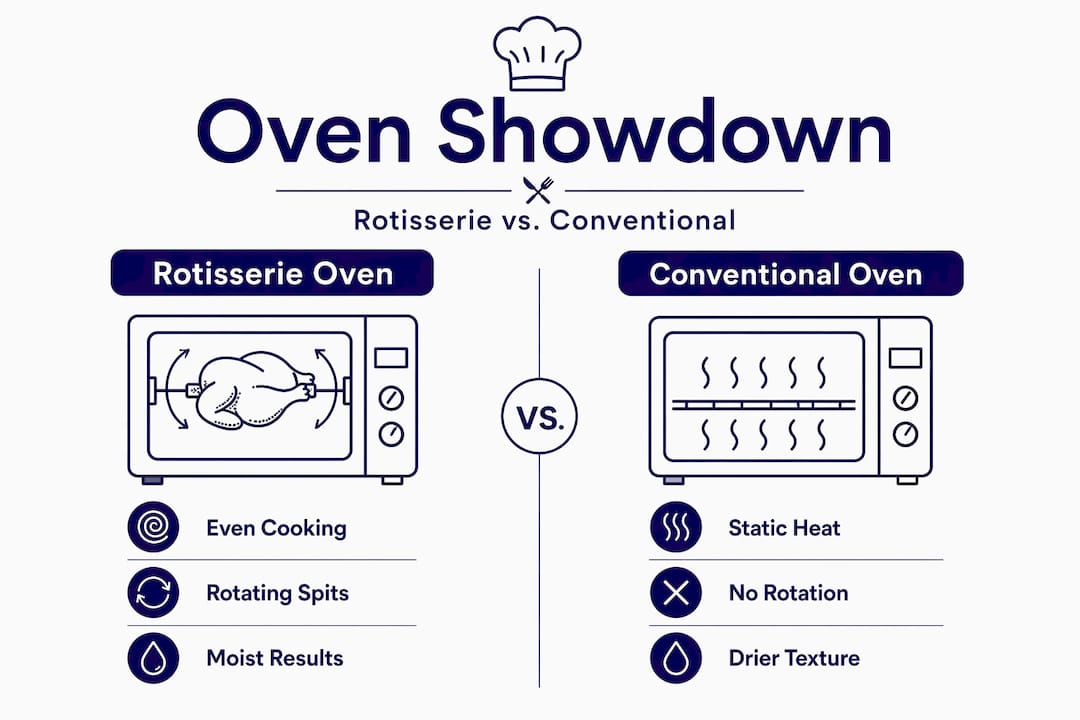
The rotating spit or basket is the defining mechanical feature. As food turns continuously during the cook cycle, each surface receives equal exposure to both heat sources. This eliminates the hot spots and uneven browning that plague static conventional ovens in high-volume settings.
How does a commercial rotisserie oven work during an actual service? Here’s what happens inside the cooking chamber:
When you compare rotisserie oven vs conventional oven performance in a busy restaurant context, the rotisserie wins on consistency. A conventional oven requires rotation by hand, careful rack positioning, and frequent monitoring. A commercial rotisserie automates all of that.
Pro Tip: Set your temperature slightly lower than you would for a static oven. The constant rotation accelerates heat transfer, so what takes 90 minutes conventionally may take 65 to 70 minutes on a spit.
The term “commercial rotisserie oven” covers several distinct configurations. Knowing which type fits your operation prevents expensive miscalculations.
Batch rotisserie ovens are built for high-volume cooking and must comply with industrial food safety regulations. They use horizontal spits that hold multiple birds or cuts simultaneously, making them the standard choice for grocery chains, large delis, and food production facilities. These models prioritize throughput above all else.
Large floor model ovens take a different approach. Double-pane glass windows and curved doors are standard features, improving heat retention while allowing customers to view the product. This makes floor models particularly effective in retail food settings, supermarket delis, and specialty butcher shops where the visual appeal of rotating product drives impulse purchases.
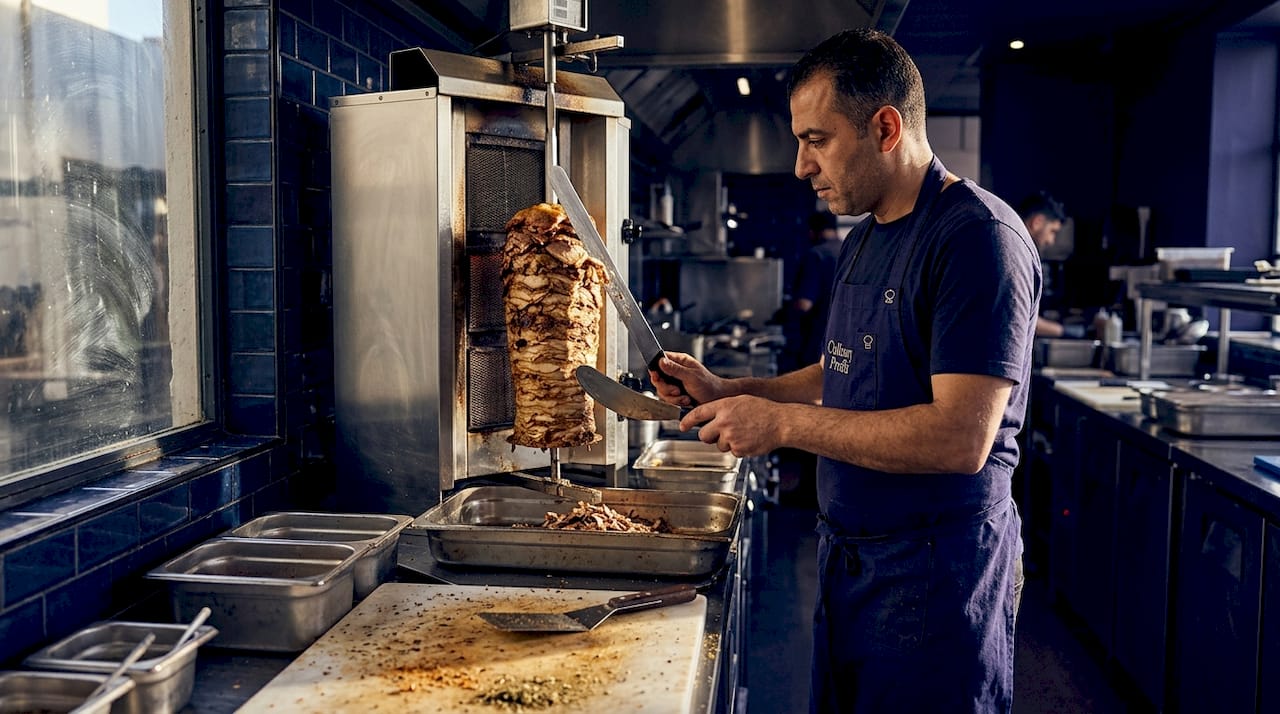
Vertical rotisserie ovens, common in shawarma and kebab operations, hold product vertically against a heating element. The cooking method differs from horizontal spit models, but the commercial-grade build standards remain the same.
Commercial rotisserie ovens also come in rack and combination configurations adapted for diverse large-scale foodservice needs. Multi-mode combination units that integrate roasting, baking, and steaming into a single platform represent the newest category.
| Oven type | Ideal operation | Capacity range | Key advantage |
|---|---|---|---|
| Batch rotisserie | Grocery, food production | 8 to 24 birds | Maximum throughput |
| Floor model | Retail deli, butcher shop | 6 to 16 birds | Customer-facing visibility |
| Vertical rotisserie | Shawarma, kebab, street food | Variable | Space efficiency |
| Combination/multi-mode | Full-service restaurant | Variable | Menu flexibility |
Pro Tip: If you’re deciding between a batch model and a floor model, ask your supplier for load capacity per cycle, not just maximum bird count. Usable capacity during peak service is often 20 to 30 percent lower than the stated maximum.
The case for investing in commercial rotisserie equipment goes well beyond the cooking results. The operational benefits of rotisserie ovens touch every part of a busy kitchen’s workflow.
Consistent product quality. Rotating mechanisms distribute heat evenly, reducing overcooking and improving texture. When the third batch of chickens out of the oven matches the first, your quality control burden drops significantly.
Reduced cooking time. Rotisserie ovens shorten cook cycles compared to traditional static roasting. Less time in the oven means faster table turns and more units sold per service period.
Energy efficiency. Advanced insulation and heating systems minimize heat loss, which reduces overall kitchen energy consumption. For an operation running multiple cook cycles per day, that efficiency compounds into real cost savings over months and years.
Labor savings. Once loaded and programmed, a commercial rotisserie requires minimal oversight. Staff can focus on prep, plating, and service while the oven operates. This is particularly valuable in the current foodservice environment where labor costs continue to rise.
Menu expansion. A single commercial rotisserie can handle whole birds, leg quarters, pork roasts, lamb, and even root vegetables. Adding rotisserie items to your menu typically commands higher price points with strong customer appeal.
Waste reduction. Consistent, even cooking means fewer overcooked or undercooked products that need to be discarded. For high-volume operators, this directly improves food cost percentages.
The best rotisserie oven for restaurants is one that delivers all six of these benefits at a capacity that matches your peak service volume. Buying too small means you’ll run the oven continuously without meeting demand. Buying oversized wastes energy and space.
Choosing the right commercial rotisserie oven requires more than comparing price tags. The factors that determine long-term value include build quality, manufacturer reputation, warranty terms, and parts availability.
Key factors to evaluate before purchasing:
Maintenance is where many operators lose money they should be protecting. Professional inspections, deep cleaning, and regular greasing are not optional if you expect the oven to perform reliably during service. Because commercial rotisseries run continuously, neglecting maintenance accelerates wear on motors, bearings, and heating elements.
Pro Tip: Build a maintenance log from day one. Record every cleaning, inspection, and repair with dates and technician notes. This documentation protects your warranty claims and helps identify recurring issues before they cause failures during service.
Common mistakes to avoid include overloading the spit beyond the rated weight limit, skipping grease replenishment on the drive mechanism, and using harsh cleaning chemicals that degrade seals and interior surfaces. Keeping a restaurant pest management plan active for your kitchen also matters here. Grease buildup from rotisserie operations attracts pests, and a systematic cleaning schedule protects both the equipment and your compliance status.
The commercial kitchen equipment sector is moving fast. If you’re investing in a rotisserie oven today, it helps to understand where the technology is heading.
Smart, connected ovens with remote monitoring and predictive maintenance are the dominant trend in commercial cooking equipment. These systems allow operators to adjust temperature profiles, monitor cook progress, and receive maintenance alerts from a phone or tablet. For multi-unit operators, centralized oversight across locations becomes possible without adding staff.
Key trends to watch:
Operators are increasingly prioritizing ovens that combine multiple cooking modes with smart connectivity to maximize kitchen flexibility and address labor shortages. A single programmable unit that can handle your rotisserie program at lunch and switch to bake mode for dinner service represents a real return on a higher capital investment.
The industrial rotisserie oven features of tomorrow, including real-time diagnostics and automated temperature adjustment, will separate operations that scale efficiently from those that struggle with consistency.
I’ve seen operators buy the cheapest rotisserie unit available and spend twice the purchase price in repairs within two years. The pattern is consistent. Investing in durable, high-performance machines pays off through reliability, consistent output, and lower maintenance costs over time. Cheaper options rarely deliver the scalability you need when volume grows.
What I’ve learned from watching kitchens operate under pressure is that the oven you trust is the oven you use correctly. When staff don’t trust a machine’s consistency, they start opening doors mid-cycle, overriding timers, and compensating in ways that undermine the entire point of the equipment.
My take on rotisserie cooking methods is that the technology works when you let it work. Program your profiles, respect the maintenance schedule, and don’t fight the equipment. Pair a quality gas convection oven alongside your rotisserie for menu flexibility, and you have a foundation that handles most of what a full-service kitchen demands.
The operators who get the most from commercial rotisserie equipment are the ones who treat it as a system, not a single appliance. That means consistent staff training, documented protocols, and a willingness to invest in quality from the start.
— John
Culinaryprofis carries professional-grade commercial kitchen equipment built for the demands of restaurant kitchens, catering operations, and specialty food businesses. If you’re ready to add rotisserie capability to your operation or upgrade existing equipment, the Culinaryprofis catalog has options that match your volume requirements and kitchen footprint. Browse the full commercial kitchen equipment selection to compare specifications, check availability, and get direct support from a team that understands foodservice operations. For operations that also need cold storage alongside hot cooking equipment, the pizza prep station and reach-in refrigeration options complement rotisserie workflows without adding complexity to your kitchen setup. Call us now for product questions or expert guidance on selecting the right unit for your specific operation.
A commercial rotisserie oven cooks whole proteins and large cuts using rotating spits combined with radiant and convection heat, producing consistent, evenly browned results at high volumes for restaurants, delis, and food production facilities.
A commercial rotisserie oven rotates food continuously for even heat distribution, while a conventional oven uses static heat that requires manual product repositioning. The rotisserie method reduces cook time and improves consistency with less staff involvement.
The best rotisserie oven for restaurants depends on volume and menu. Batch models handle high throughput for delis and grocery operations, while multi-mode combination ovens offer the flexibility most full-service restaurants need for varied menus.
Professional inspections and deep cleaning should occur regularly based on usage frequency, with most high-volume operations scheduling service quarterly. Daily cleaning of interior surfaces and weekly greasing of the drive mechanism protect performance between professional visits.
For multi-unit operators or kitchens managing labor shortages, smart ovens with remote monitoring and programmable profiles deliver measurable efficiency gains that justify the higher upfront investment through reduced labor costs and consistent output.