
Must-Have Equipment for Opening a New Restaurant

Must-have equipment for opening a new restaurant is defined as the set of commercial-grade appliances, prep tools, sanitation systems, and safety infrastructure required to operate a kitchen safely, efficiently, and in compliance with local health and fire codes. The industry term for this planning process is commercial kitchen outfitting, and it goes far beyond assembling a shopping list. Equipment selection must reflect kitchen workflow and service bottlenecks to ensure food safety and speed. The categories that matter most are cooking equipment, refrigeration, food prep tools, sanitation stations, and fire suppression systems. Get these right from the start, and your opening week runs on schedule. Get them wrong, and no amount of marketing fixes the gap.
1. Must-have equipment: cooking and heating appliances
The cooking suite is the operational core of any restaurant kitchen, and matching equipment to your menu and service volume is the first decision you make. A full-service American bistro needs a six-burner commercial range, a convection oven, a salamander broiler, and a flat-top griddle. A quick-service burger concept prioritizes a high-output fryer bank and a char broiler over a full oven suite. The equipment list follows the menu, not the other way around.
Key cooking appliances by restaurant type:
- Commercial ranges: Heavy-duty gas ranges from brands like Vulcan or Garland deliver the BTU output needed for high-volume sauté stations. Look for cast-iron grates, easy-access burner bowls, and NSF certification.
- Convection ovens: Combi ovens from Rational or Alto-Shaam handle roasting, steaming, and holding in one unit, which reduces footprint and labor.
- Fryers: Countertop fryers work for low-volume menus; floor-model fryers with built-in filtration systems are necessary for any concept frying more than 50 covers per service.
- Griddles and salamanders: Flat-top griddles are non-negotiable for breakfast concepts and burger operations. Salamanders finish proteins and melt cheese without tying up oven space.
- Hot holding units: Opening week bottlenecks frequently come from undersized hot holding units. Size these to your projected peak covers, not your average.
Pro Tip: Choose cooking equipment with removable components and smooth stainless steel surfaces. Cleaning time per shift drops significantly, and NSF-certified designs satisfy health inspectors without additional modifications.
2. How to choose the right refrigeration for your restaurant
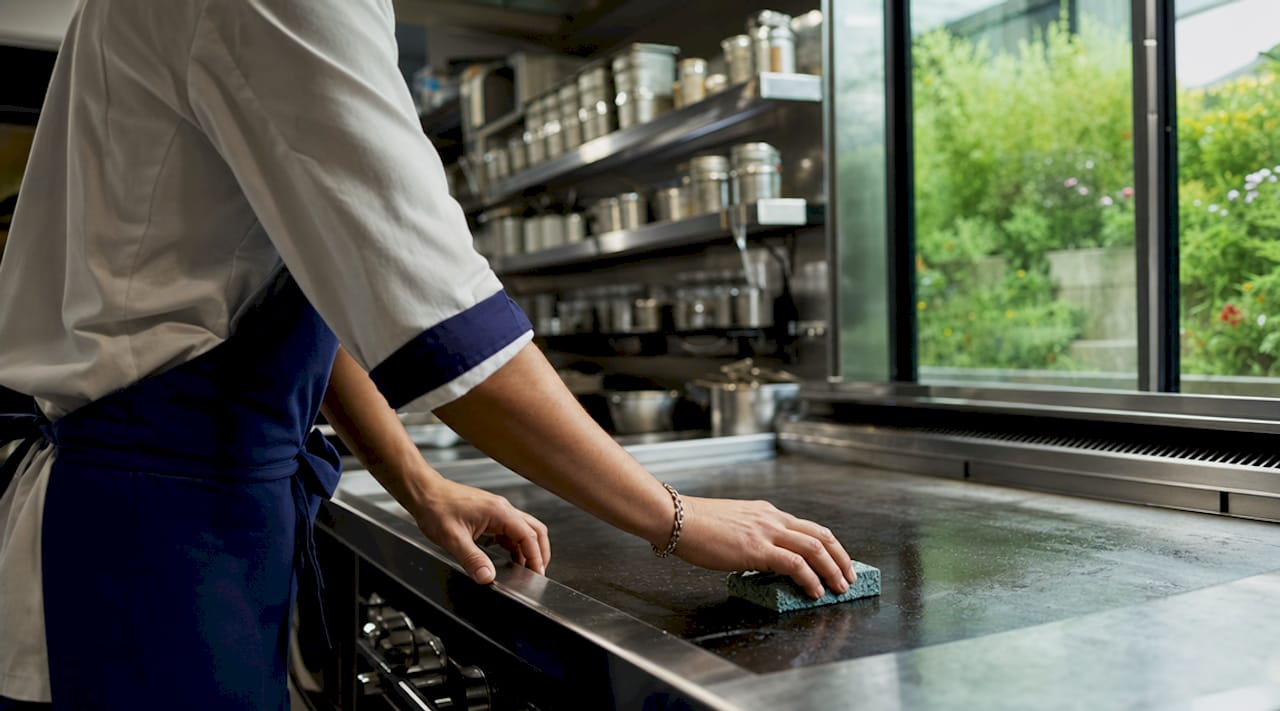
Refrigeration is the most undersized category in most new restaurant openings, and the consequences show up immediately during peak service. Insufficient refrigerated reach-in capacity slows service pace and degrades guest experience when equipment is mismatched to demand and layout. The rule is simple: size refrigeration to your busiest projected service, then add 20 percent buffer.
The main refrigeration types every new restaurant needs:
- Walk-in coolers and freezers: Walk-ins from True Manufacturing or Norlake provide bulk cold storage for deliveries and prep stock. Position them near the receiving dock and prep area to minimize travel distance.
- Reach-in refrigerators: Two-door reach-ins placed at the cook line give chefs immediate access to proteins, dairy, and prepped ingredients without walking to the walk-in during service.
- Undercounter refrigeration units: These fit beneath prep tables and keep mise en place cold at the station level. Brands like Turbo Air offer models with fast temperature recovery after frequent door openings.
- Bar refrigeration: Back-bar coolers and keg refrigerators are necessary dining equipment for any concept with a beverage program.
Placement matters as much as capacity. Refrigeration units placed far from prep and cooking stations force staff to make unnecessary trips, which slows service and increases the risk of temperature abuse. A well-designed kitchen layout places cold storage within three steps of the primary prep and cook zones.
Pro Tip: Specify units with digital temperature monitoring and alarm systems. Health inspectors require temperature logs, and digital systems generate them automatically, removing one compliance task from your opening checklist.
3. What food prep tools and stations a new restaurant needs
Food preparation equipment defines how fast and safely your kitchen converts raw ingredients into plated dishes. Food prep zoning is critical: raw storage, washing, cutting, cooking, cooling, and finished-product holding must be separated to prevent cross-contamination. This separation is not optional. It is a HACCP requirement enforced during health inspections.
Core prep tools for a new restaurant kitchen include:
- Commercial food processors: Brands like Robot Coupe produce processors that handle bulk slicing, dicing, and pureeing in minutes. A 3-quart bowl processor handles most prep volumes for restaurants under 150 covers.
- Planetary mixers: A 20-quart Hobart mixer handles dough, batters, and forcemeats for most mid-volume kitchens. Bakery-forward concepts need 60-quart floor models.
- Deli slicers: A stainless steel deli slicer handles charcuterie, deli meats, and cheese with consistent thickness. This is a standard tool in any kitchen with a sandwich program or charcuterie board.
- Immersion blenders: Commercial immersion blenders from Waring or Vitamix process soups, sauces, and emulsions directly in the pot, eliminating the transfer step.
- Prep tables and cutting boards: NSF-certified stainless steel prep tables with undershelves and color-coded cutting boards by protein type are the foundation of a HACCP-compliant prep zone.
- Mobile racks and ingredient bins: Labeled ingredient bins and mobile sheet pan racks keep prep organized and allow stations to be restocked quickly during service.
Reviewing HACCP compliance standards before finalizing your prep station layout prevents costly redesigns after your health inspection.
4. Sanitation and dishwashing equipment required by health codes
Sanitation equipment is not a back-of-house afterthought. It is a legal requirement, and gaps in this category are the most common reason new restaurants fail their first health inspection. The three-compartment sink is the centerpiece of any commercial dishwashing setup, handling wash, rinse, and sanitize cycles for pots, pans, and utensils.
Required sanitation equipment for new restaurants:
- Three-compartment sinks: NSF-certified, properly sized for your largest pots and sheet pans. Plumbing must include indirect drains and a grease trap where required by local code.
- Hand sinks: Dedicated hand sinks are required at every food prep and cooking station. They cannot be shared with prep or dishwashing sinks.
- Commercial dishwashers: High-temperature or chemical sanitizing dishwashers from Hobart or Jackson WWS handle plate and glassware volume for full-service restaurants. Undercounter models work for bars and low-volume operations.
- Sanitizer dispensing stations: Wall-mounted sanitizer dispensers at each station keep sanitizer solution accessible for wiping surfaces between tasks.
- Waste management systems: Foot-pedal trash cans, grease collection containers, and recycling bins keep the floor clear and reduce contamination risk.
Dishwashing sink draining must occur at maximum every four hours during active use, with additional draining when switching tasks or when water is visibly contaminated. This is an FDA Food Code procedural requirement, not just a best practice. Missing it during an inspection results in a critical violation.
Pro Tip: Schedule a dedicated sanitation walkthrough with your health inspector before your soft opening. Inspectors will identify fixture placement issues before they become violations on your official inspection record.
5. Fire safety compliance: hood and suppression systems
Fire suppression is the most regulated category in commercial kitchen outfitting, and new restaurant opening timelines of three to six months are often driven by the plan review process for ventilation, suppression, and plumbing systems. Getting this wrong delays your certificate of occupancy.
What NFPA 96 requires
NFPA 96 mandates pre-engineered wet chemical fire suppression system inspections every six months by certified professionals, including manual pull tests to verify automatic shutoff of gas and electric fuel supply on activation. Hood cleaning frequency is separate and depends on cooking volume:
- Monthly: Solid fuel cooking operations (wood-fired ovens, charcoal grills)
- Quarterly: High-volume operations running 12 or more hours per day
- Semi-annually: Moderate-volume operations with standard cooking loads
- Annually: Low-volume operations like churches, seasonal venues, or day camps
A Class K extinguisher must be placed within 30 feet of each commercial cooking appliance, with monthly visual checks and annual service inspections. Extinguisher tags older than 12 months result in a failed fire marshal review and possible occupancy suspension. This is a detail that catches many new operators off guard.
Common compliance failure: Mixing suppression system inspections and hood cleaning schedules is the most frequent operator error. These are two separate maintenance requirements with different cadences. Document them on separate maintenance logs and assign a responsible staff member to each.
| Requirement | Frequency | Responsible party |
|---|---|---|
| Suppression system inspection | Every 6 months | Certified fire suppression contractor |
| Hood cleaning | Monthly to annually (volume-based) | Certified hood cleaning company |
| Class K extinguisher visual check | Monthly | Designated kitchen manager |
| Class K extinguisher service | Annually | Licensed fire equipment service provider |
Key takeaways
A successful restaurant opening requires cooking equipment, refrigeration, prep tools, sanitation stations, and fire suppression systems selected and positioned around your actual service workflow, not a generic checklist.
| Point | Details |
|---|---|
| Match equipment to your menu | Select cooking appliances based on your specific concept and projected peak covers, not generic lists. |
| Size refrigeration with buffer | Add 20 percent capacity above your peak demand estimate to prevent service bottlenecks. |
| Zone prep stations by HACCP rules | Separate raw, cooked, and produce areas physically to pass health inspections and prevent contamination. |
| Know your sanitation code requirements | Three-compartment sinks, dedicated hand sinks, and proper drain schedules are legal requirements, not suggestions. |
| Track fire safety on separate logs | Suppression inspections and hood cleaning have different schedules. Document them independently to avoid compliance failures. |
What I have learned about equipment planning the hard way
I have reviewed enough restaurant opening checklists to know that most new operators treat equipment procurement as a purchasing exercise. They build a list, get quotes, and place orders. What they miss is that equipment selection is workflow design. Every piece of equipment either supports or interrupts the path from raw ingredient to plated dish.
The detail I see overlooked most often is backup smallwares. A restaurant can have a perfect cooking suite and still grind to a halt on opening night because there are not enough hotel pans, sheet trays, or tongs to run two stations simultaneously. Mobile racks are another gap. Kitchens without adequate mobile racking create clutter that slows prep and creates safety hazards.
My strongest recommendation is to run a live simulation before your soft opening. Power on every piece of equipment, stock the walk-in, and walk through a full service in real time. This exercise catches placement problems, missing tools, and ventilation issues that no floor plan review will reveal. The restaurants that open smoothly are the ones that treat their opening checklist as an operational readiness framework, not a shopping receipt.
One more thing: do not skip the zoning review. Poor separation between raw protein handling and produce prep is the single most common reason new restaurants receive critical violations on their first health inspection. Fix it on paper before you fix it in tile and stainless steel.
— John
Outfit your restaurant kitchen with Culinaryprofis
Culinaryprofis carries the commercial-grade equipment new restaurant owners need, from gas ranges and convection ovens to reach-in refrigerators, prep tables, and sanitation stations. Every product in the catalog is selected for professional performance and durability, with brands trusted by working kitchens across the foodservice industry. Whether you are outfitting a full-service dining room or a fast-casual concept, the Culinaryprofis equipment catalog covers every category on your opening checklist. Free shipping, a flexible return policy, and direct expert support make the procurement process straightforward. For food prep stations specifically, the Pro-Cut stainless steel deli slicer is a reliable starting point for any kitchen running a sandwich or charcuterie program.
FAQ
What equipment is on every restaurant opening checklist?
Every opening checklist includes a commercial range or oven, reach-in and walk-in refrigeration, a three-compartment sink, a commercial dishwasher, dedicated hand sinks, and a NFPA 96-compliant fire suppression system with a Class K extinguisher at each cooking station.
How much refrigeration does a new restaurant need?
Size refrigeration to your busiest projected service and add a 20 percent buffer. Walk-in coolers handle bulk storage, reach-in units serve the cook line, and undercounter refrigerators keep station-level mise en place cold during service.
What fire suppression inspections are required for a new restaurant?
NFPA 96 requires certified fire suppression system inspections every six months, including manual pull tests. Hood cleaning frequency ranges from monthly for solid fuel operations to annually for low-volume kitchens, and these two schedules must be tracked separately.
What sanitation equipment does a health inspector look for?
Health inspectors verify a three-compartment sink sized for your largest cookware, dedicated hand sinks at every prep and cooking station, a commercial dishwasher with proper sanitizing capability, and documented sink draining procedures compliant with FDA Food Code requirements.
Do I need a deli slicer for my restaurant kitchen?
Any restaurant running a sandwich program, charcuterie board, or deli-style menu needs a commercial slicer. A stainless steel model with NSF certification handles consistent slicing of meats and cheeses and meets sanitation standards required for food contact surfaces.