Ankarsrum vs KitchenAid: Which Stand Mixer Is Better for Serious Bakers?

Quick answer: KitchenAid's planetary mixer is the better all-rounder for cakes, cookies, and everyday baking. Ankarsrum's rotating-bowl design is the better choice if you bake bread, pizza, or bagel dough often — its 7-liter (7.4 qt) bowl and low-stress mixing action handle heavy, dense dough that can strain a planetary mixer's motor over time.

Mixing System: Planetary vs. Rotating Bowl
KitchenAid uses a planetary mixing system: the attachment spins on its own axis while also orbiting around a fixed bowl, similar to how planets orbit the sun. It's an efficient, well-understood design that works well for batters, frostings, and light-to-medium dough.
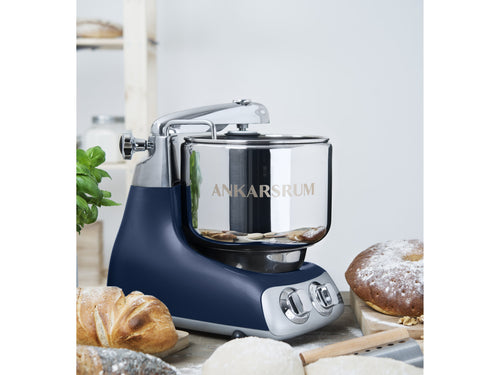
Ankarsrum takes the opposite approach: the bowl itself rotates while the roller and scraper stay in place, kneading the dough against the bowl wall the way hand-kneading works. This design is borrowed from commercial bakery mixers and puts far less mechanical strain on the motor when the dough gets heavy and stiff.
Capacity and Batch Size
- KitchenAid Artisan: 5 qt bowl (4.7 L) — roughly 4-5 lb (1.8-2.3 kg) of bread dough per batch
- KitchenAid Professional / Bowl-Lift: 6 qt bowl (5.7 L) — roughly 6-7 lb (2.7-3.2 kg) of bread dough per batch
- Ankarsrum Assistent Original: 7.4 qt bowl (7 L) — up to 11 lb (5 kg) of bread dough per batch
If you regularly bake more than a couple loaves at once, or run a small home bakery, the Ankarsrum's bowl handles noticeably larger batches without maxing out the motor.
Motor and Heavy Dough Performance
KitchenAid's owner's manuals generally recommend keeping the mixer at a lower speed setting when kneading bread dough with the flat beater or dough hook, specifically to protect the motor from the extra load. That's a reasonable precaution for a motor-driven attachment working against a fixed bowl — but it also means heavy, frequent bread baking is exactly the scenario that stresses a planetary mixer most.
Ankarsrum's Assistent Original runs a 600-watt motor built for continuous duty, and because the bowl does the work of moving the dough rather than forcing an attachment through it, dense doughs (bagels, sourdough, pizza) don't cause the same strain.
Warranty and Durability
- KitchenAid: 1-year limited warranty (varies slightly by model and retailer)
- Ankarsrum Assistent Original: 7-year warranty on the machine base
Ankarsrum has been hand-assembled in the town of Ankarsrum, Sweden since 1969, with every unit individually tested before it leaves the factory — the longer warranty reflects a machine built for decades of continuous use, not just light occasional baking.
Attachments
KitchenAid has the larger attachment ecosystem overall, with pasta rollers, meat grinders, vegetable slicers, grain mills, and ice cream makers widely available. Ankarsrum's attachment lineup is smaller but purpose-built and durable — including a meat mincer, pasta roller, citrus juicer, vegetable slicer, blender, and its own ice cream maker attachment, all designed to run off the same 600-watt motor.
Price
A KitchenAid Artisan typically runs $400-480; the Professional/Bowl-Lift models run higher. The Ankarsrum Assistent Original retails at $799.95. It costs more up front, but bakers who put real hours on their mixer tend to treat it as a long-term investment rather than an appliance they'll replace in a few years.
What Independent Reviewers Say
America's Test Kitchen has featured the Ankarsrum in its stand mixer coverage, testing it specifically against planetary mixers like KitchenAid on heavy dough performance. It's worth watching independent, hands-on comparisons like that alongside a written guide — video shows the rotating-bowl action in a way text can't.
Frequently Asked Questions
Is Ankarsrum really better than KitchenAid?
It depends what you bake. For cakes, cookies, and everyday mixing, KitchenAid's planetary design is easier to use and more affordable. For bread, pizza, and bagel dough — especially in large batches — the Ankarsrum's rotating bowl handles the load with less strain on the motor.
Can KitchenAid handle bread dough at all?
Yes, in moderate amounts. Most KitchenAid manuals recommend a lower speed for dough and caution against extended heavy-dough kneading, since the motor and gearbox weren't primarily designed around that load.
Why is the Ankarsrum bowl considered better for kneading?
Because the bowl rotates and the roller stays fixed, the dough gets worked the way hand-kneading does — folded and stretched against the bowl wall — rather than a hook forcing its way through a static mass of dough.
Which one lasts longer?
Ankarsrum's 7-year warranty on the machine base, versus KitchenAid's 1-year limited warranty, reflects the difference in how each is built for sustained heavy use. Many Ankarsrum owners report machines still running well after 20+ years.
Is the Ankarsrum worth the higher price?
If you bake bread, pizza, or large batches regularly, most bakers find the larger capacity and lower motor strain worth the difference. If you mostly make cakes, cookies, or light batters occasionally, a KitchenAid covers that well for less money.
Shop Ankarsrum at CulinaryProfis
We're an authorized Ankarsrum retailer with genuine products and full manufacturer warranty support.
Browse Ankarsrum mixers and accessories | Questions about which model fits your baking? Talk with CulinaryProfis at culinaryprofis.com | (914) 278-1007