Sourdough Baguettes in a Sunmix EVO6: Step-by-Step Recipe

Can you make sourdough baguettes in a Sunmix EVO6? Yes. A spiral mixer can develop this moderately hydrated dough evenly while giving you close control over mixing. The key is to begin slowly, add the reserved water gradually, and stop when the dough is smooth, elastic, and able to stretch thinly without tearing.
This recipe makes three baguettes with a crisp crust and an open, pleasantly chewy crumb. It uses a 100%-hydration sourdough starter and works out to approximately 70% total hydration.

What is the formula for these sourdough baguettes?
The dough contains 500 grams of bread flour, 200 grams of active starter, 320 grams of water, and 15 grams of salt. With a 100%-hydration starter, the complete formula contains 600 grams of flour and 420 grams of water.
| Ingredient | Amount | Notes |
|---|---|---|
| Strong white bread flour | 500 g | Use flour with enough strength for a long fermentation. |
| Active sourdough starter | 200 g | Assumes a starter fed with equal weights flour and water. |
| Water | 320 g | Begin with 300 g and reserve 20 g for later. |
| Fine sea salt | 15 g | Add after the dough begins to develop. |
Total dough weight: approximately 1,035 grams
Yield: three baguettes of approximately 345 grams each
How do you mix sourdough baguette dough in a Sunmix EVO6?
Start at the lowest speed with the flour, starter, and most of the water. Once the ingredients form a rough, cohesive dough, add the salt and reserved water gradually. Increase the speed only after the dough is moving freely and always stay within the instructions for your exact mixer.
- Load the bowl. Add the flour, active starter, and 300 grams of water.
- Begin slowly. Mix at the lowest setting until no dry flour remains and the dough forms a rough, cohesive mass.
- Pause and assess. If needed, let the dough rest briefly so the flour can absorb the water.
- Add salt and reserved water. Add the salt, followed by the remaining 20 grams of water in small additions. Let each addition absorb before adding more.
- Develop the dough. Continue mixing only until the dough looks smoother, feels elastic, and stretches thinly without tearing easily. Stop if the dough stops circulating or the mixer sounds strained.
Chef's note: Dough development matters more than a fixed mixing time. Flour, starter activity, water temperature, room temperature, and batch size can all change how quickly the dough comes together.
How long should sourdough baguette dough ferment?
Bulk fermentation usually takes about four to six hours at a moderate room temperature, but the dough—not the clock—decides when it is ready. Look for visible aeration, a smoother surface, and a noticeable increase in volume.
- Bulk ferment. Transfer the dough to a lightly covered container. Give it two or three gentle folds during the first half of bulk fermentation.
- Divide. Turn out the dough and divide it into three pieces of approximately 345 grams.
- Pre-shape. Form each piece into a loose cylinder. Cover and rest for 20 to 30 minutes.
- Shape. Shape each piece into a baguette without pressing out all the fermentation gas.
- Choose the final proof. Proof at room temperature until the dough responds slowly to a light fingertip press, or refrigerate the shaped baguettes for 8 to 14 hours for a longer cold proof.
How do you bake sourdough baguettes with a crisp crust?
Bake the baguettes on a thoroughly preheated steel or stone and use steam at the beginning. Steam keeps the surface flexible during oven spring; removing it later allows the crust to become crisp and deeply colored.
- Place a baking steel or stone in the oven and preheat to 465°F (240°C) for at least 45 minutes.
- Score each baguette with several shallow, overlapping cuts.
- Load the baguettes and add steam using a safe method appropriate for your oven.
- Bake with steam for approximately 10 minutes.
- Vent or remove the steam source carefully, then continue baking for approximately 12 to 16 minutes, until the crust is deep golden brown.
- Cool completely on a rack before slicing. The crumb continues setting after the bread leaves the oven.
Why is a spiral mixer useful for baguette dough?
A spiral mixer develops dough by rotating the bowl while the spiral tool works through the dough. For bread and pizza dough, this gives the baker controlled gluten development and an efficient way to mix repeatable batches. The best results still depend on using the correct batch size, speed, hydration range, and operating instructions for the exact model.
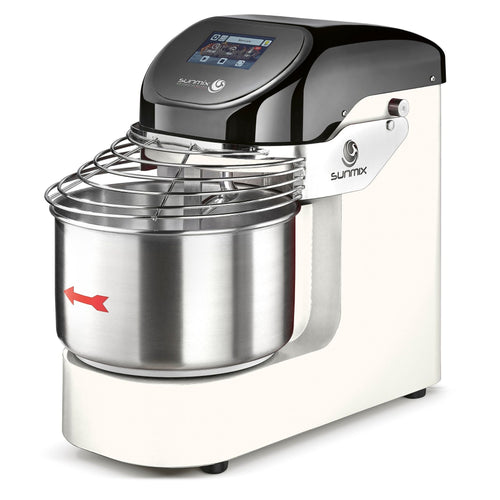
The Sunmix EVO6 is a compact spiral mixer for serious home bakers and small professional applications. Before buying, confirm that its capacity and electrical configuration match the way you plan to use it.
Frequently asked questions
What hydration is this sourdough baguette recipe?
It is approximately 70% hydration when the flour and water in the 100%-hydration starter are included.
How active should the sourdough starter be?
Use a starter that has risen strongly after feeding, shows plenty of bubbles, and smells pleasantly fermented. A weak or recently refrigerated starter can make the timetable much longer.
Why is my baguette dough sticky?
Moderately hydrated dough should feel tacky, but excessive stickiness can come from weak flour, incomplete gluten development, over-fermentation, or inaccurate weighing. Wet your hands lightly for folds instead of adding large amounts of extra flour.
Why did my baguettes spread sideways?
The most common causes are weak shaping tension, over-proofing, insufficient dough strength, or an oven surface that was not fully preheated. A supported couche can also help the baguettes retain their shape during proofing.
Can I proof the shaped baguettes overnight?
Yes. Cover the shaped baguettes so they do not dry out and refrigerate them for approximately 8 to 14 hours. Bake them cold if they appear properly proofed; otherwise, let them finish briefly at room temperature.
Do I need a Sunmix EVO6 to use this recipe?
No. The formula can be mixed by hand or with another suitable dough mixer. Adjust the method to your equipment and never exceed the manufacturer's capacity or operating limits.
Need help choosing a spiral mixer?
Tell CulinaryProfis what you mix, your usual batch size, hydration range, and how often you produce. We will help compare models and tell you plainly when a smaller or different mixer is the better fit.
Request a mixer recommendation or commercial quote
Call (914) 278-1007 or email john@culinaryprofis.com.