
How to Plan Outdoor Kitchen Space for Premium Cooking

Finding the perfect balance between luxury and functionality is the challenge every high-end home chef faces when planning an outdoor kitchen in North America. Creating a seamless cooking and dining space goes far beyond selecting appliances; it means aligning your culinary ambitions with design choices that elevate every outdoor meal. This guide spotlights professional-grade cooking equipment and expert kitchen planning so you can build an outdoor kitchen that delivers exceptional performance and unforgettable experiences.
Table of Contents
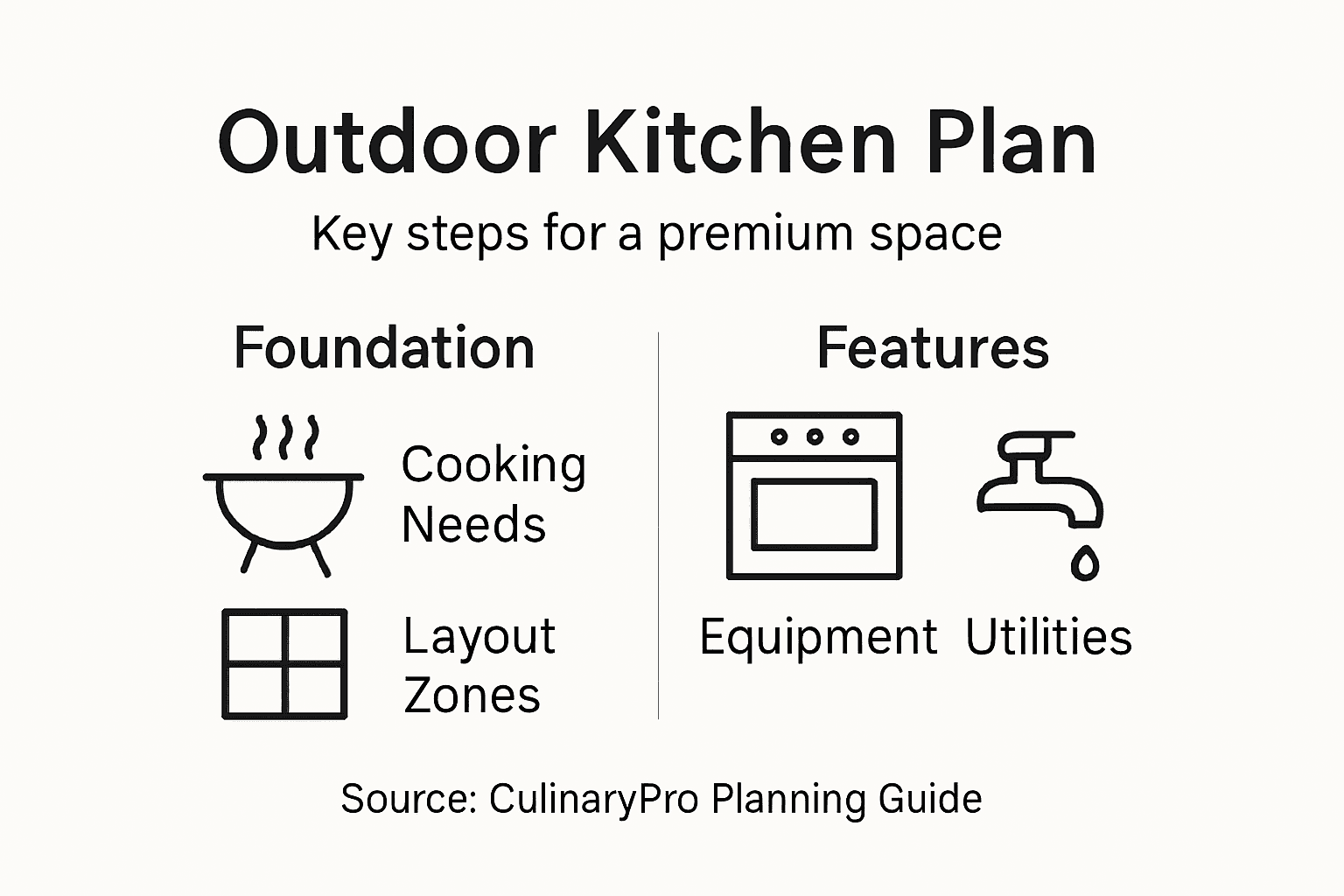
- Step 1: Assess Functional Needs And Cooking Goals
- Step 2: Define Outdoor Kitchen Layout And Zones
- Step 3: Select Premium Outdoor Cooking Equipment
- Step 4: Integrate Storage, Utilities, And Safety Features
- Step 5: Verify Design And Optimize For Usability
Quick Summary
| Key Point | Explanation |
|---|---|
| 1. Define Cooking Goals Clearly | Identify how you plan to use your outdoor kitchen, considering your cooking style and the number of guests to inform design choices. |
| 2. Plan Functional Kitchen Zones | Establish distinct areas for cooking, preparation, cleaning, storage, and socializing to enhance workflow and user experience. |
| 3. Invest in Quality Equipment | Select durable, versatile outdoor cooking tools that elevate your culinary capabilities and match your style for exceptional dining experiences. |
| 4. Integrate Safety Features | Implement safety elements like fire extinguishers and non-slip flooring to protect users while ensuring seamless kitchen functionality. |
| 5. Optimize for Usability | Use principles of usability design to ensure your kitchen layout is intuitive, enhancing both efficiency and comfort during cooking tasks. |
Step 1: Assess Functional Needs and Cooking Goals
Planning an outdoor kitchen requires understanding your unique culinary vision and functional requirements. This critical first step will help you design a space that transforms your backyard into a professional-grade cooking environment tailored precisely to your cooking style and entertainment needs.
Start by mapping out your specific cooking goals and considering how you intend to use the outdoor kitchen. Are you a passionate griller who loves hosting weekend barbecues? Do you want to create gourmet meals for large family gatherings? Or are you seeking a versatile cooking space that supports multiple cuisine styles? Each goal will dramatically influence your design choices. For comprehensive food safety planning, consider consulting the FDA's Food Safety Plan Builder to ensure your outdoor kitchen meets professional standards.
To crystallize your vision, create a detailed list of your cooking priorities:
- Preferred cooking techniques (grilling, smoking, roasting)
- Typical number of people you'll cook for
- Frequency of outdoor cooking
- Types of cuisine you typically prepare
- Special equipment requirements
- Budget constraints
By systematically evaluating these factors, you'll develop a clear roadmap for your outdoor kitchen design. Remember that functionality trumps aesthetics - your space should support your cooking workflow seamlessly.
Pro tip: Photograph your current indoor kitchen workflow to help identify pain points and design opportunities for your outdoor cooking space.
Step 2: Define Outdoor Kitchen Layout and Zones
Designing the perfect outdoor kitchen layout requires strategic planning that balances functionality, comfort, and culinary creativity. Your goal is to create a seamless cooking environment that maximizes efficiency and enhances your outdoor dining experience.
Begin by understanding how climate zone considerations will impact your kitchen design. Different geographic regions demand unique approaches to outdoor space planning. Your layout should incorporate distinct functional zones that support smooth cooking workflows and social interactions.
Consider establishing these critical kitchen zones:
- Cooking Zone: Primary area for grills, smokers, and primary cooking equipment
- Preparation Zone: Countertop space for ingredient handling and initial food prep
- Storage Zone: Area for utensils, cooking tools, and ingredient management
- Cleaning Zone: Sink and waste management area
- Social Zone: Seating and entertainment space adjacent to cooking areas
- Utility Zone: Space for refrigeration, additional appliances, and technical connections
By strategically mapping these zones, you'll create a professional-grade outdoor kitchen that supports multiple cooking styles and entertainment needs. Ensure smooth transitions between zones and consider traffic flow to prevent congestion during meal preparation.
This table summarizes how different outdoor kitchen zones enhance the cooking and entertainment experience.
| Zone Name | Main Purpose | Business Impact | Typical Features |
|---|---|---|---|
| Cooking Zone | Food preparation | Streamlines meal production | Grills, smokers, heat sources |
| Preparation Zone | Ingredient handling | Reduces prep errors | Countertops, cutting boards |
| Storage Zone | Tool and food storage | Boosts efficiency, saves time | Drawers, cabinets, refrigeration |
| Cleaning Zone | Sanitation and cleanup | Promotes safety and hygiene | Sinks, waste bins, drainage |
| Social Zone | Hosting and interaction | Improves guest satisfaction | Seating, entertainment, bar area |
| Utility Zone | Technical integration | Supports operation reliability | Electrical, gas, cooling equipment |
The most successful outdoor kitchen designs integrate functional zones that feel both purposeful and intuitive.
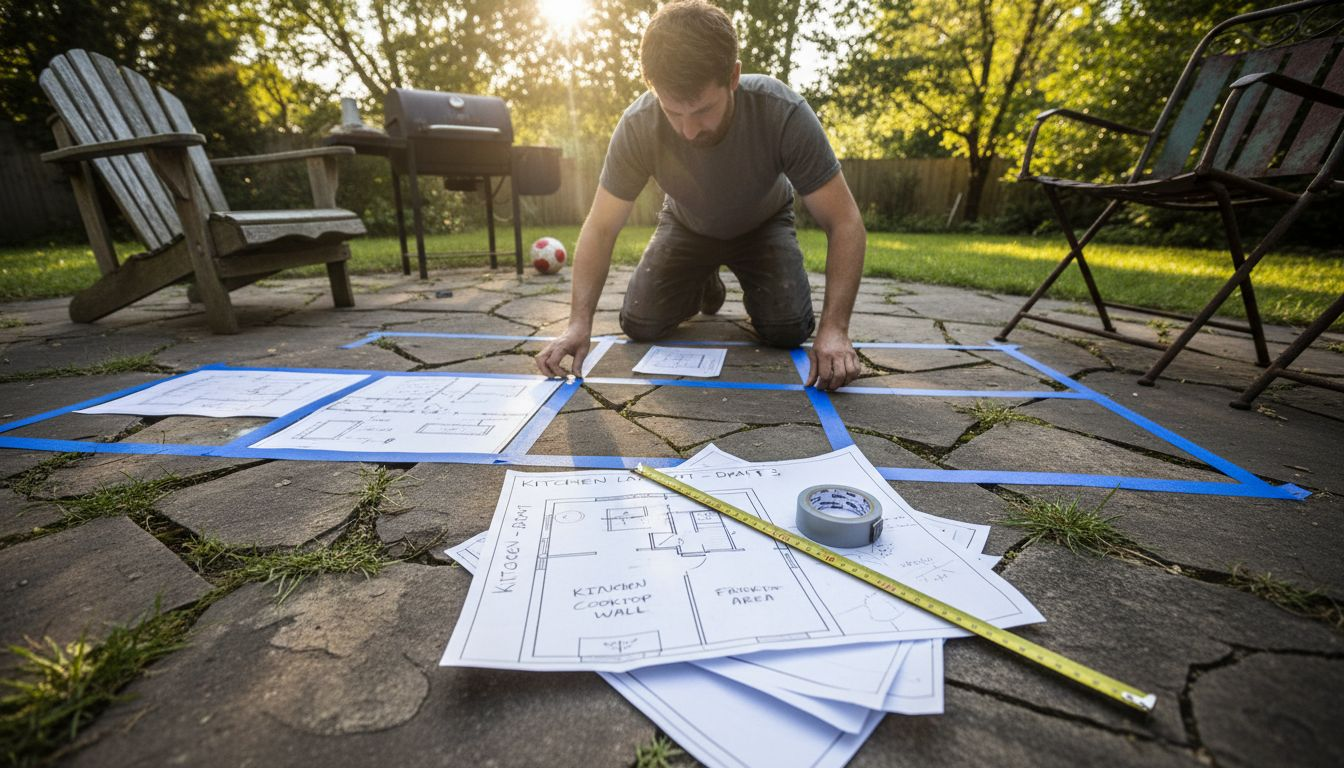
Pro tip: Use painter's tape on your patio or backyard to mock up different layout configurations before making permanent installations.
Step 3: Select Premium Outdoor Cooking Equipment
Choosing the right outdoor cooking equipment transforms your backyard into a professional-grade culinary playground. The goal is to select versatile, durable tools that match your cooking style and elevate your outdoor dining experience.
Your equipment selection should focus on advanced cooking methods that expand your culinary capabilities. Professional chefs understand that quality equipment isn't just about cooking - it's about creating memorable dining experiences that blend technique, flavor, and presentation.
Consider these essential equipment categories for your outdoor kitchen:
-
Grilling Equipment
- High-performance gas or charcoal grills
- Smokers with precise temperature control
- Multi-zone cooking surfaces
-
Cooking Surfaces
- Flat top griddles
- Pizza ovens
- Infrared cooking stations
-
Supplemental Cooking Tools
- Rotisserie attachments
- Side burners
- Warming drawers
Premium outdoor cooking equipment is an investment in culinary creativity and exceptional dining experiences.
When selecting equipment, prioritize durability, versatility, and compatibility with your cooking zones. Stainless steel and marine-grade materials offer the best resistance to outdoor elements and ensure long-term performance.
Here is a comparison of common outdoor cooking equipment types and their advantages for culinary creativity.
| Equipment Type | Recommended Use | Culinary Benefit | Durability Consideration |
|---|---|---|---|
| Gas Grill | Fast, efficient grilling | Precise temperature control | Stainless or marine-grade steel |
| Charcoal Grill | Smoky flavor, slow cooking | Authentic taste | Heavy-duty steel, rust resistant |
| Pizza Oven | High-heat baking | Crisp crusts, unique dishes | Ceramic or stainless steel |
| Smoker | Low and slow for BBQ | Deep, smoky flavors | Insulated, corrosion-resistant |
| Griddle | Versatile flat cooking surface | Breakfast, stir-fry | Non-stick, weatherproof |
Pro tip: Always test equipment dimensions against your planned layout to guarantee a perfect fit and seamless integration.
Step 4: Integrate Storage, Utilities, and Safety Features
Transforming your outdoor kitchen into a professional-grade culinary space requires strategic integration of storage, utilities, and safety elements. Your goal is to create a comprehensive environment that supports both exceptional cooking performance and absolute user protection.
Prioritize kitchen equipment safety guidelines that ensure a secure cooking experience. Professional outdoor kitchens demand meticulous attention to utility placement, electrical connections, and safety protocols that prevent potential hazards while maintaining seamless functionality.
Consider these critical integration strategies:
Storage Solutions:
- Weather-resistant storage cabinets
- Stainless steel drawers with sealed mechanisms
- Modular organizational systems
- Integrated cooling and refrigeration units
Utility Considerations:
- Dedicated electrical circuits
- Gas line safety shut-off valves
- Weatherproof electrical outlets
- Proper drainage systems
Safety Feature Implementations:
- Fire extinguisher mounting points
- Non-slip flooring materials
- Adequate lighting for nighttime cooking
- Emergency shut-off switches
Safety is not an afterthought - it's the foundation of an exceptional outdoor cooking environment.
When designing your utility integrations, always consult local building codes and consider professional installation for complex electrical and gas connections. Proper planning prevents potential safety risks and ensures a smooth, enjoyable cooking experience.
Pro tip: Invest in waterproof electrical covers and corrosion-resistant materials to extend the lifespan of your outdoor kitchen utilities.
Step 5: Verify Design and Optimize for Usability
The final stage of creating your premium outdoor kitchen involves critical verification and optimization to ensure your design meets professional standards of functionality and user experience. Your objective is to transform your initial concept into a seamless, intuitive cooking environment that feels both sophisticated and effortlessly practical.
Apply usability design principles to assess and refine your outdoor kitchen layout. Professional designers understand that true functionality goes beyond aesthetic appeal - it requires meticulous attention to workflow, ergonomics, and user interaction. A well-designed outdoor kitchen anticipates your cooking needs before you even realize them.
Implement these systematic verification strategies:
Design Verification Checklist:
- Evaluate cooking zone traffic flow
- Test equipment accessibility
- Measure workspace efficiency
- Assess lighting and visibility
Optimization Techniques:
- Mock up temporary layout with painter's tape
- Simulate cooking scenarios
- Measure walking distances between zones
- Check equipment height and reach
User Experience Refinements:
- Ensure clear sightlines
- Minimize unnecessary movements
- Create intuitive tool storage
- Balance open and closed storage areas
Usability is not about perfection - it's about creating an environment that feels natural and responsive to your culinary style.
Remember that optimization is an iterative process. Be prepared to make incremental adjustments that enhance your cooking experience and overall kitchen functionality.
Pro tip: Photograph your current kitchen workflow to identify potential improvements in your outdoor kitchen design.
Elevate Your Outdoor Kitchen Planning with Professional-Grade Equipment
Transforming your outdoor cooking space into a premium culinary zone requires strategic planning and the right tools to match your vision. This article has highlighted the importance of designing functional zones, selecting durable equipment, and ensuring safety and usability. If you seek to overcome common challenges like inefficient workflow and lack of quality tools, the solution begins with choosing high-performance, commercial-grade appliances that perfectly complement your cooking goals.
Experience the difference that professional equipment makes for grilling, smoking, and food preparation. At CulinaryProfis, we specialize in premium outdoor cooking gear tailored for both serious home chefs and professional kitchens. From stainless steel grills to versatile pizza ovens and storage solutions, our curated selection supports smooth workflows and elevates every culinary moment.
Ready to upgrade your outdoor kitchen to a space that inspires creativity and guarantees reliability? Start exploring our range of top-tier equipment at CulinaryProfis. Embrace innovation and durability designed to enhance your cooking zones and optimize your entire cooking experience. Visit us now and take the first step toward building the perfect outdoor kitchen that meets your dreams and exceeds your expectations.
Frequently Asked Questions
How do I assess my functional needs and cooking goals for an outdoor kitchen?
To assess your functional needs and cooking goals for an outdoor kitchen, start by identifying your cooking style, frequency of use, and the number of guests you typically entertain. Create a list of your preferred cooking techniques and any special equipment you desire. Begin this process before moving to the design phase to ensure your outdoor kitchen meets your culinary ambitions.
What essential zones should I include in my outdoor kitchen layout?
Include key zones such as a Cooking Zone for grills and heat sources, a Preparation Zone for food prep, a Storage Zone for utensils, a Cleaning Zone with a sink, a Social Zone for seating, and a Utility Zone for appliances. Organizing your kitchen into these distinct areas can improve workflow and enhance your outdoor cooking experience. Consider allocating enough space to each zone based on your cooking habits.
How do I select the right outdoor cooking equipment for premium results?
Select cooking equipment that suits your culinary needs, including high-performance grills, smokers, and versatile cooking surfaces like pizza ovens. Focus on durability and versatility; choose equipment made from weather-resistant materials for long-lasting performance. List your preferred cooking methods to ensure all necessary tools are included in your selection.
What storage and utility features should I integrate into my outdoor kitchen?
Integrate weather-resistant cabinets, stainless steel drawers, and refrigeration units into your outdoor kitchen for efficient storage solutions. Ensure electrical and gas utilities are safely installed, and include safety features like fire extinguishers and non-slip flooring. Plan your layout considering traffic flow to avoid clutter and enhance usability.
How can I verify and optimize the design of my outdoor kitchen?
Verify your design by assessing traffic flow, equipment accessibility, and workspace efficiency. Conduct a mock-up using painter's tape to simulate the layout and test functional zones. Aim for a finalized design within a few weeks, making adjustments as needed to improve overall user experience.
Recommended
✅ HALO Prime550 Pellet Grill with Cart
https://culinaryprofis.com/products/halo-prime550-pellet-grill-with-cart-hs-1001-xna
✅ American Outdoor Grill T-Series 36 Inch 3 Burner Built-In Gas Grill
https://culinaryprofis.com/products/american-outdoor-grill-t-series-36-inch-3-burner-built-in-gas-grill
✅ Fire Magic Lift-A-Fire Built-In Charcoal Grill
https://culinaryprofis.com/products/fire-magic-lift-a-fire-built-in-charcoal-grill