
How to Phase Out Outdated Commercial Kitchen Machinery

Phasing out outdated commercial kitchen machinery is defined as the structured process of identifying, removing, and replacing aging equipment that no longer meets operational, safety, or energy efficiency standards. Commercial kitchen managers who delay this process face rising repair bills, failed health inspections, and utility costs that erode margins. Upgrading to energy-efficient equipment can reduce utility costs by 20–30%, with refrigeration models alone seeing 30–40% less energy use. The EPA Clean Air Act Section 608 also mandates certified refrigerant recovery during disposal, making compliance a legal requirement, not an option.
How to phase out outdated commercial kitchen machinery: the full process
The industry term for this process is equipment lifecycle management. It covers every stage from performance assessment through certified disposal and replacement procurement. Treating it as a one-time swap misses the point. A structured lifecycle approach protects your budget, your staff, and your compliance record.
The process breaks into four phases: audit and assessment, planned removal, replacement selection, and responsible disposal. Each phase has specific decision points and compliance requirements. Skipping any phase creates gaps that cost money later.
How do you know which equipment needs to go?
The 50% rule is the standard benchmark for repair versus replacement decisions. When a repair estimate reaches half the cost of a new unit, replacement is the financially sound choice. Commercial kitchen appliances range from $5,000 to over $50,000, so this threshold matters at every price point.
Beyond repair costs, watch for these signs that equipment has reached end of life:
- Frequent breakdowns: More than two service calls per year on a single unit signals declining reliability.
- Outdated refrigerants: Equipment using R-22 refrigerant is costly to service and faces regulatory restrictions. Replacement is almost always more practical than continued repair.
- Energy inefficiency: Units without ENERGY STAR® certification typically consume significantly more power than current models.
- Age beyond typical lifespan: Commercial refrigerators last 10–15 years; commercial ovens 10–12 years; fryers 8–10 years. Equipment past these ranges carries elevated failure risk.
- Food safety concerns: Inconsistent temperature control or worn seals create health code violations.
Conduct a formal equipment audit at least once per year. Walk the kitchen with a clipboard and log each unit’s age, repair history, energy rating, and current condition. This audit becomes the foundation for your replacement budget and timeline.
Pro Tip: Cross-reference your audit data with your utility bills. A sudden spike in gas or electricity costs often traces back to a single failing unit before any visible breakdown occurs.
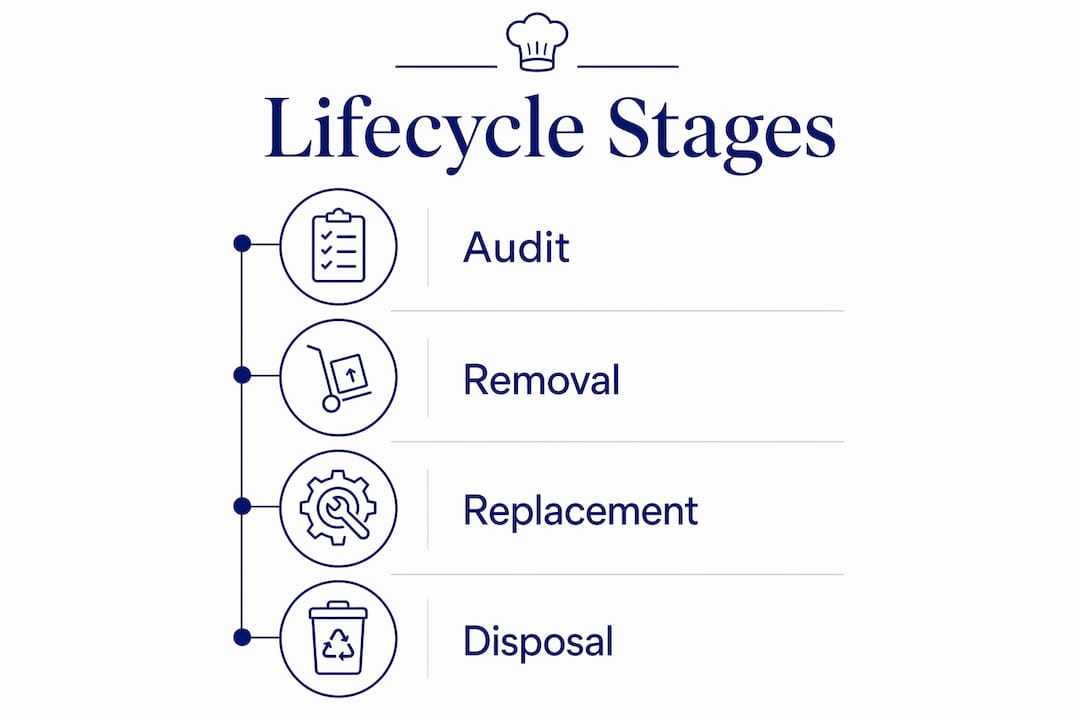
What is the step-by-step process for removing old kitchen machinery?
A structured, multi-week removal process involving audit, valuation, and certified removal is the industry standard. Rushing this process creates safety hazards and compliance violations. Follow these steps in order:
- Categorize each asset. Sort equipment into four groups: keep in service, redeploy to another location, sell or donate, and scrap. This prevents good equipment from going to landfill and maximizes recovery value.
- Get professional valuations. A certified equipment appraiser or a reputable reseller can assess resale value before you commit to scrapping. Units less than five years old often have strong secondary market value.
- Schedule disconnection with licensed professionals. Gas lines require a licensed plumber. Electrical disconnection requires a licensed electrician. Never allow kitchen staff to handle these disconnections, regardless of their experience level.
- Recover refrigerants before removal. EPA Clean Air Act Section 608 requires certified technicians to recover refrigerants from any equipment containing them. Violations carry significant fines. Confirm your removal contractor holds the required EPA Section 608 certification.
- Coordinate timing with remodels or slow periods. Align removal with planned kitchen remodels or low-volume periods to minimize service disruption. A Tuesday morning in january is better than a Friday before a holiday weekend.
- Arrange certified e-waste disposal. Circuit boards, compressors, and electronic controls qualify as e-waste in most states. Use a certified recycler to avoid liability.
- Document everything. Keep records of refrigerant recovery certificates, disposal receipts, and asset transfer documents. These protect you during health inspections and insurance audits.
Pro Tip: Time your equipment removal to coincide with a scheduled deep clean. The kitchen will already be cleared, and you avoid paying twice for labor and downtime.
How do you select energy-efficient replacements for a commercial kitchen?
Energy-efficient equipment purchase premiums pay back within 18–36 months in high-volume kitchens through utility, water, and maintenance savings. That payback window makes upfront cost a secondary concern. Total cost of ownership over a 10-year lifespan is the right metric.
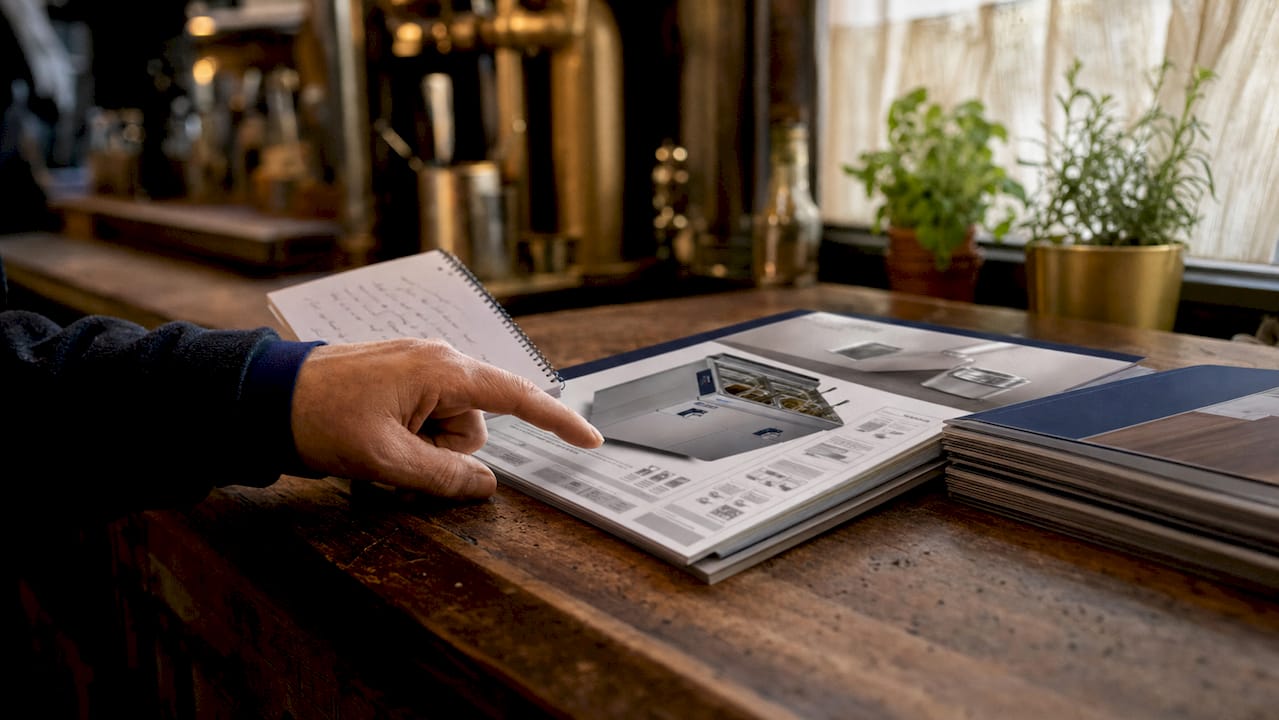
Prioritize by the energy intensity triangle
Refrigeration accounts for 35–40% of kitchen energy use, cooking for 25–30%, and dishwashing for 15–20%. Replace refrigeration units first. They run 24 hours a day and deliver the fastest return on investment. Cooking equipment comes second, followed by dishwashing.
Key selection criteria
- ENERGY STAR® certification: This federal standard guarantees verified efficiency gains. Require it for all refrigeration and dishwashing purchases.
- Smart controls and monitoring: Units with programmable controls and real-time energy monitoring improve ROI beyond isolated equipment swaps, according to efficiency upgrade research.
- Modular design: Equipment built for easy part replacement extends service life and reduces future replacement costs.
- Utility rebates: Many utility companies and state programs offer rebates for ENERGY STAR® certified commercial equipment in 2026. Check with your local utility before purchasing.
Replacement priority guide
| Equipment category | Energy share | Replacement priority |
|---|---|---|
| Refrigeration | 35–40% | First |
| Cooking equipment | 25–30% | Second |
| Dishwashing | 15–20% | Third |
| Ventilation and other | 10–25% | As needed |
High-efficiency fryers alone save over $1,000 annually compared to standard models. That figure compounds across a full kitchen upgrade. For a deeper look at what to prioritize when replacing aging cooking equipment, the 2026 replacement guide from Culinaryprofis covers category-by-category decisions.
What are the best practices for disposing of phased-out equipment?
Disposing of old equipment through asset recovery and specialist recycling supports a circular economy and keeps harmful materials out of landfills. It also generates cash that offsets replacement costs. The key is acting quickly and systematically.
Follow these disposal best practices:
- Strip functional parts first. Shelving, motors, compressors, and control panels from decommissioned units often have resale or reuse value. A specialist can assess which components are worth recovering before the unit goes to scrap.
- Segregate metals for better scrap returns. Separating stainless steel and copper before selling to a scrap dealer increases your payout. Mixed metal loads fetch lower prices.
- Use certified recycling programs. Refrigerants, compressor oils, and electronic components require certified handling. Confirm your recycler holds current certifications before signing any removal contract.
- Avoid long-term storage. Hidden costs of keeping decommissioned equipment include storage fees, insurance liability, and depreciation. Accept scrap value promptly rather than waiting for a better price that rarely comes.
Pro Tip: Contact a foodservice equipment reseller before calling a scrap dealer. A unit you plan to scrap for $200 may sell for $800 to a restaurant that needs a quick replacement.
For guidance on bulk procurement when replacing multiple units at once, the bulk appliance procurement guide from Culinaryprofis covers vendor negotiation and phased purchasing strategies. Sustainability-focused operators can also reference this 2026 foodservice sustainability guide for broader lifecycle and disposal frameworks.
Key Takeaways
A structured equipment lifecycle management process is the most cost-effective way to phase out outdated commercial kitchen machinery while maintaining compliance and reducing utility costs.
| Point | Details |
|---|---|
| Use the 50% rule | Replace equipment when repair costs reach half the unit’s replacement value. |
| Prioritize refrigeration first | Refrigeration uses 35–40% of kitchen energy, so it delivers the fastest ROI on replacement. |
| Follow EPA Section 608 | Certified refrigerant recovery is legally required before removing any refrigeration unit. |
| Segregate metals before scrapping | Separating stainless steel and copper increases scrap returns compared to mixed-load sales. |
| Calculate total cost of ownership | Upfront equipment cost matters less than the 10-year cost including utilities, maintenance, and downtime. |
What I’ve learned from watching kitchens hold on too long
The most common mistake I see commercial kitchen managers make is treating equipment replacement as a crisis response rather than a planned process. A walk-in cooler fails on a Saturday night, and suddenly the operation is scrambling for an emergency replacement at a 30% premium. That scenario is almost always preventable.
Planned Preventative Maintenance is the single most underused tool in commercial kitchen management. Regular servicing keeps components efficient and prevents the slow accumulation of small failures that eventually push a unit into “beyond economical repair” status. The most sustainable piece of equipment is the one already in your kitchen, running well.
That said, I’ve also seen managers go the other direction and over-maintain equipment that should have been replaced two years earlier. The 50% rule exists for a reason. When you’re spending more on keeping something alive than it would cost to replace it, you’re not being frugal. You’re paying a premium for unreliability.
The operators who handle this best treat their equipment inventory the way a fleet manager treats vehicles: scheduled audits, documented service histories, and a rolling replacement budget that never comes as a surprise. Coordinate removals with remodels. Sell before you scrap. And always, always get your refrigerant recovery documented before anything leaves the building.
— John
Culinaryprofis supports your kitchen equipment upgrade
Commercial kitchen managers ready to replace aging units need a supplier with the right inventory and the expertise to match equipment to operational demands. Culinaryprofis carries commercial-grade gas ranges, ovens, refrigeration units, grills, and food prep machinery from well-known brands, with free shipping and expert support on every order.

Whether you are replacing a single failing unit or upgrading an entire kitchen, Culinaryprofis provides the product selection and guidance to make the right call. Browse the full range of commercial kitchen appliances at Culinaryprofis, or contact the support team directly for a tailored equipment recommendation based on your kitchen’s specific needs and budget.
FAQ
What is the 50% rule for commercial kitchen equipment?
The 50% rule states that you should replace equipment when repair costs reach half the cost of a new unit. Commercial kitchen appliances range from $5,000 to over $50,000, so this threshold applies across all equipment categories.
What regulations apply when disposing of old commercial kitchen equipment?
EPA Clean Air Act Section 608 requires certified technicians to recover refrigerants before any refrigeration equipment is removed or scrapped. Most states also require certified e-waste disposal for electronic components.
How much can upgrading commercial kitchen equipment reduce energy costs?
Upgrading to energy-efficient commercial kitchen equipment can reduce utility costs by 20–30%. High-efficiency fryers alone save over $1,000 annually compared to standard models.
How long does it take for energy-efficient equipment to pay for itself?
In high-volume kitchens, the premium cost of energy-efficient equipment pays back within 18–36 months through utility, water, and maintenance savings.
What should you do with old commercial kitchen equipment before scrapping it?
Strip functional parts for resale, segregate metals like stainless steel and copper for better scrap returns, and contact a foodservice equipment reseller before calling a scrap dealer. Units less than five years old often have strong secondary market value.