
Types of Portable Catering Equipment: 2026 Guide

Portable catering equipment is defined as any commercial-grade cooking, refrigeration, holding, sanitation, or service gear designed to operate outside a fixed kitchen. These tools make mobile food service possible at weddings, corporate events, festivals, and outdoor venues. Compliance with the FDA Food Code 2022 and NFPA 96 ventilation standards governs what equipment you must carry. Choosing the right types of portable catering equipment from the start determines whether your operation runs smoothly or fails a health inspection. This guide covers every major category, with selection criteria tied directly to your menu and event scale.
1. Types of portable catering equipment: cooking appliances
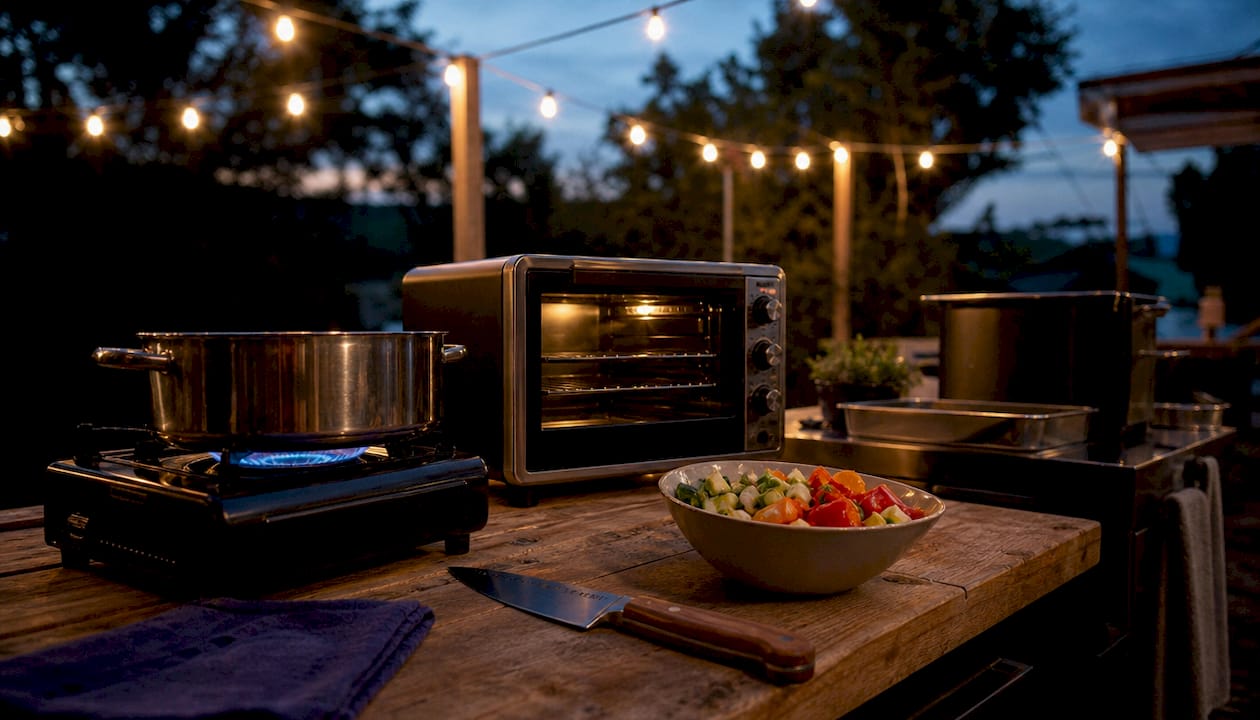
Portable cooking equipment is the core of any mobile kitchen setup. The right appliances depend entirely on your menu, not on what looks impressive in a catalog.
The main categories of portable cooking gear include:
- Portable gas grills and charcoal grills. Gas grills offer precise heat control and faster startup. Charcoal grills deliver flavor profiles that gas cannot replicate, making them the right choice for barbecue-focused menus.
- Single and double burner propane units. These handle sauces, soups, and sautéed dishes. Double burners let one cook run two pots simultaneously.
- Convection ovens and countertop ovens. Compact convection units circulate hot air for even baking and roasting. They work well for catering operations serving pastries, roasted proteins, or casseroles.
- Portable pizza ovens. Wood-fired and gas-powered pizza ovens reach temperatures above 700°F, producing results that standard ovens cannot match.
- Smokers. Offset and pellet smokers suit slow-cooked menus. They require significant setup time and space, so plan your event footprint accordingly.
- Induction burners. These are the safest option for indoor venues with strict fire codes. They produce no open flame and generate less ambient heat.
Power and ventilation matter as much as the appliance itself. NFPA 96 requires ventilation and fire safety standards for all cooking equipment in mobile setups. Always confirm your venue’s power supply before selecting electric or induction units.
Pro Tip: Select cooking equipment by writing your full event menu first, then matching each dish to the appliance it requires. Buying a smoker because it looks professional when your menu is salads and sandwiches wastes space and budget.
For a deeper breakdown, the Culinaryprofis guide on portable commercial cooking covers selection criteria by equipment category.
2. Portable refrigeration options for events
Refrigeration is non-negotiable. Cold food must stay at 41°F (5°C) or below per FDA food safety standards. Failure to maintain that temperature creates health risks and regulatory violations.
Portable refrigeration segments into three tiers based on event scale and food volume:
| Tier | Equipment Type | Best Use Case |
|---|---|---|
| Large events | Refrigerated trailers | High-volume events with 500+ guests |
| Mid-scale events | Walk-in containers | Multi-day festivals or large corporate catering |
| Small or auxiliary | Compact mobile units | Supplemental cold storage for smaller setups |
Refrigerated trailers offer the most capacity but require a tow vehicle and dedicated parking space. Walk-in containers ship as standalone units and can be placed adjacent to your service area. Compact mobile units work best as backup cold storage or for beverages.
Insulated food carriers and beverage coolers fill the gap for short-term transport between your commissary and the event site. They do not replace mechanical refrigeration for extended service periods.
Pro Tip: Always bring more cold storage than you think you need. Running out of refrigeration space mid-event forces you to discard food or risk a health code violation. Size up by at least one tier when in doubt.
3. Hot-holding and food transport containers
Hot food must stay at 135°F (63°C) or above throughout service. That standard comes directly from food safety requirements that health inspectors enforce at events. The equipment that keeps food in that safe zone includes several distinct categories.
Chafing dishes are the most common hot-holding solution. They use Sterno fuel or electric heating elements to maintain temperature in full-size hotel pans. They are lightweight, stackable, and easy to transport.
Steam tables hold multiple food pans at consistent temperatures using water-heated wells. They suit buffet-style service where guests serve themselves across multiple dishes. For buffet-style catering setups, steam tables are the standard choice for high-volume service.
Insulated food carriers are the right tool for transporting hot food from a prep kitchen to a remote event site. Quality carriers maintain safe temperatures for two to four hours without any power source.
Key features to look for in hot-holding equipment:
- Tight-fitting lids that lock heat in during transport
- Compatibility with standard hotel pan sizes for easy loading
- Durable handles rated for repeated commercial use
- Easy-clean interior surfaces that meet sanitation code requirements
Mobile food bars and salad bar units round out the serving side. These portable counters include breath guards, ice-packed wells for cold items, and display lighting. They work for both hot and cold service depending on the insert configuration.
4. Sanitation, safety, and utility equipment
A fully equipped mobile kitchen requires handwashing stations, waste disposal systems, properly sized water tanks, and safety certifications to pass inspections. Cooking gear alone does not get you through a health inspection.
Health codes mandate a three-compartment sink for washing, rinsing, and sanitizing all food-contact surfaces. A separate handwashing station must be accessible to all food handlers at all times. These are not optional items.
Water tank sizing follows a specific rule: wastewater tanks must hold at least 1.5 times the volume of your fresh water tank. Hot water for handwashing must reach a minimum of 100°F. Undersizing either tank leads to failed inspections and service shutdowns.
Fire safety equipment is equally mandatory. Requirements include:
- A UL 300-compliant automatic fire suppression system mounted above cooking equipment
- At least one Class K fire extinguisher for grease fires near fryers and open flame equipment
- At least one Class ABC fire extinguisher for general fire hazards throughout the setup
Fire safety mandates require all suppression systems to be visible and accessible during service. Inspectors check for current service tags on every extinguisher.
Power generation ties everything together. Mobile catering power needs typically range from 5 to 15 kW depending on the equipment load. Size your generator with a 20–30% buffer above your total connected load. An undersized generator causes equipment failure at the worst possible moment.
Obtaining mobile catering permits requires at least 60 days of lead time, with costs ranging from $100 to $1,000 or more depending on the jurisdiction. Fire suppression compliance is a common reason for permit denial, so verify your suppression system certification before submitting any application.
For a full breakdown of sanitation requirements, the Culinaryprofis resource on food safety equipment covers what inspectors look for in 2026.
5. Serving and utility accessories
Serving accessories determine how fast and professionally food reaches guests. Catering serving equipment includes chafing dishes, salad bar bowls, mobile breath guards, pizza delivery bags, catering trays, and buffet utensils. Each item plays a direct role in service speed and presentation.
The core serving and utility accessories every mobile caterer needs include:
- Catering trays and platters. Full-size and half-size trays in stainless steel or melamine handle everything from appetizers to carved proteins. Stainless trays are more durable; melamine is lighter for passed service.
- Buffet utensils. Tongs, ladles, serving spoons, and portion scoops in standardized sizes keep service consistent and reduce waste.
- Portable beverage dispensers. Insulated dispensers for coffee, juice, and water handle high-volume beverage service without requiring electrical connections.
- Mobile bar setups. Portable bars with folding legs, built-in ice bins, and speed rails let you run a full beverage program anywhere. The Culinaryprofis guide on portable bar equipment details the full setup.
- Equipment storage cases and transport carts. Hard-shell cases protect fragile equipment during vehicle transport. Folding carts reduce the number of trips between your vehicle and the service area.
Storage organization inside your vehicle directly affects setup speed. Caterers who pre-pack equipment by station, cooking, serving, and sanitation, cut their setup time significantly compared to those who load randomly.
6. Portable fryers and specialty cooking tools
Portable fryers deserve their own category because they carry the highest safety risk of any mobile cooking equipment. Portable fryers for catering require proper oil management, fire suppression coverage, and ventilation clearance that many venues cannot provide.
Countertop electric fryers work well in enclosed trailers with proper exhaust systems. Propane fryers produce higher output but require outdoor placement and a minimum clearance from any structure. Never operate a propane fryer inside a tent without confirmed ventilation.
Specialty tools that round out a mobile kitchen include immersion circulators for precision protein cooking, portable induction woks for Asian-inspired menus, and countertop griddles for breakfast or brunch events. Each tool should be selected only when your menu specifically requires it. Carrying equipment you do not use wastes vehicle payload and setup time.
For office catering and corporate event setups, office catering providers often rely on a combination of insulated carriers and compact induction units rather than full cooking rigs, which keeps logistics simple and compliant.
Key Takeaways
The most effective mobile catering setup starts with your menu and builds outward through cooking, refrigeration, hot-holding, sanitation, and service equipment, all sized to your event scale and local compliance requirements.
| Point | Details |
|---|---|
| Menu drives equipment choice | Select every appliance based on what your menu requires, not aesthetics or convenience. |
| Cold and hot holding are non-negotiable | Cold food must stay at 41°F or below; hot food at 135°F or above throughout service. |
| Sanitation gear is legally required | Three-compartment sinks, handwashing stations, and properly sized water tanks are mandatory. |
| Generator sizing needs a buffer | Size your generator 20–30% above your total connected load to prevent equipment failure. |
| Permits require 60 days lead time | Start the permit process early; fire suppression compliance is the most common denial reason. |
What I’ve learned from watching caterers get this wrong
The most consistent mistake I see catering professionals make is treating a mobile kitchen like a smaller version of a fixed kitchen. It is not. Vibration during transport loosens fittings, power supplies at venues vary wildly, and the space constraints force real trade-offs that a fixed kitchen never demands.
The second mistake is buying equipment based on what looks good in a showroom. A beautiful wood-fired pizza oven means nothing if your event venue sits inside a fire-restricted zone. Menu-first selection logic leads to better equipment choices every time. Induction warmers solve fire code problems that chafers cannot. Chafers work reliably when power is unavailable. The right answer depends on your specific event, not on what is popular.
Compliance complexity is the issue that catches even experienced operators off guard. Mobile permits are not universally valid across jurisdictions. A permit that clears you for one county may not satisfy the requirements of the next city over. Verify commissary access, water sourcing, and waste disposal rules for every single event location, not just once at the start of the season.
The caterers who run the most efficient operations carry less equipment, not more. They know exactly what their menu needs, they have sized every system correctly, and they have done the compliance work before the event date. That preparation is what separates a smooth service from a shutdown.
— John
Culinaryprofis has the portable catering gear you need
Culinaryprofis stocks commercial-grade portable catering equipment built for professional mobile operations. From compact refrigeration units and induction burners to full sanitation setups and serving accessories, the catalog covers every category in this guide.
The Culinaryprofis catering equipment checklist gives you a complete procurement reference before your next event. Every product listed ships free, and the expert support team can help you match equipment to your specific menu and event scale. Browse the full selection at Culinaryprofis and get your mobile kitchen set up correctly the first time.
FAQ
What are the main types of portable catering equipment?
The main types include portable cooking appliances (grills, burners, ovens, fryers), refrigeration units, hot-holding equipment (chafers, steam tables), sanitation gear (sinks, water tanks), and serving accessories. Each category serves a distinct function in a mobile food service operation.
What temperature must hot food be held at during catering events?
Hot food must be held at 135°F (63°C) or above throughout service per food safety standards. Cold food must stay at 41°F (5°C) or below. Both requirements apply regardless of event type or location.
How much power does a mobile catering setup require?
Most mobile catering operations require between 5 and 15 kW of power. Size your generator with a 20–30% buffer above your total connected equipment load to prevent failure during service.
Do I need separate permits for each event location?
Yes. Mobile catering permits are not universally valid across jurisdictions. You must verify local requirements for commissary access, water, and waste disposal at each event location before operating.
What fire safety equipment is required for mobile catering?
A UL 300-compliant automatic fire suppression system is required above cooking equipment. You also need at least one Class K extinguisher for grease fires and one Class ABC extinguisher for general hazards.