
Set Up Your Home Kitchen Like a Professional Chef

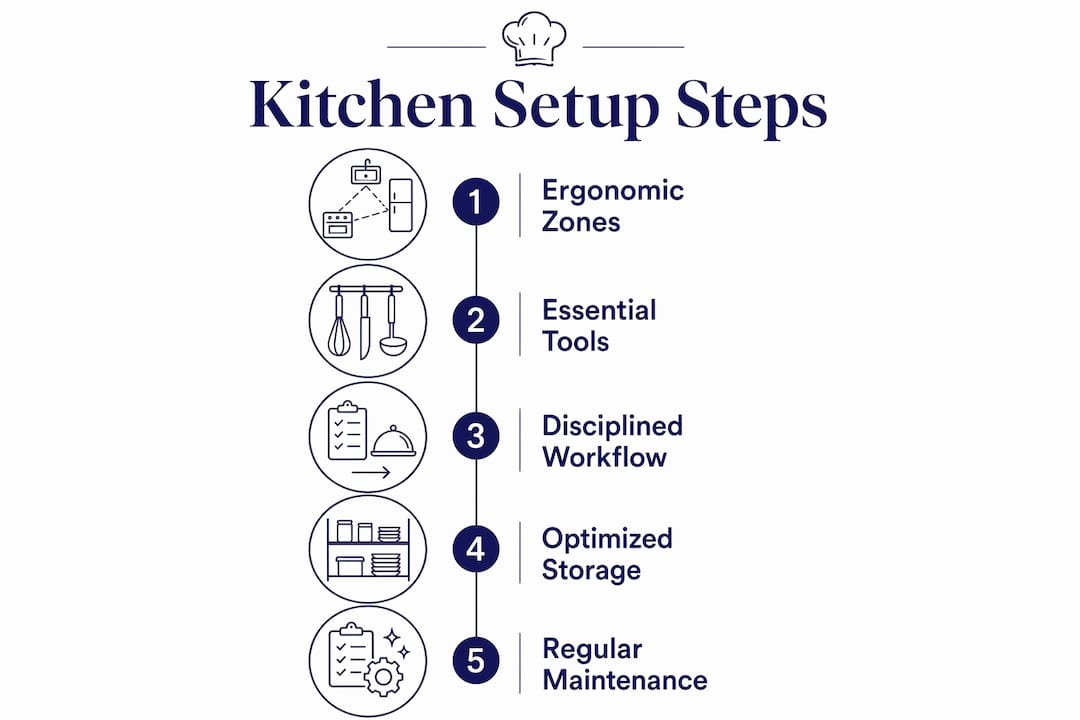
A professional kitchen setup is defined by three principles: ergonomic zones, essential tools, and disciplined workflow. Home cooks who apply these principles cook faster, waste less, and enjoy the process more. The goal is not to replicate a restaurant kitchen in square footage. The goal is to set up your home kitchen like a professional by building systems that work every time, regardless of kitchen size. Culinaryprofis works with serious home cooks who want exactly that: reliable, commercial-grade results without the commercial space.
How to set up your home kitchen like a professional
Professional kitchen design starts with the work triangle. This is the path between your refrigerator, sink, and cooktop. The ideal work triangle has a total perimeter between 10 and 26 feet, with each leg measuring 4 to 9 feet. That range keeps movement short without cramping your workspace. A triangle that is too tight creates collisions. One that is too wide wastes steps and energy.
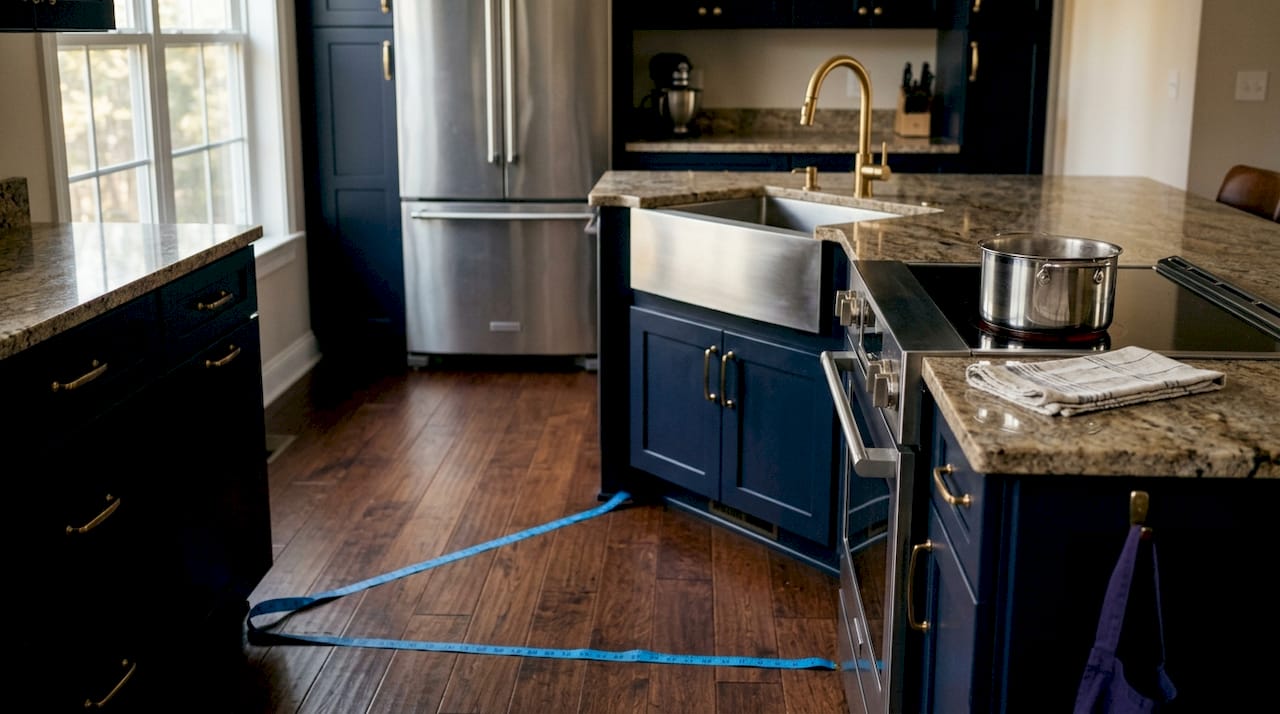
Aisle width matters just as much as triangle dimensions. Single-cook kitchens work best with 42 to 48 inches of clearance. Multi-cook kitchens need 48 to 60 inches. These numbers come from ergonomic research, not guesswork. Getting them right means two people can cook simultaneously without blocking each other.
Functional zones every home kitchen needs
Professional kitchens divide space into four zones: storage, prep, cooking, and cleaning. You can apply the same structure at home. Assign a physical area to each function, even in a small kitchen. The result is that you stop searching for tools mid-cook and start moving with purpose.
Here is how to assign zones in a typical home kitchen:
- Storage zone: Pantry, refrigerator, and dry goods cabinets. Keep this near the entry point of your kitchen so groceries go straight to their place.
- Prep zone: Your primary countertop area. Position it between storage and the cooktop so ingredients flow in one direction.
- Cooking zone: The cooktop, oven, and any adjacent landing space for hot pans. Keep pot holders and timers here, not across the room.
- Cleaning zone: The sink and dishwasher. Place a small drying rack and dish soap here only. Do not let this zone become a dumping ground.
Countertop height and ergonomics
Countertop height should sit 4 to 6 inches below your elbow, with the standard at 36 inches. If you are taller or shorter than average, this matters more than most home cooks realize. Chopping at the wrong height causes shoulder and back strain over time. A simple fix is a thick cutting board to raise the surface, or a lower prep table for taller cooks.
Vertical space is the most underused asset in a home kitchen. Wall-mounted shelves, magnetic knife strips, and pegboards free up counter space without adding square footage. In small kitchens, going vertical is not optional. It is the primary way to create a professional cooking space without a renovation.
What tools do professional home cooks actually need?
The best home kitchen tools are not the most expensive or the most numerous. A curated set of dependable essentials serves professional cooking better than a drawer full of single-use gadgets. That means starting with a high-quality chef’s knife, a cast-iron skillet, and two or three versatile pans. Every other tool earns its place only when you cook often enough to justify it.
Here is the core list every serious home cook needs:
- Chef’s knife (8-inch): The single most important tool in any kitchen. A sharp, well-balanced knife reduces prep time and improves safety.
- Cast-iron skillet (10 or 12-inch): Works on the stovetop and in the oven. Holds heat better than any non-stick pan.
- Stainless steel saucepan and sauté pan: For sauces, reductions, and searing. Stainless shows you the fond, which is the browned bits that build flavor.
- Instant-read thermometer: Vital for achieving professional cooking results with proteins and baked goods. Takes the guesswork out of doneness.
- Sheet pans (half-size): The workhorse of roasting, baking, and broiling. Buy two.
Pro Tip: Resist buying appliances that do one thing. A quality Dutch oven braises, bakes bread, fries, and makes stock. One tool, five techniques. That is the professional approach.
Multi-use appliances are preferred over single-use gadgets in small kitchens. A stand mixer that handles bread dough, pasta dough, and whipped cream earns its counter space. A device that only makes one specific food does not. Apply this filter to every purchase and your kitchen stays functional instead of cluttered.
For home bakers and bread enthusiasts, Culinaryprofis recommends reviewing the kitchen essentials guide before buying. It covers commercial-grade options that fit home kitchens without requiring professional installation.
How do professional workflows improve home cooking?
Workflow is the difference between a cook who scrambles and one who executes. Mise en place is the professional standard: complete all prep work before cooking begins. That means every ingredient measured, chopped, and placed in a bowl before the burner turns on. Skipping this step leads to burned garlic, overcooked proteins, and a chaotic kitchen.
Here is how to build a professional workflow at home:
- Read the full recipe first. Identify every step and every tool you need. This prevents mid-cook surprises.
- Prep all ingredients before cooking. Dice, measure, and organize everything into small bowls or ramekins. This is mise en place in practice.
- Organize your prep station. Place ingredients in the order you will use them, left to right. Tools go on the right side of your dominant hand.
- Time-block your cooking session. Focused cooking periods of 25 to 45 minutes with a “5-minute reset” for cleaning maintain professional-level organization throughout.
- Clean as you go. Wipe the cutting board between tasks. Rinse bowls immediately after emptying them. A clean station is a fast station.
Pro Tip: Set a timer for 5 minutes at the midpoint of any cooking session. Use that time only to wipe surfaces, return tools to their place, and clear the sink. This single habit prevents the post-dinner disaster most home cooks dread.
Reducing unnecessary movement matters more than kitchen size. A cook who walks across the kitchen for a spoon three times during a recipe wastes time and breaks focus. The fix is simple: keep every tool you need for a recipe within arm’s reach before you start. This is the core of professional workflow thinking.
For a practical guide to organizing your prep station, the prep station organization guide from Culinaryprofis adapts commercial methods directly for home use.
How should you organize storage in a professional-style kitchen?
Storage organization is where most home kitchens fail. Cabinets fill up, tools get buried, and cooks waste minutes searching for basic items. Pull-out drawers with full-extension ball-bearing slides improve accessibility and reduce physical strain compared to fixed shelving. This is not a luxury upgrade. It is a functional one that pays off every day.
The best storage upgrades for a professional-style kitchen:
- Pull-out drawers under the counter: Replace fixed shelves wherever possible. You see everything at once and reach it without crouching.
- Magnetic knife strip on the wall: Keeps knives accessible, sharp, and off the counter. A knife block takes up counter space and dulls blades faster.
- Pegboard or hanging rail: Wall-mounted storage systems keep counters clear and put frequently used tools in immediate reach.
- Labeled containers for dry goods: Uniform containers stack better and let you see quantities at a glance. Label the front and the lid.
- Drawer dividers for utensils: A junk drawer is the enemy of professional workflow. Dividers take five minutes to install and save time every single day.
| Storage method | Key advantage |
|---|---|
| Pull-out drawers | Full visibility and reach without bending |
| Magnetic knife strip | Saves counter space, protects blade edges |
| Pegboard or hanging rail | Immediate access to high-use tools |
| Labeled containers | Faster retrieval, better inventory awareness |
| Drawer dividers | Eliminates searching, keeps tools organized |
Routine decluttering sustains the system. Once a month, pull everything out of one zone and put back only what you used in the past 30 days. Anything unused goes to a secondary storage area or out of the kitchen entirely. Professional kitchens do not carry inventory they do not use. Your home kitchen should not either.
For batch cooking and weekly prep strategies that pair well with this storage setup, one-day food prep methods offer a practical framework that complements a professional home kitchen workflow.
Key Takeaways
A professional home kitchen runs on three foundations: ergonomic layout, essential tools, and disciplined workflow habits that reduce wasted movement and keep every session focused.
| Point | Details |
|---|---|
| Work triangle and zones | Keep the triangle perimeter between 10 and 26 feet and assign four distinct functional zones. |
| Countertop ergonomics | Set work surfaces 4 to 6 inches below elbow height to reduce long-term strain. |
| Essential tools first | Start with a chef’s knife, cast-iron skillet, and instant-read thermometer before adding anything else. |
| Mise en place discipline | Complete all prep before cooking starts to maintain control and quality throughout. |
| Vertical and pull-out storage | Use wall-mounted systems and pull-out drawers to maximize access and keep counters clear. |
What I have learned from setting up kitchens the professional way
Most home cooks think the gap between their kitchen and a professional one is equipment. It is not. The gap is systems. A chef in a cramped prep kitchen with a single burner and a good knife will outperform a home cook with $10,000 in appliances and no workflow. I have seen this firsthand, and it changes how you think about every purchase and every habit.
The hardest lesson is that less gear forces better decisions. When you only own tools you use regularly, you know where everything is, you maintain it properly, and you cook with more intention. Space limitations are not a handicap. They are a filter that keeps your kitchen honest.
The other thing most articles will not tell you: professional habits feel awkward at first in a family kitchen. Mise en place takes longer when kids are asking questions and the dog needs feeding. The answer is not to abandon the system. The answer is to shrink it. Do a five-minute mise en place for a weeknight dinner instead of a full restaurant-style setup. The habit still builds. The results still improve.
Culinaryprofis carries the food prep tools that make these habits easier to sustain, not just easier to start.
— John
Professional kitchen tools and resources from Culinaryprofis
Culinaryprofis stocks commercial-grade kitchen equipment built for home cooks who want professional results. The catalog covers everything from precision prep tools to heavy-duty appliances that handle daily use without wearing out.

Whether you are building a kitchen from scratch or upgrading specific stations, Culinaryprofis offers expert guidance alongside the products. The team specializes in matching serious home cooks with equipment that fits their space, workflow, and cooking style. Free shipping, a flexible return policy, and direct support make it straightforward to get the right gear without risk. Visit Culinaryprofis to browse the full catalog and find the tools that match your kitchen setup goals.
FAQ
What is the work triangle in kitchen design?
The work triangle connects the refrigerator, sink, and cooktop. The total perimeter should measure between 10 and 26 feet for efficient movement during cooking.
How do I apply mise en place at home?
Measure, chop, and organize every ingredient into bowls before turning on the heat. This single habit eliminates most cooking errors and keeps your session controlled.
What countertop height works best for home cooks?
The standard countertop height is 36 inches, but the correct height is 4 to 6 inches below your elbow. Adjust with a thick cutting board or a lower prep surface if needed.
What are the most important kitchen essentials for home cooks?
Start with a quality chef’s knife, a cast-iron skillet, stainless steel pans, and an instant-read thermometer. These four tools cover the majority of professional cooking techniques.
How do I keep a small kitchen organized long term?
Declutter one zone per month, use pull-out drawers and wall-mounted storage, and label all containers. Remove any tool you have not used in 30 days from the primary workspace.