
Why Commercial Oven Deck Material Matters for Chefs

Commercial oven deck material is the primary driver of heat transfer, crust quality, and long-term oven durability in professional kitchens. The deck surface, whether refractory stone, cordierite, ceramic, or steel, controls how heat moves from the oven floor into your product. That single variable shapes everything from crust texture to batch consistency to operating costs. Understanding why commercial oven deck material matters is not optional for serious operators. It is the foundation of every baking decision you make.
Why does commercial oven deck material matter for cooking quality?
Deck material directly controls crust development through two mechanisms: conduction and radiant heat transfer. Conduction moves heat from the deck surface into the product base. Radiant heat from the deck and chamber walls drives moisture evaporation and color development. The material you choose determines how well both mechanisms perform.
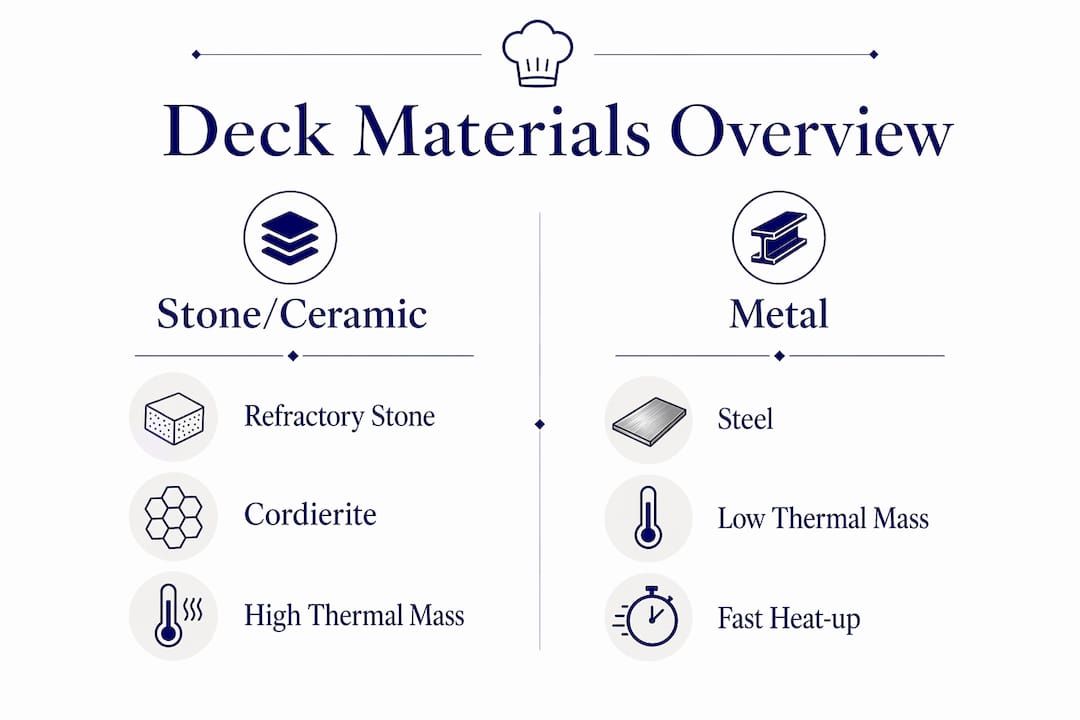
Refractory stone and cordierite are the preferred deck materials in professional pizza and artisan bread ovens. Stone decks stay heat-saturated under burners, delivering even cooking without burning product bottoms. Steel heats faster but transfers heat so rapidly that it risks overbrowning the base before the top is done. Ceramic and fireclay decks sit between those two extremes, offering good heat retention with slightly lower thermal mass than dense refractory stone.
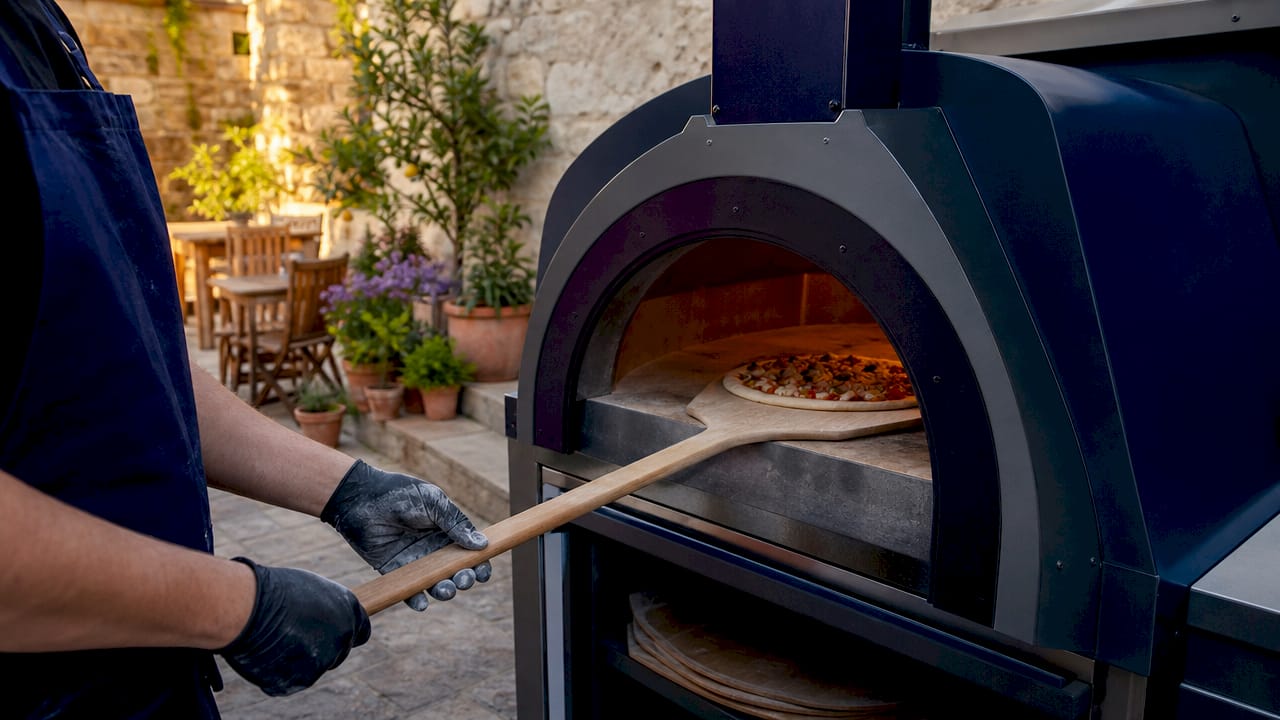
Thermal mass is a material’s ability to absorb and store heat. Higher thermal mass buffers temperature swings when you load cold product into a hot oven. That buffering is what separates a consistent bake from a variable one across a full service.
Pro Tip: If you bake high-hydration doughs like sourdough or Neapolitan pizza, prioritize cordierite or dense refractory stone. Both hold heat long enough to drive oven spring without scorching the base.
Comparing common deck materials
| Material | Thermal mass | Heat-up speed | Best for |
|---|---|---|---|
| Refractory stone | High | Slow | Artisan bread, pizza |
| Cordierite | High | Moderate | Pizza, flatbreads |
| Ceramic / fireclay | Medium-high | Moderate | Bread, pastries |
| Thick steel | Low | Fast | High-output, thin-crust |
Stone and ceramic decks align better with desired crust and moisture behavior than steel does, despite steel’s faster heat-up advantage. For most commercial bakeries and pizzerias, that tradeoff favors stone or ceramic.
What durability challenges come with commercial oven deck materials?
Deck durability depends on how well the material handles thermal cycling. Every time an oven heats up and cools down, the deck expands and contracts. Over time, that stress causes cracking, surface degradation, and in refractory-lined chambers, a failure mode called spalling. Spalling is the flaking or chipping of the deck surface caused by rapid moisture expansion inside the material. It contaminates product and forces costly downtime.
Rushed refractory dry-out is the leading cause of premature deck failure. When a new or repaired refractory deck is heated too quickly, moisture trapped inside turns to steam faster than it can escape. The pressure cracks the lining from within. That damage is often invisible at first and only becomes apparent after several weeks of service.
The correct approach is a controlled dry-out schedule with temperature holds at specific stages. Typical dry-out protocols include holds around 250°F to drive off free water, followed by a gradual ramp to 800–1000°F to remove chemically bound water. Skipping or compressing those holds is the most common operator mistake.
A proper dry-out sequence for a new refractory deck follows this order:
- Start at ambient temperature and ramp slowly to 200–250°F.
- Hold at 250°F for several hours to release free moisture.
- Ramp gradually to 500°F and hold again.
- Continue in controlled stages up to 800–1000°F.
- Allow the oven to cool naturally before returning to service.
“Durability problems often stem from installation errors and dry-out neglect rather than inherently flawed stone materials. A correctly installed and dried-out refractory deck will outlast the oven frame itself.”
Operators who skip dry-out steps face cracking, surface flaking, and contamination risks that require full deck replacement. The cost of patience during commissioning is far lower than the cost of an emergency shutdown during peak service. For more on how operational patterns affect deck longevity, see commercial oven duty cycles and how they interact with material wear.
How does deck material interact with oven insulation and energy efficiency?
Deck material does not work in isolation. The insulation surrounding the deck chamber determines how much heat the system retains between batches and how quickly it recovers after loading. Choosing the right deck without matching insulation leaves performance and efficiency on the table.
Ceramic fiber insulation reduces energy use by 30–60% in ovens with intermittent operation compared to traditional brick-lined insulation. That reduction comes from lower thermal mass. Ceramic fiber does not absorb and store heat the way dense brick does. Less stored heat means less energy wasted when the oven cools during off-peak hours.
Traditional brick-lined ovens excel in continuous, high-volume operations. The dense lining holds enormous amounts of heat, which supports rapid batch cycling without temperature drop. The tradeoff is a long heat-up time and high energy consumption during startup. For kitchens that run ovens all day, that tradeoff is acceptable. For kitchens with variable schedules, ceramic fiber insulation paired with a high-mass deck gives the best of both worlds.
Pro Tip: Match your insulation to your operating pattern. Continuous high-volume service favors dense brick lining. Intermittent or multi-shift operations benefit from ceramic fiber insulation, which recovers faster and wastes less energy during downtime.
Insulation and deck pairing guide
| Operation type | Recommended deck | Recommended insulation |
|---|---|---|
| Continuous, high-volume | Refractory stone | Dense brick lining |
| Intermittent, multi-shift | Cordierite or ceramic | Ceramic fiber |
| Mixed use | Ceramic / fireclay | Ceramic fiber with brick base |
Daily bake consistency depends on deck thermal recovery, insulation quality, and bake cycle timing. Exceeding the oven’s recovery time between batches causes measurable variation in crust color and texture across a service.
How to select the best commercial oven deck material for your kitchen
The right deck material depends on three factors: your product type, your bake volume, and your maintenance capacity. No single material wins across all three categories. The goal is the best match for your specific operation.
Start with product type. Pizza and artisan bread demand high thermal mass to drive oven spring and develop crust character. Refractory stone or cordierite decks are the correct choice for those products. Pastries and laminated doughs are more forgiving. Ceramic or fireclay decks work well and are easier to source and replace. High-output operations baking thin-crust or par-baked products can use steel decks where speed matters more than thermal stability.
Consider these factors before specifying a deck material:
- Heat retention needs. High-hydration doughs require sustained bottom heat. Stone and cordierite hold that heat through multiple loads.
- Bake cycle frequency. Tight cycles demand fast thermal recovery. Pair a medium-mass ceramic deck with ceramic fiber insulation for the best recovery rate.
- Cleaning and maintenance. Stone decks absorb grease and carbon over time. Steel decks clean faster but scratch more easily. Ceramic decks offer a middle ground.
- Replacement cost. Cordierite and ceramic tiles are widely available and relatively affordable to replace. Custom refractory stone linings cost more and require longer lead times.
- Installation requirements. Refractory decks require proper dry-out before first use. Operators without experience in that process should factor in commissioning support.
Deck ovens fully lined with refractory stone deliver stable heat retention and uniform baking efficiency across a full service. That consistency is the reason stone-deck ovens remain the standard in serious bakeries and pizzerias despite higher upfront cost. For operators running high-volume cooking equipment, matching deck material to output demands is the single highest-leverage specification decision.
Stone and ceramic surfaces also interact differently with static versus convection heat modes, which affects how you manage top-to-bottom bake balance for pizza and flatbreads. Proper deck cleaning practices extend surface life and prevent carbon buildup from degrading heat transfer over time.
Key takeaways
The deck material in a commercial oven controls heat transfer, bake consistency, and long-term durability more than any other single component in the oven’s construction.
| Point | Details |
|---|---|
| Material drives heat transfer | Refractory stone and cordierite deliver the highest thermal mass and most consistent crust results. |
| Dry-out prevents deck failure | Controlled temperature ramps to 800–1000°F remove moisture and prevent cracking and surface flaking. |
| Insulation multiplies deck performance | Ceramic fiber insulation cuts energy use by 30–60% in intermittent operations versus brick-lined chambers. |
| Match material to product type | High-hydration doughs need stone or cordierite; pastries and thin-crust products tolerate ceramic or steel. |
| Thermal recovery drives batch consistency | Exceeding recovery time between loads causes measurable variation in crust color and texture. |
The factor most operators underestimate
Operators spend hours specifying burners, controls, and steam injection systems. The deck material gets chosen last, often based on price or availability. That is the wrong order of priorities.
I have seen kitchens invest in high-end deck ovens and then rush the dry-out because the opening date was close. The result is surface cracking within three months and a full deck replacement before the first year is out. The oven was not defective. The commissioning process was. That distinction matters because it means the failure was entirely preventable.
The other pattern I see constantly is operators loading tight bake cycles without accounting for thermal recovery. They notice inconsistent browning on the third or fourth batch and blame the oven. The oven is fine. The deck has not recovered. Slowing the cycle by even four to six minutes resolves the issue completely. Understanding thermal recovery behavior before you set your production schedule saves you weeks of troubleshooting.
My practical advice: treat the deck as the core of the oven, not an accessory. Specify it first, commission it correctly, and build your bake cycles around its recovery characteristics. Everything else in the oven serves the deck.
— John
Professional oven equipment at Culinaryprofis
Choosing the right deck material is only the first step. The oven itself must be built to support that material’s thermal demands across years of daily service.

Culinaryprofis carries a full range of professional culinary equipment for restaurant kitchens and catering operations, including commercial ovens, food prep machinery, and accessories built for demanding service environments. The catalog includes equipment from established brands with specifications suited to high-volume baking and cooking. Free shipping, a flexible return policy, and expert support are available on every order. If you need guidance on matching oven specifications to your kitchen’s output requirements, the Culinaryprofis team is ready to help.
FAQ
What is the best deck material for commercial pizza ovens?
Cordierite and dense refractory stone are the best deck materials for commercial pizza ovens. Both maintain high thermal mass and even heat saturation, which produces consistent crust development without burning the base.
Why does refractory dry-out matter for deck longevity?
Skipping or rushing dry-out traps moisture inside the refractory lining. When the oven reaches operating temperature, that moisture turns to steam and cracks the deck from within, causing surface flaking and contamination.
How does ceramic fiber insulation improve oven efficiency?
Ceramic fiber insulation reduces energy use by 30–60% in intermittent operations compared to traditional brick-lined chambers. Its lower thermal mass allows faster heat-up and reduces heat loss during shutdowns.
Can steel decks replace stone in a commercial bakery?
Steel decks heat faster but transfer heat too rapidly for most artisan bread and pizza applications. Stone and ceramic decks produce better crust texture and moisture control for high-hydration products.
How often should commercial oven decks be inspected?
Deck surfaces should be inspected at least monthly for cracks, surface flaking, and carbon buildup. Early detection of surface damage prevents contamination and avoids full deck replacement during peak service.