
What Is a Plancha Griddle: The Home Cook's Guide

A plancha griddle is a solid, flat metal cooking plate that transfers heat directly to food through conduction, reaching temperatures between 300°C and 350°C for intense, uniform searing. Unlike open-flame grills, a plancha griddle eliminates flare-ups and keeps rendered juices on the cooking surface, producing richer caramelization and deeper flavor. Professional chefs have used this technique for decades, and serious home cooks are now adopting it for the same reasons: speed, versatility, and results that a standard skillet or grill simply cannot match. This guide covers everything you need to know about how a plancha works, its benefits, and how to use one well.
What is a plancha griddle and how does it work?
A plancha griddle is defined as a thick, flat metal plate, typically made from carbon steel, stainless steel, or cast iron, that heats by direct conduction rather than radiant or convective heat. Professional-grade units reach 300°C–350°C rapidly and maintain that temperature across the entire surface. That consistency is the core advantage. Every square inch of the plate delivers the same heat, so food sears evenly without hot spots or cold zones.
The word “plancha” comes from Spanish, where it simply means “plate” or “iron.” In culinary contexts, it refers specifically to this flat, high-heat cooking method. The technique is standard in Spanish and French professional kitchens, where it is also called a “plancha grill” or “flat-top griddle.” Both terms describe the same tool and the same cooking principle.
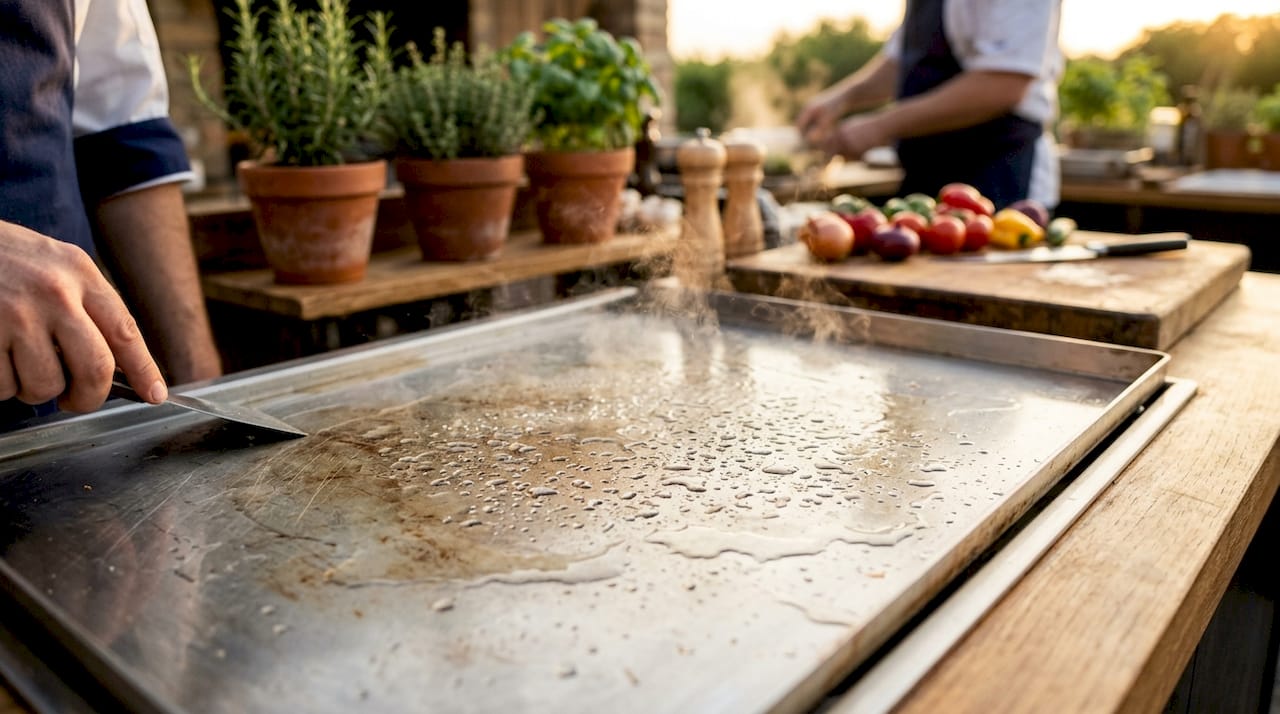
Heat conduction on a plancha is more direct than any other common cooking method. When food touches the plate, energy transfers immediately from metal to food. That contact creates the Maillard reaction, the chemical process responsible for browning and flavor development, faster and more evenly than a pan over a burner can achieve.
How does a plancha griddle differ from traditional grills and skillets?
The core difference between a plancha and an open-flame grill is the cooking surface itself. A grill uses radiant heat from flames or coals below a metal grate. Fat drips through the grate onto the heat source, creating smoke and flare-ups. That smoke adds flavor, but it also produces polycyclic aromatic hydrocarbons (PAHs), which are compounds formed when fat burns at high temperatures.
A plancha griddle keeps fat on the surface. Juices stay on the cooking plate, forming a fond that caramelizes and coats the food. The result is a richer, more concentrated flavor rather than a smoky char. Neither approach is objectively better. They produce different results, and knowing the difference helps you choose the right tool for each dish.
Compared to a standard skillet, a plancha offers a much larger cooking area and more consistent heat distribution. A skillet heats unevenly from the center outward, and its raised sides trap steam. A plancha’s open, flat surface lets moisture evaporate quickly, which is exactly what you need for a proper sear.
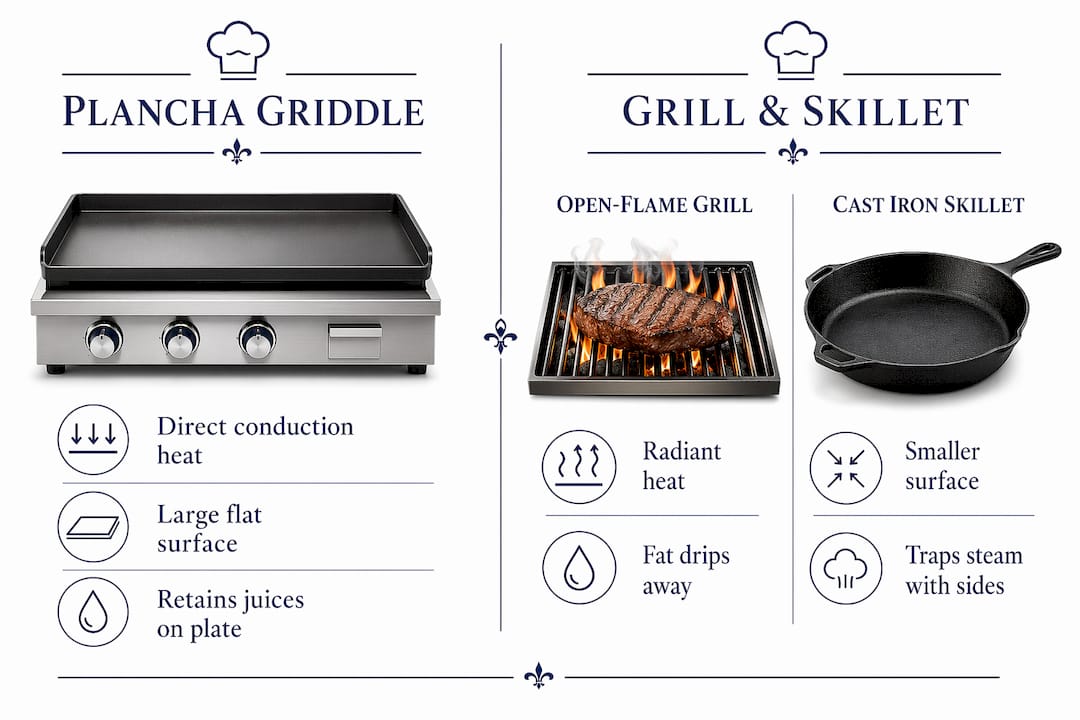
| Feature | Plancha griddle | Open-flame grill | Cast iron skillet |
|---|---|---|---|
| Heat type | Conduction | Radiant + convective | Conduction |
| Flare-ups | None | Common | None |
| Flavor profile | Caramelized, rich | Smoky, charred | Caramelized |
| Cooking area | Large, uniform | Variable | Small to medium |
| Fat management | Stays on surface | Drips onto flame | Stays in pan |
| Multi-food cooking | Excellent | Limited | Limited |
The plancha griddle vs skillet comparison comes down to scale and surface control. For cooking a single steak, a skillet works. For cooking proteins, vegetables, and eggs at the same time for four people, a plancha is the clear choice.
What are the benefits of using a plancha griddle?
The benefits of plancha cooking cover health, flavor, and practical efficiency. Starting with health: plancha cooking reduces the formation of PAHs and AGEs by preventing fat from dripping onto open flames. AGEs (advanced glycation end products) form when food is exposed to very high, dry heat for extended periods, and they are associated with inflammation. The plancha’s controlled surface heat minimizes both risks compared to traditional grilling.
Flavor development on a plancha is distinct and repeatable. The flat surface builds fond, the browned layer of proteins and sugars that sticks to the plate and transfers back to food. That fond is flavor. A grill loses it through the grate. A plancha concentrates it.
The practical advantages are equally strong:
- Large cooking area. A plancha lets you cook eggs, proteins, and vegetables simultaneously on one surface, reducing total cook time for full meals.
- Temperature zones. Most plancha units allow you to create hotter and cooler zones across the plate, so you can sear meat on one side while keeping vegetables warm on the other.
- Easy cleanup. A flat metal surface is faster to clean than a grill grate with crevices and bars.
- Year-round use. A plancha works indoors on a range or outdoors on a gas burner stand, making it a practical tool in any season.
Pro Tip: Deglaze the plancha surface with a small amount of water or white wine while it is still hot. The liquid lifts the fond and creates an instant pan sauce you can pour directly over the food.
Chef Mercedes Golip describes the plancha as a culinary workhorse for multitasking, capable of handling an entire meal’s components at once. That efficiency is the reason professional kitchens adopted it long before home cooks did.
How to use and maintain a plancha griddle effectively
Correct setup determines your results before you cook a single piece of food. Preheat the plancha for 10–15 minutes before cooking. That time allows the plate to reach a uniform temperature across its full surface. Skipping this step causes uneven searing and sticking.
For gas-powered units, verify gas hose connections with a soapy water test before every session. Apply soapy water to all connections and look for bubbles. Bubbles indicate a leak. This check takes 30 seconds and prevents a serious hazard. For outdoor setup guidance on commercial-grade equipment, Culinaryprofis covers commercial grill setup in detail.
Seasoning the surface
A new plancha requires seasoning before first use. Apply a thin layer of high-smoke-point oil (such as flaxseed, grapeseed, or refined avocado oil) to the entire surface, then heat until the oil smokes and polymerizes. Repeat this process 3–5 times. Each cycle builds a thicker, more durable non-stick coating. A well-seasoned plancha releases food cleanly and resists rust.
Cooking technique steps
- Preheat the plancha for 10–15 minutes on high heat.
- Reduce to your target cooking temperature before adding food.
- Pat food dry before placing it on the plate. Moisture is the enemy of a good sear.
- Press food lightly onto the surface at first contact to maximize plate contact.
- Resist moving food until it releases naturally. Forced movement tears the sear.
- Use a metal spatula or scraper to deglaze and clean between batches.
Setup and drainage
Tilt the plancha plate slightly using the rear legs so grease drains toward the front into the drip tray. This prevents fat from pooling under food, which would cause steaming instead of searing. Even a small tilt makes a measurable difference in crust quality.
Pro Tip: Advanced cooks use a sous vide finish technique to maximize results: cook proteins to target internal temperature in a water bath first, then sear on a screaming-hot plancha for 60–90 seconds per side. You get a perfect interior and a restaurant-quality crust without overcooking.
Cleaning is straightforward while the plate is still warm. Scrape residue with a metal bench scraper, then wipe with a damp cloth. Never use soap on a seasoned surface. Dry the plate completely and apply a light coat of oil before storage to prevent oxidation.
What foods and recipes excel when cooked on a plancha griddle?
The plancha’s high, even heat suits a wide range of foods. The best plancha grill recipes take advantage of the surface’s ability to sear quickly without drying food out.
Seafood performs exceptionally well on a plancha. Shrimp, scallops, and fish fillets cook in under three minutes at high heat. The surface creates a golden crust while keeping the interior moist. Delicate fish that would fall apart on a grill grate holds together perfectly on a flat plate.
Vegetables caramelize fast on a plancha. Asparagus, zucchini, bell peppers, and corn develop char marks and concentrated sweetness in minutes. The high surface temperature drives off moisture quickly, so vegetables stay firm rather than turning soft and watery.
Eggs and breakfast foods are a natural fit. A plancha handles multiple eggs, bacon strips, and toast simultaneously, which makes it practical for cooking for a group. The large surface area is the key advantage here.
Other foods that excel on a plancha:
- Thin-cut meats: Skirt steak, chicken thighs, and pork cutlets sear fast and stay juicy.
- Arepas and flatbreads: The flat surface toasts evenly without burning edges.
- Halloumi and firm cheeses: High heat creates a golden crust without melting the cheese into the surface.
- Dumplings and gyoza: The plancha produces the crisp bottom that defines these dishes.
Culturally, the plancha is central to Spanish tapas cooking, where gambas a la plancha (grilled shrimp) is a staple. In France, it is standard equipment in bistros for cooking steak and fish. Latin American cooks use flat griddles for arepas and tortillas. The technique crosses cuisines because the physics of flat-surface high-heat cooking improves nearly every food that benefits from a sear.
Plancha cooking is social and interactive, inviting guests to gather around the hot plate and participate in the cooking. For catering-style gatherings, pairing a plancha with complementary equipment creates a complete outdoor cooking station. Zinqué’s catering approach demonstrates how flat-top cooking integrates naturally into group meal service.
Why the plancha changed how I cook outdoors
The first time I cooked on a plancha, I expected it to feel like a bigger skillet. It does not. The difference is the thermal mass. A thick carbon steel plate holds heat in a way a thin pan never can. You can add cold food straight from the refrigerator and the surface temperature barely drops. That stability is what separates a plancha from every other flat cooking surface I have used.
The mistake most beginners make is not preheating long enough. Ten minutes feels excessive until you understand that the plate needs to reach equilibrium across its entire surface, not just the center above the burner. I spent two sessions wondering why my sears were uneven before I started using an infrared thermometer to check surface temperature before cooking. The difference was immediate.
The social aspect surprised me more than the cooking results. A plancha placed on an outdoor table becomes the center of the meal. Guests watch, ask questions, and reach in. It changes the dynamic of cooking for a group in a way that a closed oven or a covered grill never does. For anyone who cooks outdoors regularly, a plancha is not a specialty tool. It is the most practical piece of equipment you can own.
Culinaryprofis equipment for high-heat outdoor cooking
Culinaryprofis stocks commercial-grade cooking equipment built for the kind of high-heat, high-output cooking that plancha technique demands.
For cooks who want to build a complete outdoor cooking station, the Dukers commercial stock pot range provides a powerful gas burner platform that pairs well with flat-top griddle surfaces. It handles the sustained high heat that plancha cooking requires. Culinaryprofis also carries the AccuTemp countertop electric griddle, which delivers uniform surface temperatures for consistent searing indoors. Browse the full equipment range at Culinaryprofis to find the right setup for your kitchen or outdoor cooking space.
Key takeaways
A plancha griddle is the most efficient flat-surface cooking tool available to home cooks, combining high-conduction heat, zero flare-ups, and a large cooking area that no standard skillet or grill can replicate.
| Point | Details |
|---|---|
| Definition and heat | A plancha is a solid metal plate reaching 300°C–350°C via direct conduction for uniform searing. |
| Health advantage | Plancha cooking reduces PAH and AGE formation by keeping fat off open flames. |
| Flavor mechanism | Juices stay on the surface, building fond that caramelizes and enriches every dish. |
| Seasoning requirement | Season with high-smoke-point oil 3–5 times before first use to build a non-stick surface. |
| Setup best practice | Tilt the plate for grease drainage and preheat 10–15 minutes for consistent results. |
FAQ
What is a plancha griddle used for?
A plancha griddle is used for high-heat searing of seafood, meats, vegetables, eggs, and flatbreads on a flat metal surface. Its large cooking area allows multiple foods to cook simultaneously, making it practical for full meals and group cooking.
How does a plancha griddle differ from a skillet?
A plancha offers a much larger, uniformly heated surface compared to a skillet, with no raised sides that trap steam. That open surface drives off moisture faster, producing a better sear on proteins and vegetables.
Is plancha cooking healthier than grilling?
Plancha cooking reduces the formation of carcinogenic PAHs and AGEs because fat does not drip onto open flames. This makes it a healthier cooking method than traditional open-flame grilling for regular use.
How long should you preheat a plancha griddle?
Preheat a plancha for 10–15 minutes before cooking to allow the plate to reach a uniform temperature across its full surface. Insufficient preheating causes uneven searing and food sticking.
What is the best oil to season a plancha griddle?
High-smoke-point oils such as flaxseed, grapeseed, or refined avocado oil work best for seasoning a plancha. Apply a thin layer, heat until smoking, and repeat 3–5 times to build a durable non-stick coating.