
What Is a Commercial Warming Drawer: Pro Kitchen Guide

A commercial warming drawer is a dedicated foodservice appliance that holds fully cooked food at safe, consistent temperatures without cooking it further. Unlike an oven or microwave, it applies gentle heat to preserve texture, moisture, and flavor until the moment of service. Brands like Winston CVap and Alto-Shaam have built entire product lines around this single function, and for good reason. In professional kitchens and serious home setups alike, a commercial warming drawer is the difference between food that arrives at the table in peak condition and food that dries out waiting on the line.
What is a commercial warming drawer and how does it work?
A commercial warming drawer is a hot-holding unit, not a cooking appliance. It maintains food at a target temperature, typically at or above 140°F, which is the minimum safe holding temperature recognized by food safety standards. Operating ranges span 90°F to 180°F, with some models reaching 200°F for specific holding needs.
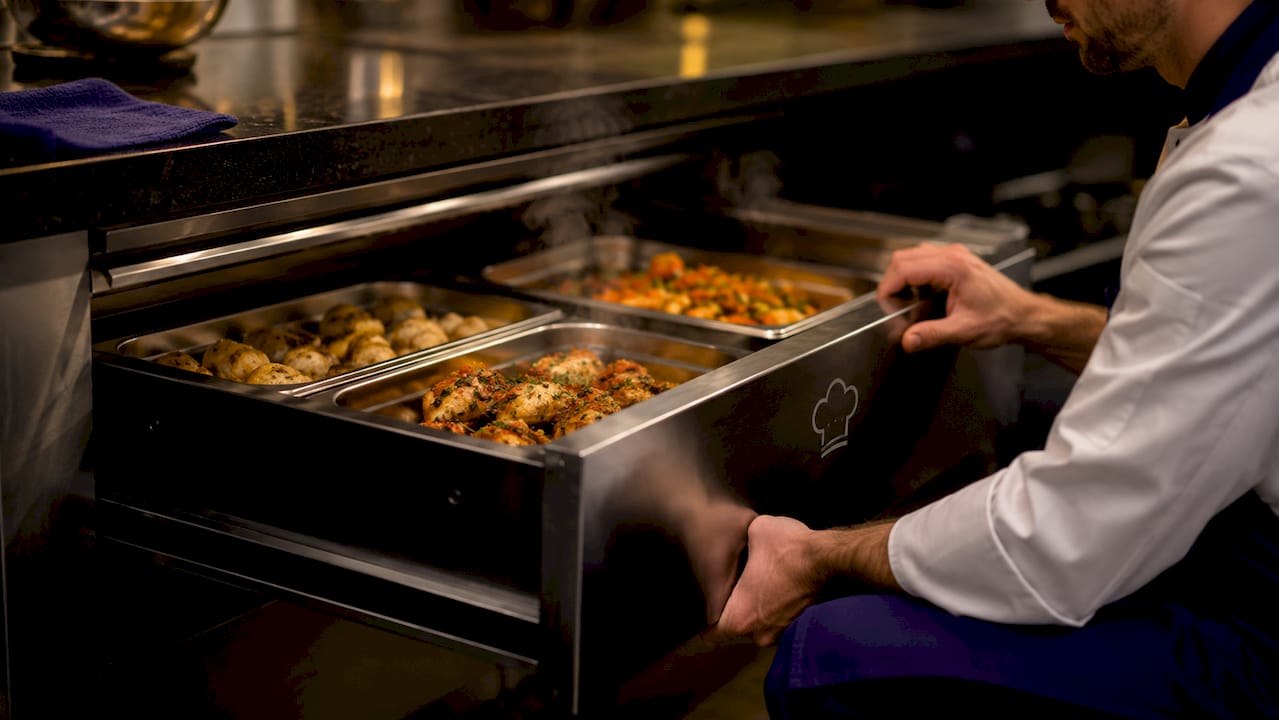
The technology behind quality warming drawers goes beyond a simple heating element. Dual heat systems combine moist vapor and dry air heat to control food texture during holding. Winston CVap drawers use a patented version of this approach, keeping soft foods moist and crispy foods crisp at the same time. That level of control is not possible with a standard oven or a heat lamp.
Key features that define commercial warming drawer function:
- Temperature control: Thermostatic controls hold food at a precise target without fluctuation.
- Humidity management: Adjustable vents control moisture levels, letting operators choose between a moist or dry holding environment.
- Gentle heat delivery: The unit warms without browning, drying, or continuing to cook the food.
- Capacity: Most commercial units accept full-size hotel pans, making them compatible with standard kitchen workflows.
Pro Tip: Set your warming drawer to 140°F or above for any protein or cooked vegetable. Drop below that threshold and you enter the food safety danger zone, regardless of how the food looks or smells.
Warming drawers differ from ovens and microwaves in one fundamental way: they are designed only to hold food hot, not to cook it. Microwaves reheat unevenly and continue cooking. Ovens run too hot and dry food out quickly. A warming drawer holds steady, applying just enough heat to maintain quality without degrading it.
What are the benefits of warming drawers in professional and home kitchens?
The primary benefit of a commercial warming drawer is labor efficiency during peak service. Warming drawers keep multiple prepared items hot during service periods, eliminating last-minute reheating and reducing pressure on line cooks. During a lunch rush, that means fewer bottlenecks and faster ticket times.
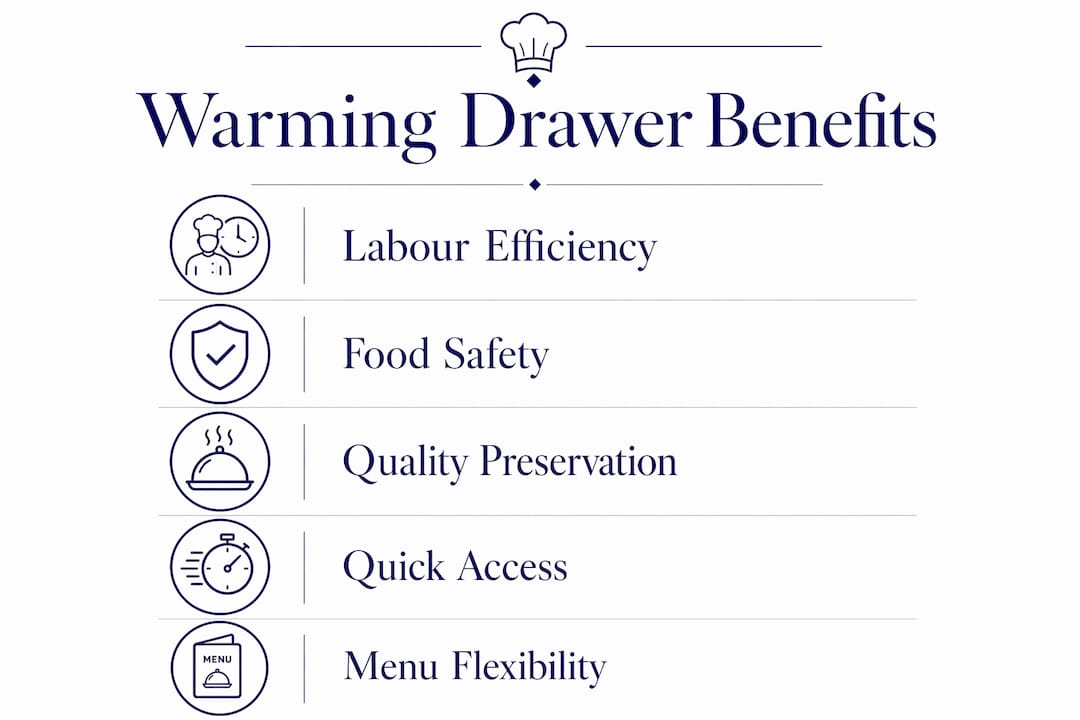
Food quality is the second major benefit. Holding food in a warming drawer preserves yield and texture in ways that ovens cannot. Proteins held in a Winston CVap drawer retain moisture because the humidity environment slows evaporation. Bread held in a Hatco unit stays warm without developing a hard crust. Matching the warming solution to specific menu items is critical to maintaining that quality consistently.
Additional benefits that culinary professionals and home cooks rely on:
- Reduced food waste: Food held properly does not dry out or overcook, so less gets discarded at the end of service.
- Workflow staging: Cooks can prepare items ahead of service and stage them in the drawer, freeing up burners and oven space.
- Versatility: Warming drawers handle proteins, sides, breads, sauces, and plated dishes without adjustment between items.
- Energy efficiency: A warming drawer consumes far less energy than running a full oven just to hold food hot.
Front-of-house and kitchen staff both benefit from quick access to hot, ready food. Servers can pull plated dishes without waiting on the line, and prep cooks can stage components in advance. That coordination is what separates a smooth service from a chaotic one. For high-volume kitchen operations, this kind of workflow integration is not optional.
What types of commercial warming drawers should buyers consider?
Commercial warming drawers come in three primary configurations: built-in, countertop, and freestanding. Vulcan, Wells, and Hatco produce models across all three categories, each designed for specific operational needs. Choosing the wrong configuration for your kitchen layout wastes money and floor space.
| Configuration | Best for | Key trade-off |
|---|---|---|
| Built-in | Restaurants with fixed cabinetry or custom line builds | Requires installation; not portable |
| Countertop | Catering operations, smaller kitchens, home setups | Limited capacity per unit |
| Freestanding | High-volume restaurants needing flexible placement | Takes up floor space |
Single-drawer units work for low-volume operations or home kitchens. Multi-drawer units with independent controls are the standard in commercial settings because different menu items require different temperature and humidity settings. Running bread and proteins in the same drawer at the same settings compromises one or both.
Material quality matters as much as configuration. Stainless steel construction is the industry standard for durability and sanitation. Vulcan warming drawers feature stainless steel roller slides for smooth operation and easy cleaning. Look for units with removable pan inserts, since removable drawers and smooth rollers make daily cleaning significantly faster.
Pro Tip: If you run a varied menu with both crispy and moist items, choose a multi-drawer unit with independent humidity controls. A single shared environment forces a compromise that hurts food quality on at least one item.
How to use a commercial warming drawer effectively in daily operations
Effective use of a warming drawer starts before service, not during it. Load only fully cooked food that is already at a safe internal temperature. A warming drawer is not a reheating device, and treating it as one creates food safety risks and uneven results.
Follow these steps for daily warming drawer operation:
- Preheat the drawer before loading any food. Allow 15–20 minutes for the unit to reach your target holding temperature.
- Set the temperature to 140°F or above for all hot-held proteins, cooked vegetables, and sauces. Adjust upward for items that need to arrive at the table very hot.
- Manage humidity by item type. Cover moist foods like braised proteins or rice to trap steam. Leave crispy items like fried chicken or roasted potatoes uncovered with the vent open.
- Stage items parallel to cooking. As batches come off the grill or out of the oven, transfer them directly to the warming drawer. Do not let food sit on a counter first.
- Rotate stock during long service periods. First in, first out applies to warming drawers. Items held too long lose quality even at the correct temperature.
- Clean after every service. Remove drawer inserts and wipe down rollers after each shift. Grease and food residue build up quickly in a warm environment.
The most common mistake is overloading the drawer. Stacking pans too high blocks heat circulation and creates cold spots. A single layer of food in each pan, with the drawer no more than two-thirds full, gives consistent results. For organized prep station workflows, warming drawers work best when positioned close to the pass or plating area, not buried at the back of the line.
Operators who hold cooked food safely at or above 140°F while staging pans parallel to cooking maintain quality throughout service without overcooking. That discipline is what separates kitchens that use warming drawers well from those that treat them as an afterthought.
Key Takeaways
A commercial warming drawer holds fully cooked food at 140°F or above, preserving texture and safety without cooking further, making it an essential tool for any serious kitchen operation.
| Point | Details |
|---|---|
| Core function | Holds cooked food at safe temperatures without continuing to cook it. |
| Safe holding temperature | Set to 140°F or above for all hot-held proteins, vegetables, and sauces. |
| Humidity control matters | Use adjustable vents and covers to match the holding environment to each food type. |
| Choose the right configuration | Match built-in, countertop, or freestanding units to your kitchen size and workflow. |
| Clean after every service | Remove inserts and wipe rollers daily to prevent grease buildup and maintain hygiene. |
Why warming drawers are the most underrated tool on the line
Most kitchens I have worked in or consulted for treat the warming drawer as a backup plan. It sits at the end of the line, half-loaded, set to a single temperature for everything. That approach wastes the equipment’s actual capability.
The real value of a commercial warming drawer shows up in how it changes the rhythm of service. When you stage correctly, the line stops being reactive. Cooks are not scrambling to fire items because a table ordered at an awkward time. The drawer holds the buffer, and the kitchen runs on its own schedule. That shift in workflow reduces errors, speeds up tickets, and cuts the stress that causes mistakes during a busy service.
My honest advice: buy one drawer more than you think you need, and position it at the pass. The benefits of automated kitchen equipment compound when warming drawers work alongside your cooking line rather than behind it. Pair a multi-drawer unit with independent controls with a solid commercial steamer oven, and you have a holding system that handles nearly any menu. The kitchens getting the most out of this equipment are the ones treating it as a primary workflow tool, not a convenience.
— John
Commercial warming drawers available at Culinaryprofis
Culinaryprofis carries professional-grade commercial kitchen equipment for restaurants, catering operations, and serious home cooks. The catalog includes warming drawers, commercial ovens, refrigeration units, and a full range of foodservice appliances from trusted brands.
Every order ships free, and the support team is available to help match equipment to your specific kitchen layout and menu needs. Whether you are outfitting a full restaurant line or upgrading a home kitchen, browse professional kitchen equipment at Culinaryprofis to find the right warming solution. For bulk purchasing or multi-unit orders, the bulk appliance procurement guide covers everything you need to know before buying.
FAQ
What is a commercial warming drawer used for?
A commercial warming drawer holds fully cooked food at safe temperatures, typically 140°F or above, without cooking it further. It preserves texture and moisture during service periods in professional and home kitchens.
How does a warming drawer differ from an oven?
A warming drawer applies gentle, controlled heat to hold food hot, while an oven cooks food with high, direct heat. Warming drawers do not brown, dry out, or continue cooking food the way an oven does.
What temperature should a commercial warming drawer be set to?
Set the drawer to 140°F or above for all hot-held proteins, cooked vegetables, and sauces. Some models operate up to 200°F for items that need to arrive at the table very hot.
Can a warming drawer handle different foods at the same time?
Multi-drawer units with independent controls handle different foods simultaneously by allowing separate temperature and humidity settings per drawer. Single-drawer units require a compromise that can affect food quality.
How do you clean a commercial warming drawer?
Remove the drawer inserts after each service and wipe down the stainless steel rollers and interior surfaces. Vulcan warming drawers are designed with removable pans and smooth rollers specifically to make this process fast and thorough.