
What Is a Combi Oven? A Complete Guide for Chefs

A combi oven is a professional kitchen appliance that combines convection heat, steam, and a simultaneous blend of both to cook food with precision and control. The industry term is “combination oven,” though “combi oven” is the standard shorthand used across foodservice. This single unit replaces multiple appliances, handling roasting, steaming, baking, poaching, braising, and rethermalizing in one compact footprint. For culinary professionals managing high-volume output and consistent quality standards, the combi oven is not optional equipment. It is the operational center of a modern professional kitchen.
What is a combi oven and how does it work?
A combi oven operates across three distinct cooking modes: convection, steam, and combination. Each mode serves a different culinary purpose, and switching between them is controlled digitally through a programmable interface.
Convection mode circulates dry, heated air through a fan system. This mode is ideal for browning, crisping, and baking. The moving air transfers heat faster than a static oven, which shortens cook times and produces consistent surface color across every rack position.
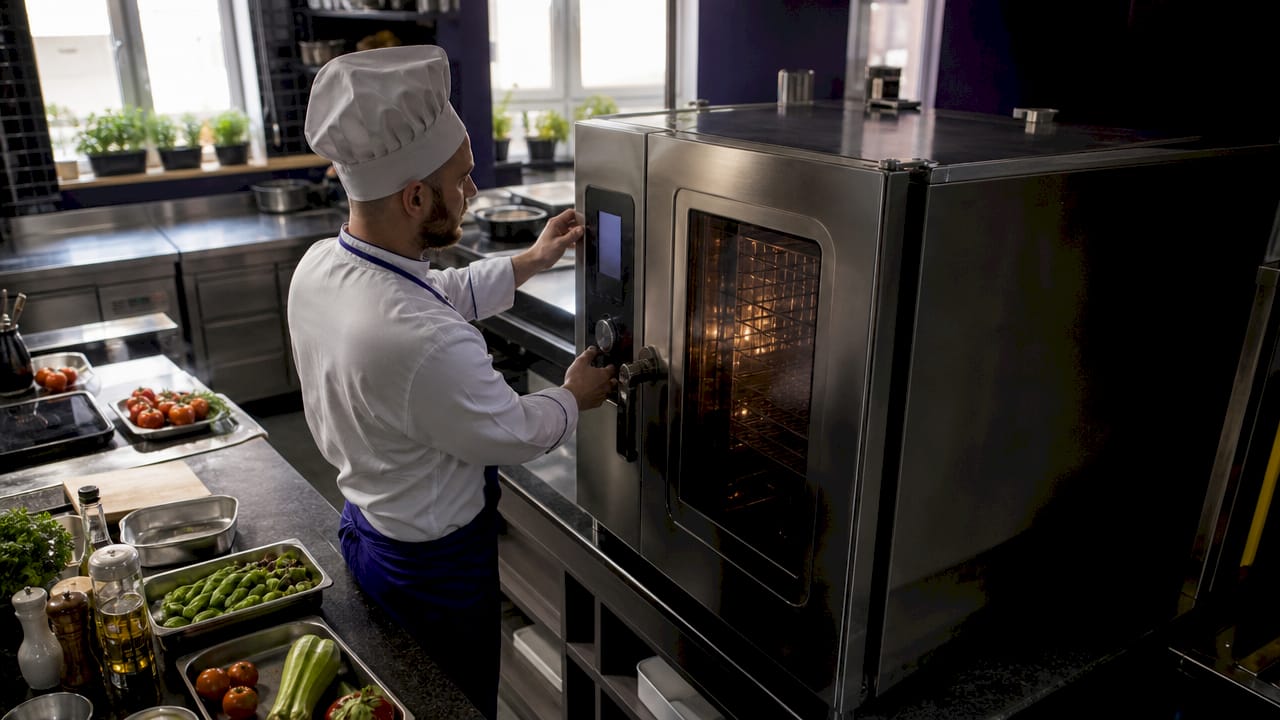
Steam mode injects moisture into the cooking cavity at controlled temperatures. This gentle, moist heat is ideal for vegetables, fish, and delicate proteins. Because moisture acts as a more efficient energy carrier than dry air, food cooks faster and retains more natural juices.
Combination mode runs both systems at once. The oven delivers dry heat for browning while simultaneously injecting steam to prevent moisture loss. This is where the combi oven earns its reputation. A whole roast chicken, for example, gets a crisp skin from convection and a juicy interior from the controlled humidity.
Boiler vs. boilerless steam systems
The method of steam generation splits combi ovens into two categories. Boiler systems generate steam rapidly and recover quickly between door openings, making them well suited for high-output environments. The trade-off is regular descaling maintenance. Boilerless systems inject water directly onto a heating element to produce steam. They are easier to maintain and work well in smaller kitchens or locations with limited water treatment infrastructure.
Pro Tip: If your kitchen operates in an area with hard water, factor descaling frequency into your total cost of ownership calculation before choosing a boiler system.
Modern combi ovens use digital sensors and real-time monitoring to track temperature, humidity, and cooking progress simultaneously. Programmable recipe storage means a cook can execute a complex multi-stage program with a single button press, reducing labor and eliminating human error on repetitive tasks.
What are the main benefits of using a combi oven?
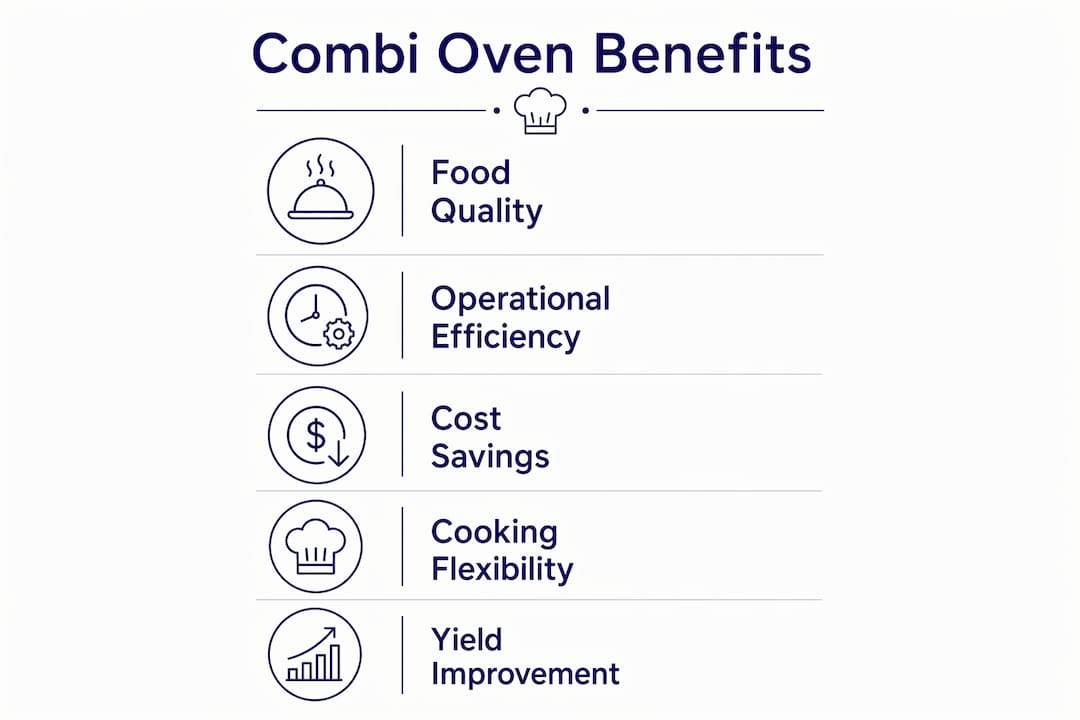
The benefits of combi ovens fall into three categories: food quality, operational efficiency, and cost control. Each one has a direct impact on kitchen performance.
Food quality and yield
Precision humidity control in a combi oven reduces protein cooking losses by up to 50%, compared to conventional dry-heat methods. That number translates directly to plate weight, portion cost, and customer satisfaction. Less shrinkage means more servings per kilogram of raw protein, which matters in any high-volume operation.
Operational consistency
- Standardized programs lock in cook times, temperatures, and humidity levels for every dish on your menu.
- Repeatable results mean a less experienced cook can execute a complex recipe the same way a senior chef would.
- Multi-stage automation handles tasks like searing with dry heat and finishing with steam without manual intervention.
- Auto-cleaning cycles maintain sanitation standards with minimal manual effort, reducing labor at the end of service.
Programmable cycles standardize cooking results across different operators, which is the single most underrated advantage in a high-turnover kitchen environment. Consistency does not depend on who is working the line.
Cost and space efficiency
Despite higher upfront costs, combi ovens lower total operational costs through energy savings and reduced food waste. One unit replaces a convection oven, a steamer, and often a braising pan. That consolidation frees floor space and reduces utility consumption. For catering operations and hotels running continuous service, the return on investment is measurable within the first year of operation.
Pro Tip: Calculate your current food waste from overcooked proteins before purchasing. The yield improvement alone often justifies the equipment cost within months.
What can you cook in a combi oven?
The combi oven handles a wider range of cooking tasks than any other single appliance in a professional kitchen. The key is matching the cooking mode to the food type.
- Roasting and browning: Use convection mode or combination mode for poultry, beef, and pork. The controlled humidity prevents surface drying while maintaining internal moisture.
- Steaming: Use steam mode for vegetables, shellfish, dumplings, and custards. Precise temperature control prevents overcooking delicate items.
- Baking: Convection mode with optional humidity injection produces consistent bread crusts, pastry layers, and even bakes across all rack positions.
- Braising: Combination mode replicates the low-and-slow moist environment of a traditional braise in a fraction of the time.
- Rethermalizing: Steam mode gently reheats pre-cooked foods without drying them out, critical for banquet and catering operations.
Delta-T cooking and core temperature probes
Using a core temperature probe is the most effective technique for cooking proteins to exact internal temperatures without overcooking. The probe monitors the center of the food in real time and signals the oven to adjust or stop. Delta-T cooking takes this further by maintaining the oven cavity temperature a set number of degrees above the target internal temperature throughout the cook. This technique produces tender, juicy roasts with repeatable, high-yield results every time.
Cooking multiple foods simultaneously
A combi oven cooks different food items simultaneously without flavor transfer due to controlled airflow and humidity management. This capability is a significant advantage in high-volume foodservice. A hotel kitchen can run salmon on one rack and roasted vegetables on another without either item picking up the other’s aroma. Proper load management is required. Heavy or moisture-releasing items should be positioned on lower racks to prevent drip contamination and uneven cooking.
| Cooking method | Recommended mode | Typical application |
|---|---|---|
| Roasting | Combination | Poultry, beef joints, pork shoulder |
| Steaming | Steam | Vegetables, fish, shellfish, custards |
| Baking | Convection | Bread, pastry, cakes |
| Braising | Combination | Short ribs, lamb shanks, root vegetables |
| Rethermalizing | Steam | Banquet proteins, pre-cooked grains |
For a deeper look at steam-specific cooking equipment, the commercial steamer oven guide on Culinaryprofis covers how dedicated steamers compare to the steam mode in a combi unit.
How to choose and optimize a combi oven for your kitchen
Selecting the right combi oven starts with three variables: kitchen volume, menu complexity, and available space. A high-volume restaurant running 200 covers per service needs a different unit than a boutique catering operation running 40.
- Volume and capacity: Match the number of rack positions to your peak service demand. Undersizing forces multiple cook cycles and creates bottlenecks.
- Steam system type: Choose a boiler system for high-output kitchens with treated water. Choose a boilerless system for smaller operations or locations with hard water.
- Core probe compatibility: Confirm the unit supports core temperature probes before purchasing. This feature is non-negotiable for consistent protein cookery.
- Programmable recipe storage: Prioritize units that store a large number of recipes. This directly reduces training time and skill dependency.
- Automated cleaning: Auto-cleaning programs save significant labor at the end of service and maintain hygiene standards without manual scrubbing.
Load management is the most overlooked operational skill when running a combi oven. Placing moisture-heavy items like fish or braised meats near items that require dry surface conditions, such as bread or pastry, will compromise both. Organize your racks by moisture output and airflow requirements.
Pro Tip: Run a dedicated training session on load management when onboarding new kitchen staff. Most combi oven underperformance comes from incorrect rack placement, not equipment failure.
For context on how combi ovens fit into a broader high-volume kitchen setup, the Culinaryprofis resource on high-volume cooking appliances covers complementary equipment and workflow planning.
Key Takeaways
A combi oven is the most operationally versatile appliance in a professional kitchen, combining convection, steam, and combination modes to deliver consistent, high-yield results across every cooking method.
| Point | Details |
|---|---|
| Three core modes | Convection, steam, and combination modes cover roasting, steaming, baking, braising, and rethermalizing. |
| Yield improvement | Precision humidity control reduces protein cooking losses by up to 50% compared to dry-heat methods. |
| Operational consistency | Programmable cycles standardize results across all operators, regardless of skill level. |
| Steam system choice | Boiler systems suit high-output kitchens; boilerless systems are easier to maintain in smaller operations. |
| Core probe technique | Delta-T cooking with a core temperature probe delivers repeatable, high-yield protein results every time. |
Why combi ovens are worth every dollar of the investment
I have worked with professional kitchens long enough to know that most equipment debates come down to budget. The combi oven is the one appliance where the upfront cost argument falls apart quickly. The yield gains on protein alone, up to 50% less shrinkage, pay for the unit faster than most operators expect. That is not a marketing claim. It is basic math applied to your food cost percentage.
What I find most underappreciated is the consistency factor. Kitchens with high staff turnover lose quality every time a skilled cook leaves. A combi oven with well-built programmable recipes neutralizes that risk. A new hire can execute a 12-hour braise or a precise salmon fillet on day one, because the machine carries the technical knowledge. That is a structural advantage, not a convenience.
The common mistake I see is buying a combi oven and using it like a standard convection oven. Operators skip the core probe, ignore load management, and never build out their recipe library. The equipment then underperforms, and the team blames the machine. The machine is not the problem. The training is. Invest in both the equipment and the operational knowledge to run it correctly, and the return is consistent.
— John
Professional kitchen equipment at Culinaryprofis
Culinaryprofis stocks commercial-grade kitchen equipment built for professional performance and daily operational demands.
A complete kitchen setup pairs a combi oven with reliable cold storage. Culinaryprofis carries a full range of commercial reach-in refrigerators in one, two, and three-door configurations, suited for restaurant kitchens and catering operations of every size. Proper cold storage directly supports the yield gains you get from precise combi oven cooking. Keeping proteins at correct holding temperatures before they go into the oven is as important as the cook itself. Browse the full Culinaryprofis equipment catalog at culinaryprofis.com to build out your kitchen with the right tools for the volume and menu you run.
FAQ
What is a combi oven used for?
A combi oven handles roasting, steaming, baking, braising, and rethermalizing in a single unit. It replaces multiple appliances and gives chefs precise control over temperature and humidity for every cooking task.
How does a combi oven differ from a convection oven?
A convection oven uses only dry, circulated heat. A combi oven adds steam injection and a combination mode, giving it far greater control over moisture levels and making it suitable for a much wider range of cooking methods.
What is Delta-T cooking in a combi oven?
Delta-T cooking maintains the oven cavity temperature a fixed number of degrees above the food’s target internal temperature throughout the cook. This technique reduces shrinkage and produces consistently juicy, high-yield results for proteins.
Which is better, a boiler or boilerless combi oven?
Boiler systems recover steam faster and suit high-output kitchens, but require regular descaling. Boilerless systems are easier to maintain and work well in smaller operations or locations with hard water.
Can a combi oven cook different foods at the same time?
A combi oven can cook different items simultaneously without flavor transfer, provided load management is correct. Heavy or moisture-releasing items should be positioned on lower racks to avoid affecting items that require drier conditions.