
Commercial Oven Types Compared: 2026 Pro Kitchen Guide

Commercial oven types compared for professional kitchens include five core categories: combi, convection, deck, conveyor, and high-speed ovens. Each type serves a distinct cooking method, throughput demand, and menu profile. Choosing the wrong type costs more than money. It costs uptime, consistency, and staff efficiency. This guide breaks down each oven type by real operational criteria so you can match the right equipment to your kitchen’s actual workload.
1. What makes combi ovens the most versatile choice?
Combi ovens are defined as units that combine convection heat, steam injection, and humidity control in a single cavity. That combination lets one appliance replace a steamer, a convection oven, and in many cases a braising pan. Full-service restaurants, hotel kitchens, and healthcare foodservice operations rely on combi ovens precisely because menu complexity demands multiple cooking modes without multiple footprints.
The technology works by letting operators switch between dry heat, steam, and a combination of both. Programmable recipe modes store cooking sequences, which reduces reliance on individual cook skill and improves plate-to-plate consistency. Automated HACCP logging records temperature data continuously, which satisfies food safety audits without manual documentation.
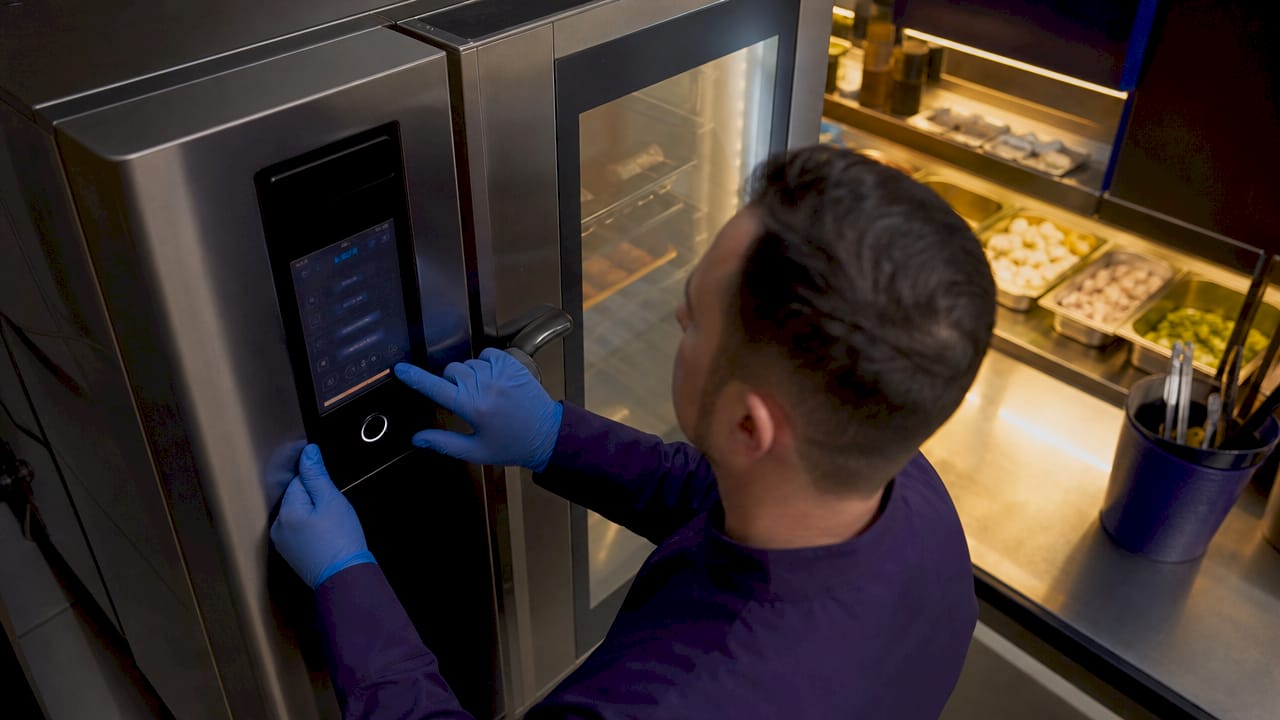
Cost is the main barrier. Advanced combi ovens generally cost $14,000–$28,000 depending on size and features. The total cost of ownership over 15 years ranges between $46,000 and $65,000, driven more by maintenance, service contracts, and energy use than by the hardware purchase price itself.
Key operational benefits of combi ovens:
- Programmable multi-stage cooking reduces labor dependency
- Automated HACCP logging supports food safety compliance
- Steam injection preserves moisture in proteins and baked goods
- One unit handles roasting, steaming, baking, and regeneration
- Cloud-based fleet management is available on top-tier models
Pro Tip: Operators achieve ROI on combi ovens mainly through labor savings and menu consistency, not just cooking speed. Budget for staff training from day one or the advanced features will go unused.
2. When convection ovens are the right call
Convection ovens use a fan to circulate hot air continuously around the food. That forced airflow cooks faster and more evenly than static heat, and it does so without the complexity or cost of steam systems. For kitchens focused on baking and roasting without steam requirements, convection ovens are significantly less expensive than combi units and fully sufficient for the work.
Bakeries, pizzerias, and casual dining kitchens get the most value from convection ovens. Croissants, roasted vegetables, sheet-pan proteins, and cookies all benefit from consistent airflow. The absence of steam components means fewer parts to fail and lower service costs over time.
The service ecosystem matters as much as the oven itself. Brands with widely available parts networks resolve repairs the same day, which keeps kitchen downtime minimal. For institutional kitchens running high-volume shifts, that parts availability often outweighs marginal differences in baking performance between brands.
Convection oven strengths at a glance:
- Lower acquisition cost than combi ovens
- Simpler mechanics mean fewer service calls
- Consistent airflow produces even browning and crust development
- Broad parts availability supports fast repair turnaround
- Straightforward controls reduce staff training time
3. Deck ovens: the standard for traditional baking
Deck ovens use static, radiant heat from stone or ceramic deck surfaces. The heat transfers directly from the deck into the dough, producing the thick crust and open crumb structure that artisan bread bakers require. No fan, no steam injection by default, just direct contact heat.
Deck ovens are preferred for traditional bread baking and bakery products where crust texture and bottom heat are non-negotiable. Sourdough loaves, baguettes, focaccia, and Neapolitan-style pizza all perform better in a deck oven than in a convection unit. The deck material itself affects the final product. Stone decks retain heat longer and produce a more consistent bake than steel decks. Culinaryprofis covers why deck material matters in detail for operators evaluating this category.
Throughput is the limitation. Deck ovens handle roughly 10–20 racks per hour, which makes them unsuitable for high-volume production environments. They are the right tool for quality-focused bakeries and restaurants where product authenticity matters more than speed.
4. Conveyor ovens: built for continuous production
Conveyor ovens move food through a heated tunnel on a belt at a set speed. Temperature zones inside the tunnel are programmable, and the belt speed controls total cook time. The result is a fully standardized cook with no operator intervention required after setup.
Continuous conveyor ovens maintain standardized cooking through programmable temperature zones and precise control, which makes them the default choice for mass-production environments. Quick-service restaurants, pizza chains, and stadium concession operations rely on conveyor ovens because consistency across hundreds of units per hour is the primary requirement.
Conveyor ovens can exceed 200 items per hour in throughput. That output rate makes them the highest-volume option in the commercial oven category. The tradeoff is menu inflexibility. Conveyor ovens excel at flat or uniform products like pizza, sandwiches, and flatbreads. They are not suited for roasts, delicate pastries, or anything requiring variable moisture control.
5. High-speed ovens: rapid cooking for fast-service applications
High-speed ovens combine microwave energy, infrared radiation, or impingement airflow to cook food in a fraction of the time a conventional oven requires. A sandwich that takes 12 minutes in a convection oven cooks in under 90 seconds in a high-speed unit. That speed makes them the right fit for coffee shops, hotel lobbies, and fast-casual counters where made-to-order speed is the competitive advantage.
High-speed ovens use electromagnetic radiation including infrared and microwave for ultra-fast cooking, ideal for rapid throughput needs. Most models are ventless, which means they install without a hood exhaust system. That ventless capability opens up locations that would otherwise require expensive kitchen buildouts.
The limitation is cavity size. High-speed ovens handle single portions or small batches. They are not designed for full-sheet pans or large roasts. Use them for reheating, finishing, and made-to-order single-serve items.
6. Throughput planning: matching capacity to demand
Throughput mismatch is one of the most common and expensive mistakes in commercial kitchen planning. Buying an oven with insufficient capacity for peak service creates bottlenecks that no amount of skilled labor can fix.
Typical throughput rates by oven type:
| Oven Type | Approximate Throughput |
|---|---|
| Deck oven | 10–20 racks per hour |
| Convection oven | 15–30 racks per hour |
| Combi oven | Varies by program and load |
| Conveyor oven | Exceeds 200 items per hour |
| High-speed oven | Single portions, under 2 minutes |
Matching peak hourly throughput with capacity plus 10–20% headroom prevents bottlenecks and keeps service moving. Build that buffer into your planning before you finalize a purchase. A unit that runs at 100% capacity during every peak service will fail faster and cost more to maintain.
7. How to evaluate commercial ovens beyond the spec sheet
The spec sheet tells you BTU output and cavity dimensions. It does not tell you how fast a technician will arrive when the unit fails at 11 a.m. on a Saturday. Operational fit requires evaluating factors that manufacturers rarely highlight.
Key evaluation criteria for kitchen operators:
- Service network coverage: How many certified technicians operate within your area? Same-day parts availability directly determines how long your kitchen sits idle after a breakdown.
- Staff training requirements: Sophisticated combi oven software requires user proficiency to deliver value. If your team turns over frequently, simpler interfaces pay off faster.
- Total cost of ownership: Hardware price is one line item. Factor in energy consumption, service contracts, and consumable parts over a 10-year horizon.
- Menu compatibility: A conveyor oven is the wrong tool for a fine-dining kitchen. Match the oven’s strengths to your actual menu, not your aspirational one.
- Duty cycle demands: High-volume operations need units rated for continuous use. Review duty cycle specifications before committing to any model.
Pro Tip: For multi-unit operations, prioritize service network depth and staff training capacity as much as purchase price. A cheaper unit with poor local service support will cost more over three years than a premium unit with a strong dealer network.
Key takeaways
The most effective commercial oven type depends on your kitchen’s menu complexity, throughput demands, and service network access, not on purchase price alone.
| Point | Details |
|---|---|
| Combi ovens offer the most versatility | They replace multiple appliances but require staff training to deliver full ROI. |
| Convection ovens suit baking-focused kitchens | Lower cost and simpler maintenance make them the right fit when steam is not needed. |
| Deck ovens prioritize crust quality over speed | Choose them for artisan bread and pizza where bottom heat is non-negotiable. |
| Conveyor ovens lead in throughput | They exceed 200 items per hour but only work well for flat, uniform products. |
| Service network determines real-world value | Parts availability and technician coverage matter more than marginal spec differences. |
What I’ve learned about buying commercial ovens the hard way
The spec sheet conversation is the easy part. Every sales rep will walk you through BTU ratings, cavity dimensions, and programmable modes. What they rarely tell you is how the oven performs at month 18 when a control board fails and the nearest certified technician is four hours away.
I’ve watched kitchens buy premium combi ovens with sophisticated cloud management features, then run them in manual mode for two years because nobody on staff had the time or training to learn the software. That is not a technology failure. It is a purchasing decision made without accounting for operational reality.
The pricing difference between top-tier combi oven brands often comes down to software complexity and cloud management features, not hardware durability. Hardware quality across the major commercial tiers is generally comparable. You are paying for the interface and the ecosystem, so make sure your team will actually use both.
My honest recommendation: match the oven to the staff you have, not the staff you plan to hire. Buy the unit your team can operate at 90% efficiency on day one, then upgrade when your operation justifies it. Chasing the most advanced technology in a kitchen that lacks the training infrastructure to support it is a reliable way to overspend and underperform.
— John
Culinaryprofis carries professional-grade commercial kitchen equipment
Culinaryprofis stocks a curated selection of commercial kitchen equipment built for foodservice operators who need reliable performance across every service. Whether you are outfitting a new kitchen or replacing aging equipment, the catalog covers ovens, ranges, refrigeration, and food prep tools from professional-grade brands.
The Culinaryprofis team offers expert support to help you match equipment to your kitchen’s specific throughput and menu demands. Free shipping, a flexible return policy, and direct access to product specialists make the buying process straightforward. Visit Culinaryprofis to review current inventory and get guidance on the right equipment for your operation.
FAQ
What are the main types of commercial ovens?
The five main types are combi, convection, deck, conveyor, and high-speed ovens. Each is designed for a different cooking method, throughput level, and menu profile.
Are combi ovens worth the higher cost?
Combi ovens are worth the cost for full-service kitchens with complex menus, because they replace multiple appliances and automate HACCP logging. ROI depends heavily on staff training and service network access.
What is the best commercial oven for a bakery?
Deck ovens are the standard choice for artisan bread and pastry production because their radiant heat produces the crust texture and bottom bake that convection airflow cannot replicate.
How do electric vs gas ovens compare for commercial use?
Gas ovens heat faster and cost less to operate in most U.S. markets, while electric ovens offer more precise temperature control and simpler ventilation requirements. The right choice depends on your utility infrastructure and local energy rates.
How much does a commercial combi oven cost?
Advanced combi ovens typically cost between $14,000 and $28,000 at purchase, with total cost of ownership over 15 years reaching $46,000–$65,000 when maintenance and energy are factored in.