
Taco Bar Equipment: Your Complete Event Setup Guide

Taco bar equipment is the collection of cooking, warming, and serving tools that makes hosting a taco bar organized, efficient, and enjoyable for every guest. The category covers everything from propane flat-top grills and chafing dishes to insulated tortilla warmers, ramekins, taco holders, and serving utensils. Getting the right gear in place before guests arrive is what separates a smooth, self-serve taco station from a chaotic mess of cold tortillas and empty trays. Whether you are hosting 20 people in a backyard or feeding 100 at a catered event, the right taco catering supplies determine how well the food holds and how fast the line moves.
What is taco bar equipment and what does every setup need?
Taco bar equipment refers to the tools that handle three jobs: cooking the food, keeping it at the right temperature, and presenting it so guests can serve themselves without help. Every setup, regardless of size, needs items from all three categories. Miss one, and the experience breaks down fast.
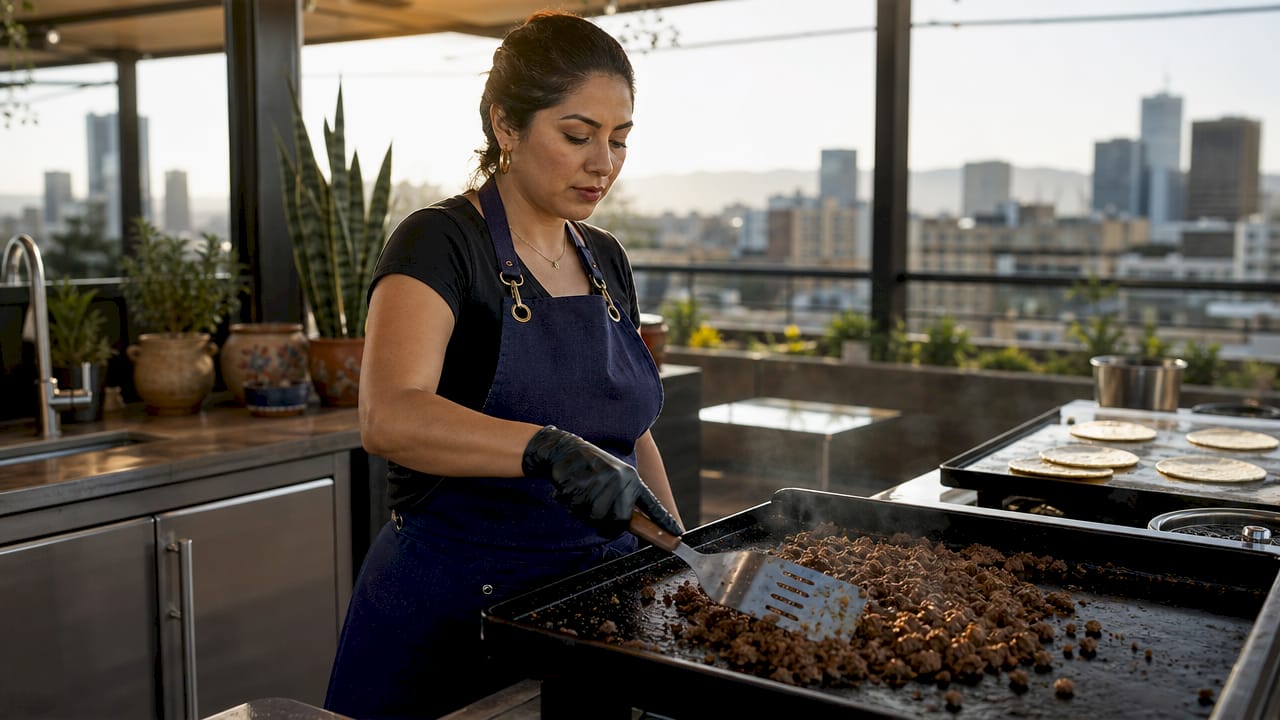
Cooking equipment is the starting point. A propane flat-top grill is the standard choice for onsite cooking at events because it heats quickly, holds a large surface area, and handles high volume. For hosts who prefer to cook proteins in advance, a slow cooker on the warm setting works well for holding seasoned beef, chicken, or carnitas. The Le Griddle Big Texan 3 Burner Gas Griddle from Culinaryprofis is a strong option for events where onsite cooking is part of the experience.
Food holding equipment keeps everything at serving temperature once it leaves the grill. Core taco bar items include chafing dishes with Sterno fuel, electric warming trays, and insulated tortilla warmers. Chafing dishes are the workhorses of any taco bar. They hold proteins and sides at safe temperatures for the full duration of a 2–3 hour service window.
Serving essentials complete the setup. You need:
- Taco holders or racks to keep assembled tacos upright
- Ramekins or small bowls for toppings like salsa, sour cream, and guacamole
- Serving spoons, tongs, and ladles, one per protein and topping to prevent cross-contamination
- Plates, napkins, and cutlery at the front of the line
Pro Tip: Label every topping container with a small tent card. Guests move faster when they do not have to ask what anything is, and you spend less time answering questions.
How to scale taco bar equipment for different event sizes
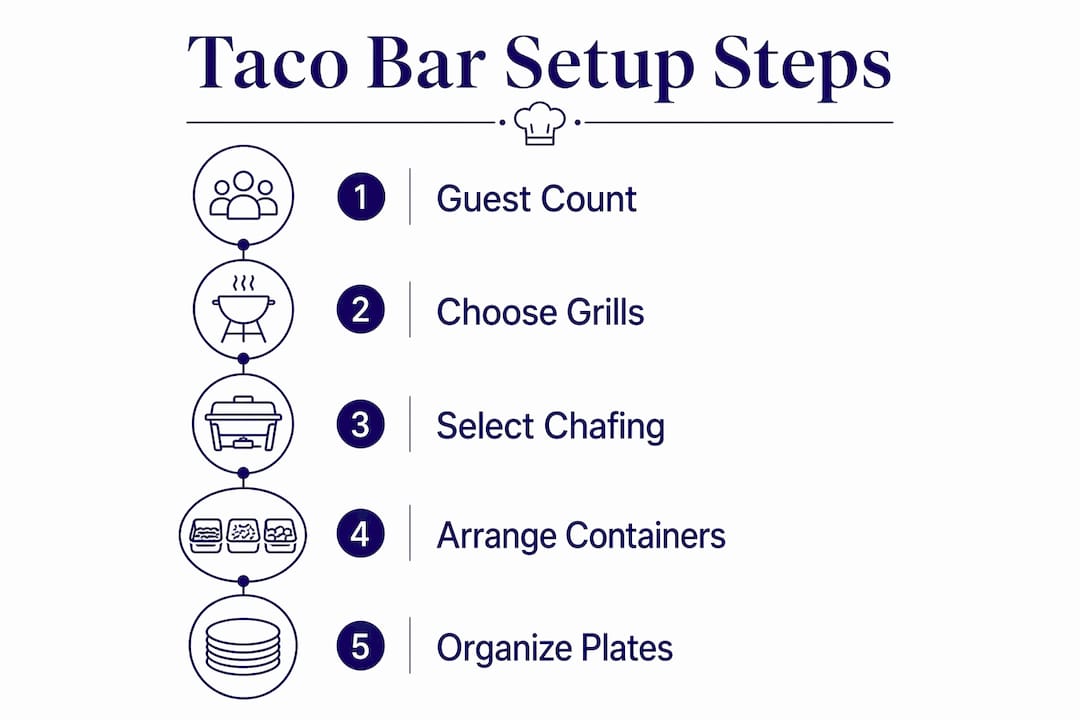
Guest count drives every equipment decision. Plan for 2–3 tacos per person, roughly 1/4 pound of protein each, 1.5 plates per guest, and 4–5 napkins per guest. Those numbers sound like a lot until you watch a taco bar in action. Tacos are messy, and guests almost always go back for seconds.
For events over 20 guests, two mirrored serving stations prevent bottlenecks and keep food at proper temperatures. One long line with 50 people waiting means the food at the front gets cold and the food at the back gets overcooked. Two identical stations cut wait times in half.
| Guest count | Grills | Chafing dishes | Topping containers | Plates | Napkins |
|---|---|---|---|---|---|
| Up to 20 | 1 | 2 | 3–4 | 30 | 80–100 |
| Up to 50 | 1–2 | 3 | 4–5 | 75 | 200–250 |
| Up to 100 | 2 | 3–4 | 5+ | 150 | 400–500 |
For a 100-guest event, the recommended load-out is two grills, 3–4 chafing dishes, at least five topping containers, and a full set of dedicated serving utensils. Always pack backup Sterno fuel canisters and extra serving spoons. Running out of fuel mid-event is the most common and most avoidable mistake in taco catering.
Key items to double up on for larger events:
- Serving tongs and spoons (one set per station)
- Sterno fuel canisters (at least two extras per chafing dish)
- Tortilla warmers (one per protein type if serving both corn and flour)
- Topping bowls (duplicated at each mirrored station)
Best practices for taco bar setup and layout
The physical arrangement of your taco bar equipment matters as much as the equipment itself. A left-to-right line sequence starting with plates and napkins, then tortillas, then proteins, then cold toppings, then sauces, prevents backtracking and cross-contamination. Guests who have to reach back across the line to grab a plate after they already have a tortilla in hand create chaos.
Tiered serving stands improve both visual appeal and accessibility. Placing shorter containers at the front and taller items at the back lets guests see everything at once. This reduces the number of guests who stop mid-line to look around, which keeps the flow moving.
Cold toppings require specific handling. Keep cold items over ice in bowls throughout the entire service period. Sour cream, shredded cheese, pico de gallo, and guacamole all need to stay below 40°F to remain safe and fresh. A simple hotel pan filled with ice under your topping bowls handles this without any extra equipment.
Pro Tip: Warm tortillas in an insulated warmer or pre-heat them on a skillet before service. Properly warmed tortillas stay soft and flexible, which directly improves the guest experience. Cold, stiff tortillas crack and fall apart.
Additional layout tips that make a real difference:
- Place sauces and hot condiments at the very end of the line so guests do not hold up the flow while they decide
- Use separate tongs for each protein to prevent flavor mixing and allergen cross-contact
- Set napkin dispensers at both the start and end of the line
Comparing types of taco bar equipment: which option fits your event?
Not all taco bar equipment works the same way. The right choice depends on your event location, guest count, and budget.
| Equipment type | Best for | Portability | Cost level | Key limitation |
|---|---|---|---|---|
| Propane flat-top grill | Onsite cooking, large events | High | Medium-High | Requires fuel management |
| Electric warming tray | Indoor events, small gatherings | Medium | Low-Medium | Needs power outlet |
| Slow cooker | Pre-cooked proteins, casual events | High | Low | Limited capacity |
| Chafing dish with Sterno | Any event, holding cooked food | High | Low-Medium | Fuel must be monitored |
| Electric chafing unit | Upscale indoor events | Low | High | Not portable outdoors |
| Insulated tortilla warmer | All events | Very high | Low | Holds heat for limited time |
Propane flat-top grills are the best choice for outdoor events where onsite cooking is expected. The Le Griddle Grand Texan 4 Burner Built-In Gas Griddle from Culinaryprofis delivers commercial-grade output for high-volume service.
For protein holding, keep meat in a slow cooker on warm or in a chafing dish with Sterno at 140°F, and add a splash of water or broth to prevent drying. This is the single most important technique for maintaining protein quality over a 2–3 hour service window. Dry, overcooked meat is the fastest way to disappoint guests.
Disposable serving ware works for casual backyard events. Reusable commercial-grade ware is the better call for catered events where presentation matters. Compostable plates and utensils from brands like World Centric or Eco-Products offer a middle ground for hosts who want sustainability without the dishwashing.
Additional taco bar essentials that improve the experience
Beyond the core cooking and warming gear, a set of smaller accessories separates a good taco bar from a great one. These items are easy to overlook during planning but make a noticeable difference during service.
Useful accessories to add to your taco bar equipment list:
- Taco racks and holders: Keep assembled tacos upright and prevent them from tipping and spilling toppings before guests reach their seats.
- Condiment squeeze bottles: Use for sour cream, hot sauce, and crema. Bottles give guests control over portions and keep toppings from being scooped out unevenly.
- Napkin dispensers: Place at both ends of the line. Loose napkin stacks blow away outdoors and run out fast.
- Signage and label tents: Identify every protein, topping, and sauce. Include allergen notes for items like dairy, gluten, and nuts.
- Food storage containers with lids: Use for backup proteins and toppings kept in a cooler or refrigerator until needed.
- Backup fuel: Pack at least two extra Sterno canisters per chafing dish. A standard canister lasts roughly two hours.
- Compostable plates and utensils: Brands like Eco-Products make compostable options that hold up under the weight of a loaded taco.
For hosts planning a full catered event, reviewing a catering equipment checklist before finalizing your supply order prevents last-minute gaps. A missing ladle or an empty fuel canister mid-service creates problems that are hard to fix on the spot.
Key takeaways
A complete taco bar setup requires cooking equipment, food holding tools, and organized serving supplies working together to keep food safe and guests moving efficiently.
| Point | Details |
|---|---|
| Core equipment categories | Every taco bar needs cooking gear, warming equipment, and organized serving supplies. |
| Scale by guest count | Plan 1.5 plates and 4–5 napkins per guest; use two stations for groups over 20. |
| Line sequence matters | Arrange left to right: plates, tortillas, proteins, cold toppings, then sauces. |
| Temperature control is non-negotiable | Hold proteins at 140°F and keep cold toppings over ice for the full service period. |
| Backup supplies prevent failure | Extra Sterno fuel, serving utensils, and topping containers are not optional for large events. |
What I have learned from setting up taco bars the hard way
The biggest mistake hosts make is treating the taco bar as an afterthought. They spend hours on the food and five minutes on the setup. Then the tortillas are cold, the proteins dry out after 45 minutes, and guests are crowding around one narrow table trying to figure out which spoon goes with which topping.
Clear labeling is the single highest-return investment in any taco bar setup. I have watched a simple set of printed tent cards cut host interruptions by more than half. Guests stop asking questions and start building tacos. That is the goal.
Temperature management is where most home hosts fall short. Holding protein at 140°F in a chafing dish with Sterno is not complicated, but it requires attention. Check the fuel level every 45 minutes. Add broth to the protein pan if it starts to look dry. These are small habits that protect the quality of the food across a full service window.
For larger events, the two-station setup is not a luxury. It is a functional requirement. One line with 50 people waiting means the food at the front gets cold before the last guests reach it. Two mirrored stations solve that problem completely. If you are planning an event with a full bar alongside the food, the same logic applies. A portable bar setup guide from Culinaryprofis covers the parallel planning considerations worth reviewing.
My honest advice: build your equipment list before you build your menu. The food is only as good as the system that holds and serves it.
— John
Commercial-grade taco bar equipment from Culinaryprofis
Culinaryprofis carries professional cooking and warming equipment built for the demands of event service.

The Dukers Commercial Stock Pot Range is a reliable gas burner stand designed for high-volume cooking and holding, making it a practical choice for keeping large batches of protein and sides at proper serving temperatures throughout a long event. Culinaryprofis also stocks the full Le Griddle lineup, including freestanding and built-in gas griddles suited for outdoor taco bars of any size. All orders ship free, and the Culinaryprofis support team is available to help you match the right equipment to your event requirements.
FAQ
What is taco bar equipment?
Taco bar equipment is the set of cooking, warming, and serving tools used to prepare and present food at a taco bar. It includes grills, chafing dishes, tortilla warmers, topping containers, serving utensils, and plates.
How many chafing dishes do I need for a taco bar?
Plan for 2 chafing dishes for up to 20 guests and 3–4 chafing dishes for events up to 100 guests. Each dish holds one protein or side item at safe serving temperature.
How do I keep tortillas warm at a taco bar?
Use an insulated tortilla warmer or pre-heat tortillas on a skillet before service. Insulated warmers hold heat for up to an hour and keep tortillas soft and flexible throughout service.
What is the correct order for a taco bar line?
Arrange the line left to right: plates and napkins first, then tortillas, proteins, cold toppings, and sauces last. This sequence prevents backtracking and reduces cross-contamination between items.
How do I keep taco bar proteins from drying out?
Hold proteins in a chafing dish with Sterno or a slow cooker set to warm at 140°F. Add a small amount of water or broth to the pan to maintain moisture during a 2–3 hour service window.