
How to Select Small Food Prep Tools for Your Home

Small food prep tools are compact kitchen appliances and utensils designed to handle specific tasks like chopping, mincing, emulsifying, and dicing at a scale suited to everyday home cooking. Knowing how to select small food prep tools for your home kitchen means choosing tools that fit your counter space, match your cooking volume, and clean up without hassle. Models like the KitchenAid mini chopper and Cuisinart FP-7 show how much a well-chosen compact tool can cut down on prep time. This guide covers what to look for, how to compare popular options, and how to build a kitchen toolkit that actually earns its storage space.
What features matter most when selecting small food prep tools for home use
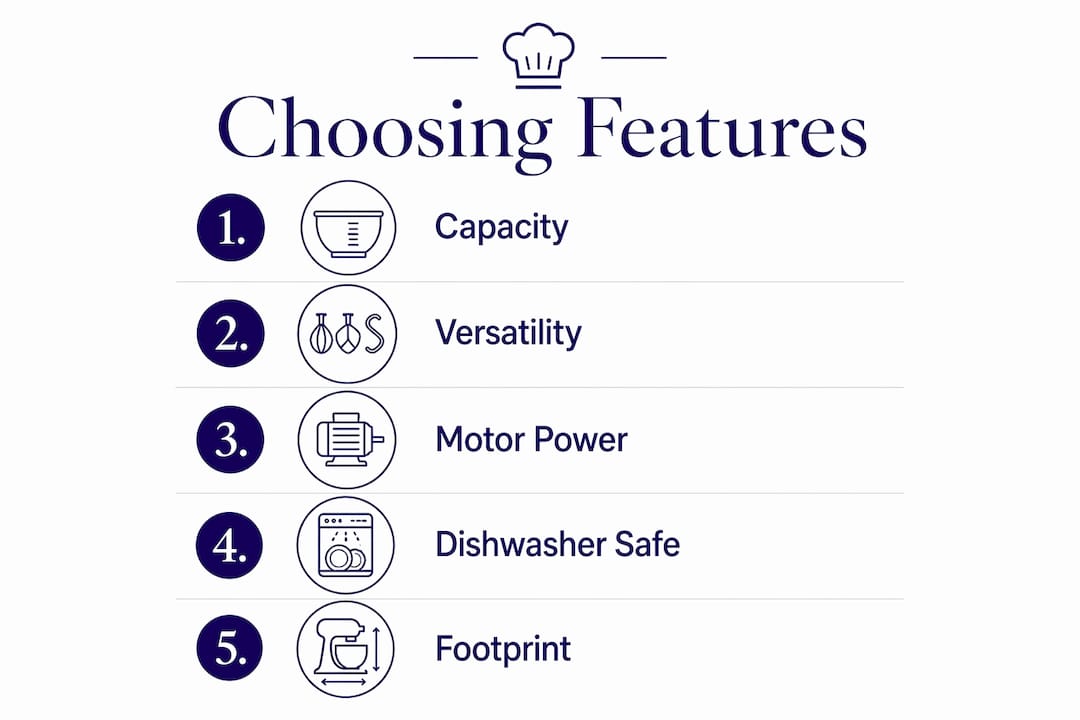
The right features separate a tool you reach for every day from one that collects dust. Home cooks benefit most from focusing on five core criteria before buying any small food prep appliance.
Capacity and size
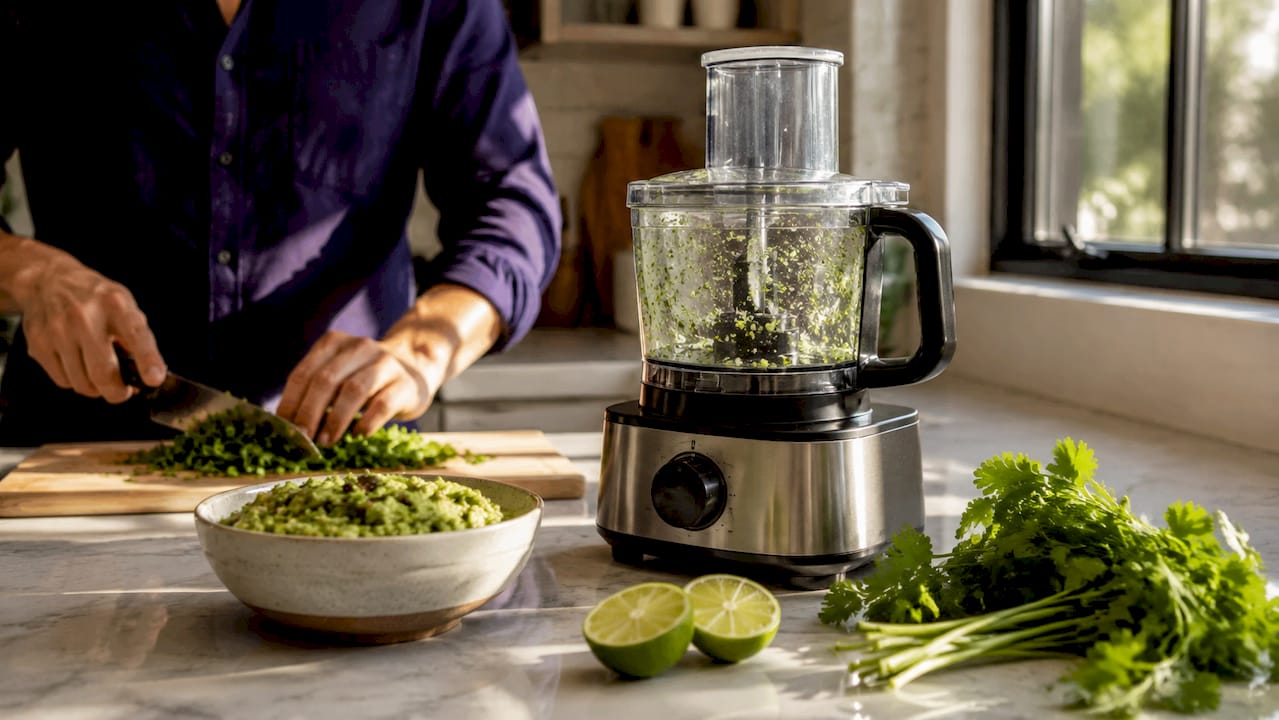
Compact processors with 3.5–4 cup capacity hit the sweet spot for most home cooking tasks. That range handles mincing vegetables, making dips, and blending sauces without taking over your counter. Anything smaller limits batch size too aggressively. Anything larger defeats the purpose of a compact tool.
Versatility and multipurpose function
A good small prep tool handles at least three task types: chopping, pureeing, and emulsifying. Tools that cover more tasks reduce the number of gadgets you need to store. Versatile tools that multitask well reduce the need for single-use gadgets, which is the core principle behind a tight, functional kitchen toolkit.
Motor power
Motor strength determines what a tool can and cannot process. For typical home tasks like mincing garlic, making hummus, or blending a vinaigrette, a motor in the 250–400 watt range is sufficient. Underpowered motors strain on dense ingredients and wear out faster.
Dishwasher-safe parts
Cleaning convenience directly affects how often you use a tool. Look for removable bowls, lids, and blades that are rated for the dishwasher’s top rack. The Cuisinart FP-7 manual specifies placing removable parts upside down on the top rack only. The motor base on every model must be wiped clean, never submerged.
Countertop footprint and storage
A compact footprint matters in kitchens where counter space is limited. The KitchenAid mini chopper includes cord storage built into the base, which keeps the unit tidy between uses. Cord management is a small detail that makes a real difference in a busy kitchen.
Pro Tip: Before buying, measure the cabinet or drawer space where you plan to store the tool. A compact footprint on the counter means nothing if the unit does not fit your storage setup.
How do you compare the best small food processors and prep gadgets?
Comparing small food processors requires looking at real use cases, not just spec sheets. The table below covers three widely available models across the key criteria home cooks care about most.
| Model | Capacity | Speed Settings | Best For | Limitation |
|---|---|---|---|---|
| KitchenAid 3.5-Cup Mini Chopper | 3.5 cups | 2 speeds + pulse | Garlic, herbs, small dips | Not suited for large batches |
| Hamilton Beach 4-Cup Food Chopper | 4 cups | 1 speed + pulse | Onions, nuts, quick sauces | Basic motor, limited power |
| Cuisinart FP-7 (7-Cup) | 7 cups | 2 speeds + pulse | Dressings, dips, slicing | Larger footprint than mini models |
The KitchenAid Mini 3.5-Cup Chopper features two speeds and a pulse setting, giving you control over texture from coarse to fine. That level of control matters when you are making salsa versus a smooth hummus. The Hamilton Beach 4-cup model trades some power for a lower price point, making it a solid entry-level option.
Small processors excel at emulsifying sauces, dips, dressings, and marinades. That is their strongest use case. They are not the right tool for kneading dough or processing large quantities of vegetables in a single pass.
The Cuisinart FP-7 sits at the larger end of the compact category. It handles more volume per batch, which suits home cooks who prep for three or four people regularly. The tradeoff is a bigger footprint and a higher price than true mini choppers.
For home cooks focused on small-batch food preparation, the 3.5–4 cup range delivers the best balance of utility and space efficiency. Spending more on a full-size processor makes sense only when your cooking volume consistently exceeds what a compact model can handle.
How to integrate small food prep tools into your cooking workflow
A tool only adds value if it fits naturally into how you cook. Follow these steps to build small prep tools into your routine without creating new friction.
-
Assess your cooking volume. Count how many people you cook for on a typical weeknight. If you regularly cook for one or two people, a 3.5-cup chopper covers nearly every task. Cooking for four or more people several times a week pushes you toward the 4-cup or 7-cup range.
-
Identify your most repetitive manual tasks. Mincing garlic by hand, chopping onions, and whisking dressings are the tasks that small prep tools replace most effectively. Write down the three prep steps you do most often. Choose a tool that handles at least two of them.
-
Organize tools for immediate access. Compact, countertop-friendly tools get used more often when they are visible and within reach. Store your most-used prep tool on the counter rather than in a cabinet. Reserve cabinet space for tools you use less than once a week.
-
Clean immediately after use. Prompt rinsing and top-rack placement preserve blade sharpness and prevent residue from hardening. Dried food residue on blades dulls the edge faster than normal use. Rinse the bowl and blade within five minutes of finishing prep.
-
Dry parts before reassembling. Storing a wet bowl on the motor base traps moisture and promotes odor. Stand removable parts upright or lay them on a drying rack before putting the unit back together.
Pro Tip: Keep a small prep tool on the counter next to your cutting board. Physical proximity is the single biggest factor in whether you use a tool daily or weekly.
For guidance on organizing your prep station around compact tools, the Culinaryprofis article on kitchen prep station setup covers counter layout and storage strategies in detail.
Common mistakes to avoid with small food prep tools
Most problems with small food processors come from misuse, not product defects. Knowing the common errors saves you money and extends tool life.
- Overfilling the bowl. Exceeding the max fill line forces the motor to work harder and produces uneven results. Small processors max out around 2 cups of dense vegetables per pass. Process in batches rather than pushing the limit.
- Ignoring the pulse function. Holding the power button continuously overprocesses most ingredients. Use short pulses for chopping tasks. Continuous run is appropriate only for smooth purees and emulsified sauces.
- Submerging the motor base. The motor housing on every small food processor is not waterproof. Wiping it with a damp cloth is the correct method. Submerging it causes electrical damage that voids the warranty.
- Storing blades loose in a drawer. Loose blades dull quickly and create a safety hazard. Store blades in the processor bowl with the lid on, or use a blade guard if one is included.
- Skipping the blade inspection. A nicked or bent blade tears food rather than cutting it cleanly. Inspect blades every few months and replace them when the edge shows visible damage.
Small food processors are not suited for kneading heavy doughs or large-batch slicing and grating. Attempting those tasks strains the motor and shortens the tool’s lifespan. When your cooking needs consistently exceed what a compact model handles, upgrading to a full-size processor is the practical choice.
For home cooks who also process meat at home, the professional small kitchen gadgets overview at Culinaryprofis covers when to step up to commercial-grade equipment.
Key takeaways
Matching a small food prep tool’s capacity and features to your actual cooking volume is the single most effective way to avoid clutter and get consistent daily use from your kitchen toolkit.
| Point | Details |
|---|---|
| Ideal capacity range | Choose a 3.5–4 cup model for most home cooking tasks and small-batch prep. |
| Dishwasher safety protocol | Place removable parts on the top rack only; always wipe the motor base, never submerge it. |
| Best use cases | Small processors excel at emulsifying dressings, dips, and sauces, not dough or large batches. |
| Workflow placement | Store your most-used prep tool on the counter to increase daily use frequency. |
| Know the limits | Upgrade to a full-size processor when batch volume consistently exceeds 2 cups of dense ingredients. |
What I have learned from years of working with small kitchen tools
Home cooks consistently underestimate how much a single well-chosen compact tool changes their daily routine. I have seen kitchens packed with gadgets where the cook still reaches for a knife for every task, because none of the tools were sized or placed correctly. The problem is almost never the tool itself.
The most common mistake I see is buying a tool based on maximum capability rather than typical use. A 7-cup processor sounds more useful than a 3.5-cup chopper. For a household of two people making weeknight dinners, the smaller tool gets used every day while the larger one sits in a cabinet. Matching capacity to cooking volume is the decision that actually determines whether a tool earns its place.
I also think the cleaning step is underrated as a buying criterion. A tool that requires hand-washing every component after every use will get skipped. Dishwasher-safe removable parts are not a luxury feature. They are the reason you will actually clean the tool promptly and use it again tomorrow.
My practical advice: buy one compact, versatile tool that handles your three most common prep tasks. Use it daily for a month. Then decide if you need anything else. Most home cooks find they do not.
— John
Culinaryprofis has the kitchen prep tools you need
Culinaryprofis carries a curated selection of small food prep equipment built for home cooks who want professional-grade performance without commercial kitchen complexity. The catalog covers compact prep tools alongside full-size processing equipment, so you can match the right tool to your actual cooking needs.
For home cooks who process meat regularly, the Pro-Cut KMG-32 meat mixer grinder delivers commercial-grade output in a format that works for serious home use. Culinaryprofis offers free shipping, a flexible return policy, and expert support to help you choose the right equipment. Browse the full selection at culinaryprofis.com or call for direct product guidance.
FAQ
What is the best capacity for a small food processor at home?
America’s Test Kitchen identifies 3.5–4 cups as the ideal range for home use. That size handles most daily prep tasks without taking up excessive counter or cabinet space.
Can small food processors handle dough?
Small food processors are not suited for kneading dough. Their motors and bowl sizes are designed for emulsifying, mincing, and chopping, not the sustained resistance of bread or pizza dough.
How do you clean a small food processor safely?
Place removable parts, including the bowl, lid, and blade, on the dishwasher’s top rack. Wipe the motor base with a damp cloth only. Never submerge the motor housing in water.
What tasks are small food prep tools best at?
Small processors excel at making dressings, dips, and sauces, mincing garlic and herbs, and chopping small volumes of vegetables. They are not the right choice for large-batch slicing or grating.
How do I choose between a mini chopper and a small food processor?
A mini chopper like the KitchenAid 3.5-cup model suits quick, single-ingredient tasks and takes up minimal space. A small food processor like the Cuisinart FP-7 offers more capacity and attachment options, making it better for cooks who prep multiple components in a single session.